

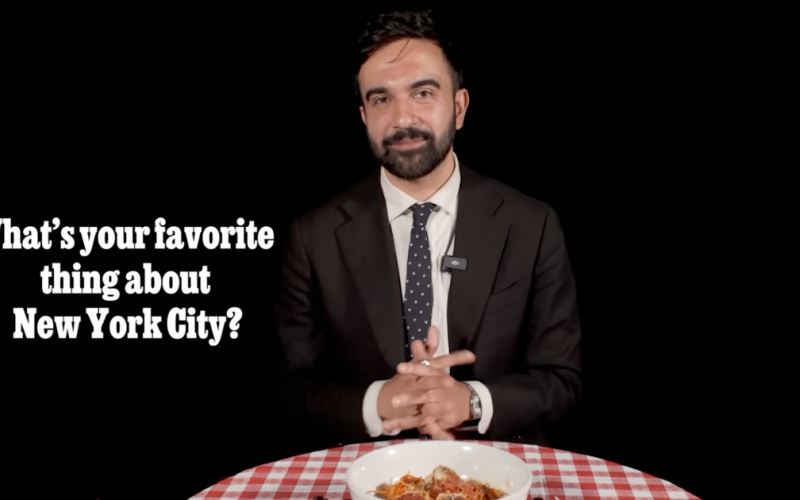
Less than 30% of Jewish voters in New York City believe Mayor Zohran Mamdani is doing a good job, according to a new poll that also highlights widespread concern over rising antisemitism.
The survey, conducted by The Jewish Majority, found that 32% of Jewish voters rate Mamdani’s performance as “excellent” or “good,” while 40% say he is doing a “poor” job. Another 18% rated his performance as “fair,” with the remainder undecided.
The poll surveyed 665 Jewish voters who participated in the most recent mayoral election, including a subset who supported Mamdani.
Concern over antisemitism was a dominant issue.
Eighty-two percent of respondents said they are either “very” or “somewhat” concerned about rising antisemitism in the city. Among those concerned, 73% said they believe the increase is linked to public figures “normalizing” anti-Zionism.
The findings come as hate crime data shows an increase in incidents.
New York City recorded 143 hate crimes from January through March, an 11.7% rise compared to the same period last year. Of those incidents, 78 cases, or 55%, targeted Jewish individuals or institutions, according to NYPD data cited in the report.
The poll also measured reactions to specific issues tied to the mayor.
Sixty-one percent of respondents said Mamdani’s refusal to condemn the phrase “globalize the intifada” has emboldened pro-Hamas protesters, while 19% disagreed. The remaining respondents were undecided.
On broader policy questions, 84% of Jewish voters who supported Mamdani said they favor a two-state solution to resolve the Israeli-Palestinian conflict. The same percentage supported legislation allowing the NYPD to establish buffer zones around synagogues and other houses of worship, a measure passed in March.
Mamdani’s electoral support among Jewish voters has been limited.
Exit polling showed he received 31% of the Jewish vote in the general election, though his support was higher among younger voters, with 44% backing him in the 18 to 29 age group.
The mayor’s positions on Israel-related issues have drawn scrutiny, as the New York Post reported.
He supports the Boycott, Divestment, and Sanctions movement and has criticized Israeli policy, positions that have fueled debate about their impact on public discourse and community relations.
Critics argue those positions contribute to rising tensions, while supporters say they reflect legitimate political viewpoints.
City officials have defended the mayor’s record.
Phylisa Wisdom said Mamdani has prioritized engagement with Jewish communities and is working to address antisemitism through policy initiatives. She cited efforts to build relationships across neighborhoods and develop a city-level plan to combat antisemitism.
The poll results highlight a divide between the mayor and a significant portion of Jewish voters, particularly on issues related to public safety and rhetoric.
The data also underscores how concerns about antisemitism are shaping political perceptions in New York City, with many voters linking those concerns directly to leadership and public messaging.
The issue is likely to remain central as the administration continues to respond to rising hate crime figures and ongoing political tensions tied to the Israeli-Palestinian conflict.
