

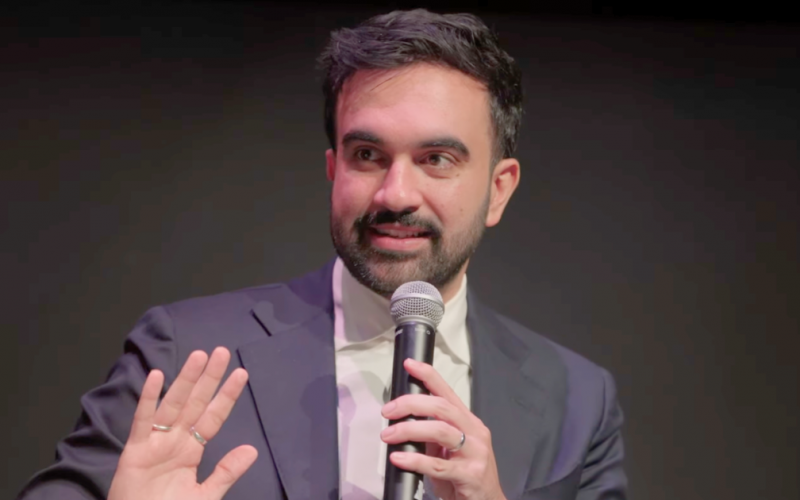
HUD Secretary Scott Turner is warning that New York City Mayor Zohran Mamdani’s proposed 9.5% property tax hike will drive rents higher and squeeze working families.
Speaking on “The Alex Marlow Show,” Turner said the economic impact would be immediate.
“Rents are going to go up. You’re going to see people who are going to be out of housing, not be able to afford rents. Housing costs will go up,” Turner said.
The warning comes as Mamdani advances a $127B city budget while pressuring Albany to approve higher taxes on millionaires and corporations. The mayor has said that if Gov. Kathy Hochul and state lawmakers reject what he calls a “rich tax,” the city will be “forced” to increase property taxes by 9.5% across the board.
“There are two paths to bridge the city’s inherited budget gap,” Mamdani said during his budget presentation. “The first path is the most sustainable and fairest: raising taxes on the wealthiest and corporations.”
“If we do not go down the first path,” he added, “the city will be forced to go down a second, more harmful path of property taxes and raiding our reserves.”
Housing analysts note that while property owners technically pay property taxes, renters often feel the effects in tight housing markets.
According to New York City Department of Finance data for fiscal year 2027, rental properties are currently taxed at an average effective rate of roughly 12.4%. A 9.5% increase would push that rate to approximately 13.6%.
On a per-unit basis, the average property tax for a rental apartment is estimated at $5,886. A 9.5% increase would raise that figure to roughly $6,445 per unit — an increase of about $560 per apartment.
For landlords operating dozens or hundreds of units, those additional costs compound quickly. In market-rate buildings, owners may attempt to pass along some or all of the increase through higher renewal rates or listing prices.
New York City rents are already up 6.6% year-over-year, according to Realtor.com data, while vacancy rates hover near 1.4%, historically low. Nearly 90% of renters remained in place last year, limiting available inventory and strengthening landlord pricing power, per the Conservative Brief.
Even in rent-stabilized buildings, where annual rent increases are capped, higher property taxes can strain building finances. Owners may reduce services, defer maintenance, or delay capital improvements to offset higher fixed costs.
Small Property Owners of New York warned that the proposal could be the “final nail in the coffin” for smaller landlords operating rent-stabilized buildings.
Mamdani has also appointed six new members to the city’s Rent Guidelines Board, which sets allowable rent increases for nearly one million stabilized units. A central promise of his campaign was to freeze rents on those apartments.
Turner framed the issue more broadly, arguing that increasing operating costs in an already strained housing market risks unintended consequences.
“When property taxes rise, the consequences ripple outward,” Turner said. “Rents are going to go up.”
As Albany debates tax increases on high earners and city officials weigh fiscal options, the fight over property taxes underscores a larger question: in one of the nation’s tightest housing markets, who ultimately absorbs the cost?
