

In Manhattan, Brooklyn, and Queens, locals say the Islamic call to prayer—the Adhan—is now broadcast over loudspeakers five times daily, including in the early hours before sunrise.
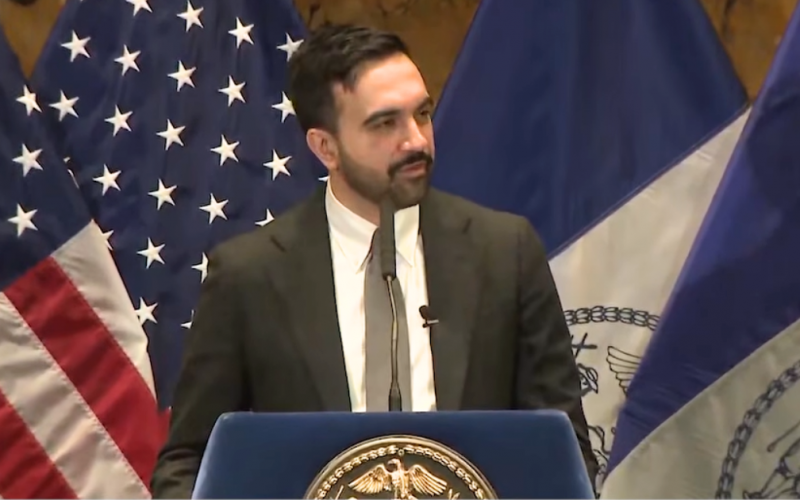
Local accounts indicate this increase has occurred under Mayor Zohran Mamdani, marking a significant expansion beyond the limited Friday and Ramadan allowances established in 2023 under former Mayor Eric Adams.
Previously, mosques were permitted to broadcast the Adhan publicly on Fridays and during Ramadan without requiring a special noise variance.
Today, amplified calls at each of Islam’s five daily prayer times transform the city’s soundscape from dawn through evening, reaching across densely populated neighborhoods with high pedestrian traffic and mixed-use development.
For many in the city, the expansion raises concerns beyond noise.
In a place where nearly 3,000 people died during the September 11, 2001 attacks, the public projection of religious phrases in lower Manhattan carries emotional and historical weight, RedState noted.
While Muslim Americans universally condemned those attacks, some residents say the memory of 9/11 shapes how amplified calls to prayer are perceived today.
Complaints include early-morning disruptions, with some noting that sleep and daily routines are affected.
Debates over amplified calls are also taking place in other Democratic-led cities.
Minneapolis and Dearborn, Michigan, permit Adhan broadcasts under local ordinances, though timing and volume restrictions differ.
Residents in these areas report discussions about balancing religious expression with neighborhood peace, and some city boards have instituted guidelines to limit loudspeaker volume during early morning hours.
Supporters of expanded broadcasts frame the policy as an affirmation of religious liberty and inclusion.
Advocates argue that amplified calls to prayer should be treated similarly to church bells or other traditional religious sounds long present in American cities.
Historically, church bells, synagogue calls, and other religious sound markers were permitted across U.S. neighborhoods with limited restrictions.
Public figures promoting expanded religious expression describe the practice as a step toward equity and cultural recognition, emphasizing the value of diverse traditions in a multicultural city.
Critics contend that amplification sets the Adhan apart from incidental worship sounds.
Early-morning broadcasts are cited as disruptive, and some question whether city enforcement adequately protects residents’ rights to quiet neighborhoods.
Observers also note that many Muslim-majority countries restrict public broadcasts of non-Islamic religious practices, raising questions about reciprocity and fairness, according to Redline.
Some community meetings have featured residents voicing concerns about maintaining quality-of-life standards while respecting constitutional protections.
City agencies now face mounting pressure to balance constitutional protections for religious expression with the practical needs of residents.
Complaints continue to pour in, community board meetings are crowded with concerned neighbors, and questions about permits and enforcement remain unresolved.
The question of whether five daily Adhan broadcasts should continue may hinge on clear policy guidance and consistent enforcement, alongside a serious public conversation about neighborhood standards and quality of life.
As Democratic-led cities nationwide adopt similar policies, New York’s experience underscores the difficulty of respecting religious freedom without compromising the daily lives of residents.
The five-times-daily call to prayer, echoing through densely populated neighborhoods, has emerged as a flashpoint in debates over public space, tradition, and the rights of longtime community members.
WATCH:
