

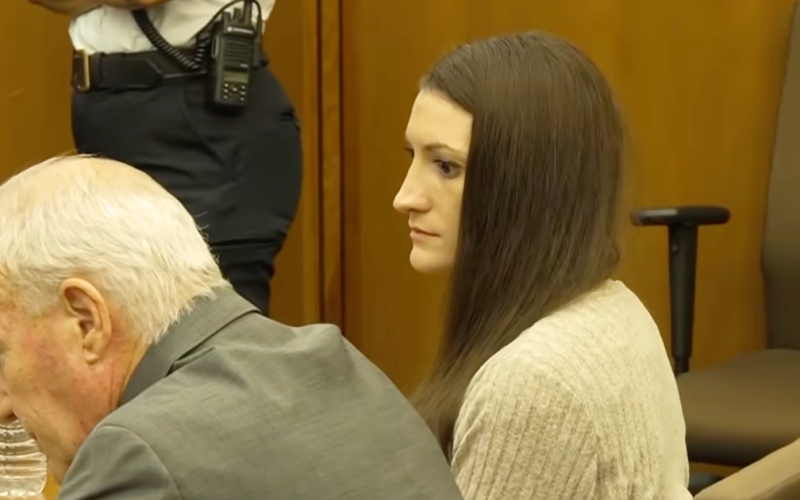
The murder trial of Massachusetts mother Lindsay Clancy ended in a mistrial Friday after jurors said they could not unanimously decide whether she was criminally responsible for killing her three young children.
Judge William Sullivan declared the mistrial after the 12-member jury spent seven days deliberating the case, totaling more than 37 hours, without reaching an agreement. The panel consisted of nine women and three men.
Jurors informed the court that they remained unable to reach a unanimous decision despite repeatedly returning to the deliberation room throughout the week.
“It is with a heavy heart that we are unable to come to a unanimous decision and will not be able to,” the jury wrote in a note read in court Friday.
Prosecutors asked Sullivan to declare a mistrial, while Clancy’s attorney, Kevin Reddington, urged the judge to send jurors back for another round of deliberations before ending the proceedings.
Sullivan ultimately sided with prosecutors and declared the case deadlocked. In an unusual development reported by the Daily Mail, the judge then gave Reddington an hour to pursue an appeal of the ruling.
Clancy, 36, was charged with killing her children — 5-year-old Cora, 3-year-old Dawson and 8-month-old Callan — at the family’s Duxbury home in January 2023.
Clancy has acknowledged killing the children but pleaded not guilty by reason of lack of criminal responsibility. Her attorneys argued that she was suffering from severe postpartum mental illness at the time.
The defense maintained throughout the trial that Clancy experienced postpartum psychosis and had been improperly treated and overmedicated before the killings.
Prosecutors rejected that argument, contending that Clancy understood her actions and deliberately planned the deaths. They pointed to evidence that she asked her husband, Patrick Clancy, to leave the house to pick up food and medication shortly before the children were killed.
The trial stretched across five weeks and included testimony from dozens of witnesses, psychiatric experts and members of the Clancy family.
Jurors began deliberating Aug. 27, but signs of a potential impasse emerged days later.
The panel first informed Sullivan on Tuesday that it could not agree on a verdict. The judge instructed jurors to continue discussing the case rather than immediately declaring a mistrial, per the Daily Mail.
The jury returned Wednesday with another message saying it remained unable to reach a decision.
Sullivan then delivered what is known in Massachusetts as a Tuey-Rodriguez instruction, which urges deadlocked jurors to reconsider the evidence and one another’s views while remaining faithful to their own judgment. The instruction is generally used as a final effort to produce unanimity before a mistrial.
The proceedings grew more contentious Thursday after the jury foreperson reportedly raised concerns about one juror’s approach to the court’s reasonable-doubt instructions.
Reddington asked Sullivan to remove a juror whom he claimed was “refusing to listen to the law.” Prosecutors opposed the request, and Sullivan declined to remove the juror.
Sullivan also questioned the jurors individually before sending the full panel back to continue deliberating. The jury returned Friday morning but remained deadlocked.
Because no verdict was reached, Clancy has neither been convicted nor acquitted of the charges against her.
Massachusetts prosecutors are permitted to bring the case to trial again after a hung jury. A retrial in that circumstance does not violate constitutional protections against double jeopardy because the first jury never returned a final verdict.
Prosecutors could instead pursue another resolution, including a potential plea agreement, or decide not to retry the case. As of Friday morning, the Plymouth County District Attorney’s Office had not publicly announced which course it would take.
Clancy has been receiving treatment at Tewksbury Hospital while the case proceeded. She was left paralyzed following an apparent suicide attempt after the killings and has appeared in court using a wheelchair.
The mistrial leaves one of Massachusetts’ most closely watched criminal cases unresolved more than three years after the deaths of Clancy’s children.
