

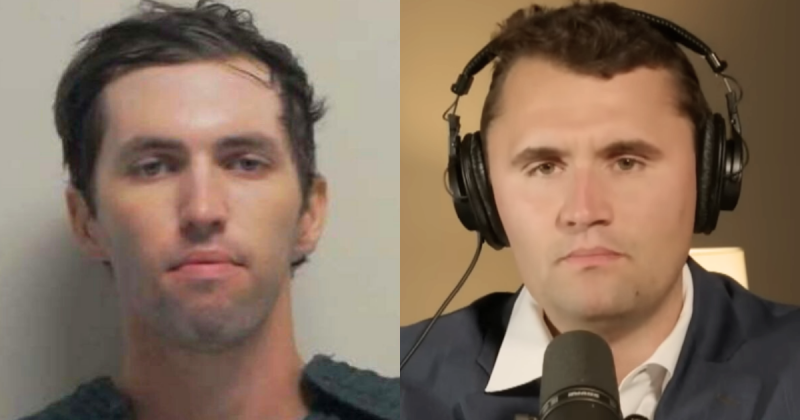
Defense attorneys for Tyler Robinson, accused of assassinating Turning Point USA founder Charlie Kirk, have filed a motion seeking to remove the entire Utah County Attorney’s Office from the case, citing a potential conflict of interest.
The motion asserts that the adult child of a deputy prosecutor attended the Utah Valley University event where Kirk was fatally shot, raising questions about impartiality in a high-profile trial.
Robinson faces the death penalty, making procedural maneuvers critical to his defense strategy.
Legal experts have expressed skepticism about the motion, noting that mere attendance at a public event by a prosecutor’s relative does not typically create a disqualifying conflict.
Chicago defense attorney Donna Rotunno called the motion “frivolous,” noting that disqualifying an entire prosecutor’s office typically requires a direct personal stake in the case, according to The Post Millennial.
She said the argument would carry more weight if the prosecutor’s family member were personally involved in the incident.
Randolph Rice, a legal analyst, noted that courts weigh whether a familial connection could influence prosecutorial decisions.
He added that thousands of people attended the event, and millions more watched it online, making it unlikely that a single witness could sway the office’s approach.
Court filings indicate that the adult child in question had no firsthand view of the fatal shot and did not participate in investigative or prosecutorial work.
Utah County prosecutors maintain that the family connection did not influence their decision to pursue capital punishment.
Deputy County Attorney Jeff Gray said the defense motion appears to be aimed at gaining a procedural advantage rather than addressing a legitimate conflict.
The motion has raised questions about potential consequences if granted. Rice explained that appointing a new prosecutorial team could alter how the case is handled, including the consideration of the death penalty.
Rice said courts look for conflicts that could genuinely affect a defendant’s right to a fair trial and that replacing the prosecutorial team could lead to a different review of the case’s strategy, including how the death penalty is considered, according to Trending Politics.
The defense also pointed out that during the chaos of the event, the adult child was in contact with family members, including the prosecutor, which they argue could create the appearance of bias.
However, prosecutors counter that appearances alone are insufficient grounds for disqualification, especially when no direct involvement in the case exists.
The high-profile nature of the trial has placed intense scrutiny on procedural fairness.
Observers note that courts are generally cautious about removing entire offices, particularly in cases with extensive public witnesses, due to the risk of delaying proceedings or creating complications in ongoing investigations.
The hearing on the motion is scheduled for Friday at 1 p.m. local time in Utah.
Legal analysts anticipate the court will carefully weigh the balance between preserving public confidence in the justice system and ensuring Robinson’s right to a fair trial.
The outcome could influence how similar motions are evaluated in future cases involving widely publicized crimes.
As Robinson’s trial moves forward, both sides are expected to continue scrutinizing procedural details closely.
The case, which has drawn national attention, underscores the legal complexities that can arise when high-profile crimes intersect with family connections to law enforcement personnel.
WATCH:
