

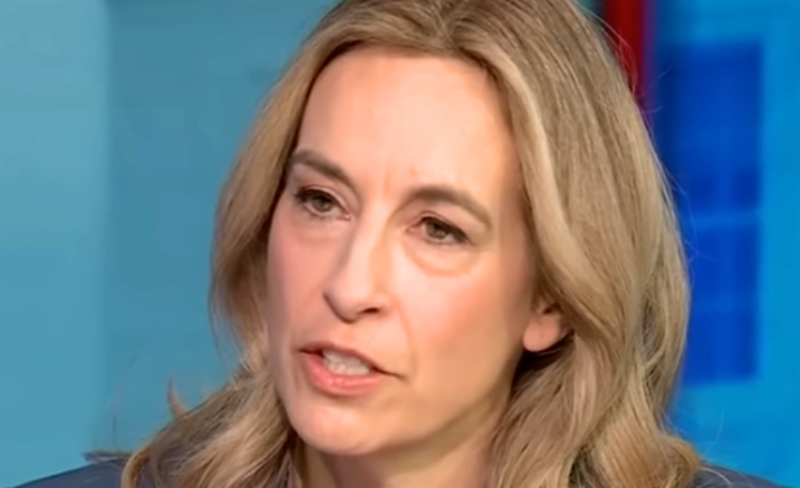
A political standoff over voter rolls escalated this week in New Jersey, where Governor Mikie Sherrill flatly rejected a federal demand tied to thousands of non-citizens found registered to vote in her state.
The refusal came after weeks of mounting pressure from the Department of Justice, which had zeroed in on 6,600 names improperly added to New Jersey’s voter registration system.
Harmeet Dhillon, the assistant attorney general leading the DOJ’s Civil Rights Division, first sought the records on July 21.
She wanted full identifying details — birth dates, addresses, nationalities, and registration timelines — for every non-citizen flagged in the review.
Federal investigators believe as many as 400 of those individuals went a step further and actually voted in prior elections.
A five-day compliance window came and went this week with no records handed over. Sherrill made her position public through a post on X, framing the request as an overreach with no legal footing.
“Today, I informed [Dhillon] that New Jersey will not provide the personal information of thousands of New Jersey residents,” Sherrill wrote on X. “The request had no legal basis, and I will always protect New Jerseyans’ personally identifiable information.”
Attached to her post was a letter addressed to Dhillon, in which the governor characterized the registrations as accidental.
She wrote that the affected individuals ended up on the rolls “through no fault of their own” and insisted local officials were “working tirelessly … to rectify this error.”
The DOJ wasted little time responding. Dhillon fired back on the same platform, accusing Sherrill of shielding the state from accountability rather than protecting voters.
“NJ has a legal duty to keep ineligible voters off its rolls, & our request is grounded in that legal authority,” Dhillon wrote. “DOJ will get this information through all legal means!”
Behind the request lies a broader federal investigation into what Dhillon has described as “unlawful dilution of American votes.”
That inquiry now feeds directly into an existing DOJ lawsuit against New Jersey, one already centered on the state’s refusal to share voter data.
Sherrill has pointed elsewhere for blame.
Last week, she attributed the registration failures to a “serious software error” originating in the state’s Motor Vehicle Commission, linking the glitch to French technology contractor IDEMIA.
IDEMIA rejected that framing outright. The firm maintains that responsibility for confirming voter eligibility rests with New Jersey’s own election division, not with the software it provides.
Timing has added fuel to the dispute.
Just days before the scandal became public, President Trump delivered remarks on July 16 alleging that Chinese actors had breached voter registration data belonging to 220 million Americans nationwide.
Sherrill responded by joining 23 fellow Democratic governors on a joint statement pushing back against Trump’s claims.
The coalition labeled his remarks “deeply alarming” and accused him of working to “undermine free and fair elections.”
The statement went further, charging that Trump sought to “intimidate and silence voters.”
In the same breath, the governors credited their own party with “actually making life better for American families by lowering costs, creating jobs and protecting our freedoms.”
Dhillon has since seized on the sequence of events.
She alleges Sherrill was already aware of the 6,600 improperly registered non-citizens at the time she signed the anti-Trump statement and publicly disputed the president’s claims.
According to Dhillon, Sherrill “still went online and called the president a liar and said he was exaggerating” despite knowing about the unfolding scandal in her own state.
“Shame on you, governor,” Dhillon said in a pointed rebuke aimed directly at Sherrill.
No records have been turned over as of this week, and the DOJ has signaled it will pursue every available legal avenue to obtain them regardless of New Jersey’s resistance.
The standoff leaves unresolved questions about the scope of the registration failure, the timeline of what state officials knew, and whether federal authorities will ultimately gain access to the disputed voter information through the courts.
