

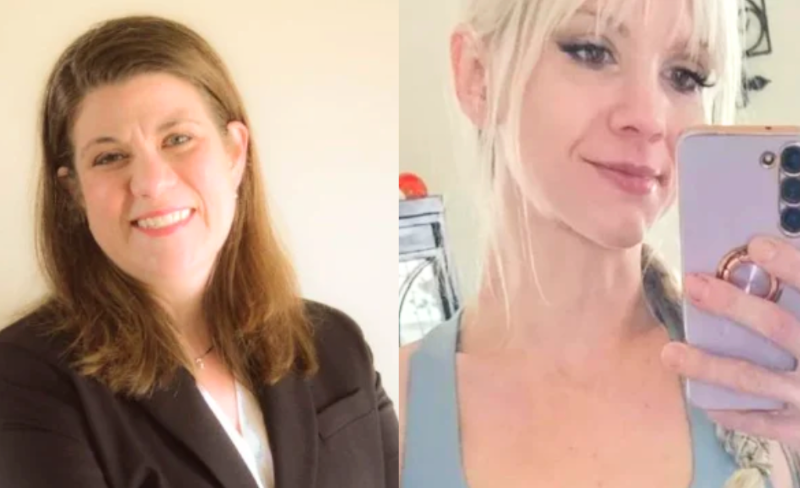
A Minnesota jury handed down a guilty verdict against Shiloh Hendrix on Thursday, convicting her of disorderly conduct in a case that has drawn national attention since a playground confrontation went viral in 2025.
Newly surfaced court paperwork now shows the trial judge’s instructions to jurors never once invoked the First Amendment.
The conviction centers on Hendrix’s use of a racial slur toward Sharmake Omar, a man who confronted her with a cellphone camera rolling and repeatedly pressed her to say the word.
Footage of the encounter exploded across social media platforms in May 2025, months after the April incident itself occurred.
Presiding over the case was Assistant Chief District Court Judge Christa M. Daily, whose written jury instructions became the focal point of the trial’s aftermath once defense filings came to light.
Jurors split their verdict.
They convicted Hendrix on the count tied to Omar but declined to convict her on a separate charge connected to a child who allegedly took a snack from her 18-month-old son’s diaper bag — the moment that first prompted Hendrix to use the slur and that drew Omar’s camera in the first place.
Omar’s own conduct during the exchange was notably composed. He remained calm yet confrontational, repeating his demand that Hendrix say the word while stating plainly that he intended to upload the footage.
Behind the scenes, defense attorney Brian Karalus had tried to steer the outcome differently.
Days before Daily settled on her final instructions, Karalus submitted his own proposed version, one that cited the First Amendment twice within three pages of text.
His submission read in part: “Whoever, in a public or private place, knows, or has reasonable grounds to know, that his or her conduct will, or will tend to, alarm, anger, or disturb others, or provoke an assault or breach of the peace, is guilty of disorderly conduct. However, because this case is based upon alleged speech, the First Amendment to the United States Constitution limits what speech may constitutionally be punished. Speech alone cannot constitute disorderly conduct unless the State proves beyond a reasonable doubt that the words used were fighting words.”
None of that constitutional framing made it into the version Daily ultimately handed the jury. Her instructions stretched across eleven pages without a single reference to the First Amendment.
Instead, the instructions Daily approved required jurors to weigh two questions: whether Hendrix’s words were obscene, and whether those words qualified as “fighting words” under the law.
Jurors were asked to decide if “the defendant engaged in offensive, obscene, abusive, boisterous, or noisy conduct, or in offensive, obscene, or abusive language tending reasonably to arouse alarm, anger, or resentment in others.”
Daily’s instructions elaborated further: “If you find that the defendant’s conduct consisted only of offensive, obscene, or abusive language, you must also find that the words used were ‘fighting words.’ Speech is not ‘fighting words’ merely because it is racist. ‘Fighting words’ are words that constitute personally offensive epithets that, when spoken to the ordinary person, under the particular circumstances of the case, are, as a matter of common knowledge, inherently likely to provoke a violent reaction or incite an immediate breach of the peace by those to whom such words are addressed. The offense may be based upon the utterance of fighting words alone, without resulting in actual violence. The focus is upon the nature of the words and the circumstances in which they were spoken, rather than upon the actual response.”
Notably, Omar showed no violent reaction when Hendrix eventually said the slur after his repeated insistence, despite the instructions characterizing such language as inherently likely to trigger that very response.
Karalus’ rejected proposal offered a narrower definition, describing fighting words as those “inherently likely to provoke an immediate violent reaction from the ordinary person to whom the words are directed,” and adding that they must be “personally abusive,” aimed at a specific person, and “more than merely offensive, insulting, rude, vulgar, or hateful.”
His filing also included the statement that “the Constitution protects speech that many people find offensive or hateful” — a line absent entirely from the instructions jurors actually received.
The instructions Daily provided went further still, directing jurors to scrutinize their own potential prejudices before rendering judgment.
“We all have feelings, assumptions, perceptions, fears, and stereotypes about others,” Daily’s instructions stated. “Some biases we are aware of and others we might not be fully aware of, which is why they are called ‘implicit’ or ‘unconscious biases.’ No matter how unbiased we think we are, our brains are hardwired to make unconscious decisions. We look at others, and filter what they say, through the lens of our own personal experience and background. Because we all do this, we often see life — and evaluate evidence — in a way that tends to favor people who are like ourselves or who have had life experiences like our own. We can also have biases about people like ourselves.”
Jurors were also told: “Reconsider your first impressions of the people and the evidence in this case. If the people involved in this case were from different backgrounds, for example, richer or poorer, more or less educated, older or younger, or of a different gender, gender identity, race, religion, or sexual orientation, would you still view them, and the evidence, the same way?”
In the wake of the split verdict, Karalus did not hide his frustration with how the trial unfolded, describing himself as having spent it “fighting the prosecutor and the judge” and calling the entire proceeding “bizarre.”
He has since confirmed plans to appeal the guilty verdict.
