

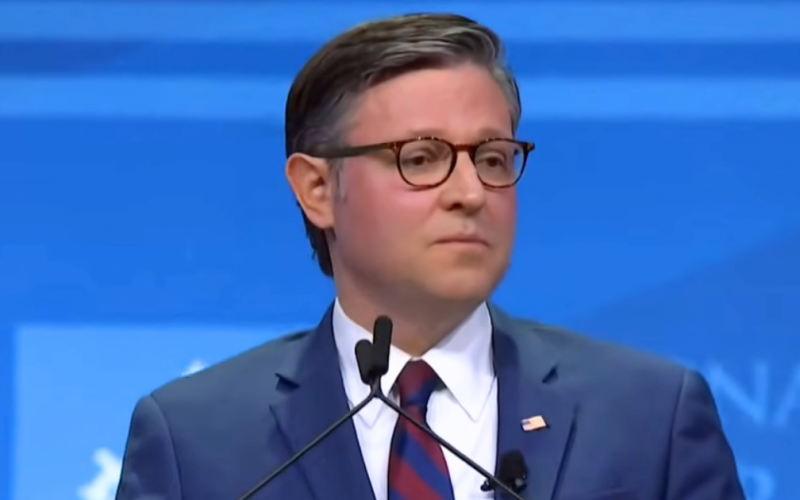
House Speaker Mike Johnson (R-LA) is facing mounting scrutiny from fellow Republicans as a temporary federal funding restriction on Planned Parenthood approaches its expiration.
The Washington Examiner reported that Johnson is set to let the restriction expire, allowing federal funds to flow again after July 4.
Republican lawmakers say maintaining the restriction is crucial for defending pro-life priorities and controlling federal spending on abortion services.
The controversy stems from Johnson’s earlier efforts to impose a longer-term ban.
He initially advanced a two-year restriction through the House as part of a broader legislative package aimed at limiting federal support for abortion providers.
Conservatives widely embraced the measure as a lasting solution, viewing it as a way to prevent federal funds from indirectly subsidizing abortion services through Medicaid.
During Senate negotiations, however, procedural limits tied to the budget reconciliation process forced the ban to be shortened to one year.
The compromise allowed the legislation to pass while substantially reducing the restriction’s intended impact.
The budget reconciliation process, which allows certain fiscal measures to pass the Senate with a simple majority, imposes strict rules on what provisions can be included in a bill.
These constraints narrowed both the scope and timeline of Johnson’s original plan, leaving the funding restriction perilously close to expiration without a clear extension.
Lawmakers have urged leadership to act before the July 4 deadline, citing both financial and values-based objections.
Pro-life advocacy groups have emphasized the stakes, The Blaze reported. Live Action highlighted the scale of abortions nationwide, estimating that a procedure occurs roughly once every 73 seconds.
The group has joined other organizations in calling on Johnson and Republican leaders to extend or reinstate the ban, warning that federal dollars should not support organizations that provide abortions.
Advocates frame the issue as both a financial and ethical concern, noting that Medicaid contributions can cover a range of health services, but opponents argue funds risk subsidizing abortion-related care.
Several GOP lawmakers have voiced public concerns.
Texas Sen. John Cornyn reaffirmed his long-standing opposition to federal funding of abortion providers.
“I strongly supported defunding Planned Parenthood in the Working Families Tax Cuts Act and have championed provisions to ensure federal tax dollars aren’t funding abortions throughout my career,” Cornyn said. “Defending the right to life is fundamental and something all Republicans should fight for.”
Missouri Sen. Josh Hawley warned of serious consequences if the restriction lapses.
“This would be a massive betrayal,” Hawley said. “Under no circumstance can Planned Parenthood be allowed to get taxpayer money for their abortions and gender transition insanity. Period.”
Attention has also focused on Planned Parenthood’s latest annual report, which recorded 434,450 abortions over the past year—the organization’s highest total on record.
Advocates say these figures reinforce the need to maintain federal funding restrictions, highlighting both the scale of services provided and the potential financial impact of federal contributions.
With the July 4 deadline approaching, Johnson’s next steps remain uncertain.
He could attempt to restore the restriction through a new legislative vehicle, negotiate a compromise with Senate allies, or allow it to lapse entirely.
His decision could influence internal GOP dynamics, affect upcoming negotiations over federal spending, and shape broader debates on taxpayer support for abortion services nationwide.
Lawmakers and advocacy groups are watching closely, emphasizing that Johnson’s choice will signal the party’s priorities on federal funding for abortion and pro-life policies.
