

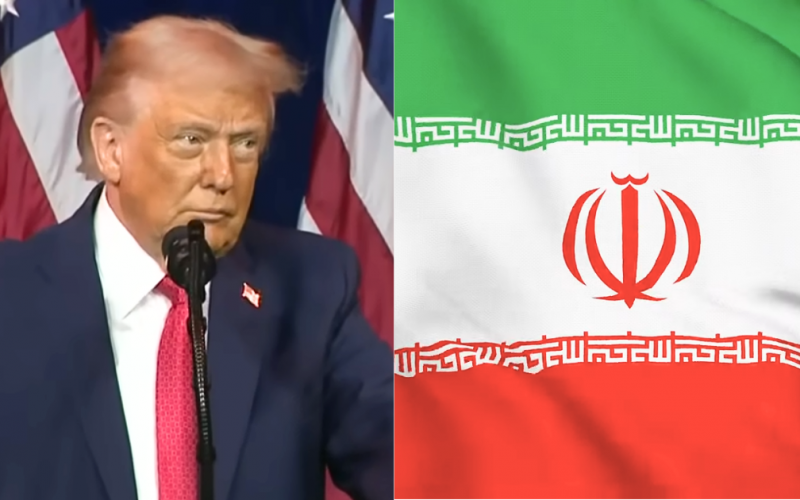
Iran has taken a shocking and morally indefensible step in response to mounting pressure from the United States, calling on its youth to serve as human shields around power plants and key bridges.
Alireza Rahimi, Secretary of the Supreme Council of Youth and Adolescents, urged citizens: “Our national assets and capital, regardless of any taste or political viewpoint, belong to the future of Iran and to the Iranian youth.”
This alarming tactic comes as President Donald Trump issued a hard deadline, warning that if Iran does not reopen the Strait of Hormuz, the U.S. could take decisive military action.
“A whole civilization will die tonight, never to be brought back again. I don’t want that to happen, but it probably will,” Trump wrote on Tuesday.
The use of civilians as shields is a known tactic in modern warfare, but Iran’s targeting of children and students has drawn sharp international condemnation.
Patriot Fetch described the move as exploiting the nation’s youth, calling it “morally indefensible.”
While human chains have historically served as symbolic demonstrations of solidarity or deterrence, they cannot halt modern precision strikes and leave millions of civilians exposed.
The Strait of Hormuz, through which a fifth of the world’s oil flows, is at the center of the standoff.
Iranian authorities justified the human chains by claiming that targeting infrastructure defended by civilians could constitute war crimes, News18 reported.
Military analysts, however, stress that this tactic does nothing to protect lives and merely signals a government desperate to avoid consequences under Trump’s ultimatum.
Military operations have already intensified.
The Associated Press reported that U.S. and Israeli forces have conducted airstrikes on bridges, train stations, and Iranian-linked facilities, while Tehran has fired ballistic missiles toward Saudi Arabia.
Trump has made clear he is “not at all” concerned about accusations of committing war crimes, emphasizing that civilian risks arise from Iran’s own coercive policies, not American restraint, the Express reported.
International reaction has been vocal but cautious.
UN Secretary-General António Guterres reminded nations that attacks on civilian infrastructure are prohibited under international law, while New Zealand Prime Minister Christopher Luxon urged diplomacy.
Despite global warnings, Iran continues to mobilize its youth, underscoring the regime’s desperation.
Iran has precedent for human chains, particularly around nuclear sites such as Natanz and Bushehr, as symbolic demonstrations of unity and deterrence.
However, involving children or students in protective measures near strategic sites raises serious ethical and legal concerns under international law.
Observers note that Iran’s actions place its civilian population at increased risk amid the ongoing standoff with the United States.
As the 8 p.m. ET deadline approaches, attention remains focused on Iran’s actions and the potential risks to civilians near strategic sites.
The deployment of human shields has drawn international scrutiny, while the United States has emphasized the importance of maintaining security and freedom of navigation in critical waterways.
Observers highlight that these developments carry significant geopolitical and humanitarian implications.
WATCH:
