

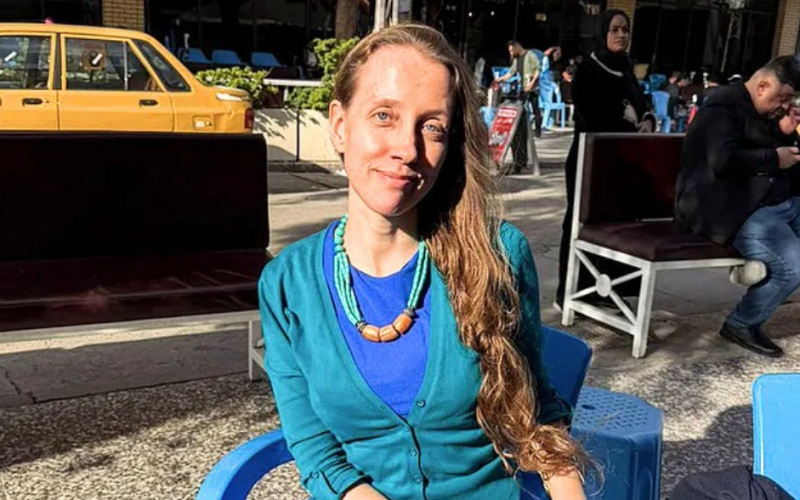
Iran-Backed Militants Kidnapped an American Journalist and Put Her Name on a Hit List — The Hostage Deal That Brought Her Home
Shelly Kittleson is free. The American journalist spent one week in the hands of Kata’ib Hezbollah, an Iranian-backed militant organization operating inside Iraq, before her release was secured through a negotiated agreement.
Two Iraqi government sources, along with a separate source directly familiar with the matter, confirmed her release to reporters.
Kittleson’s abduction took place in Baghdad on March 31, a Tuesday, when fighters from the militia seized her and took her into captivity.
Her kidnapping was not random. Multiple sources revealed that Kata’ib Hezbollah maintained a list of American journalists targeted for abduction — and Kittleson’s name was on it.
The group publicly announced her release through its official Telegram channel, where a spokesperson stated she would go free under a single, non-negotiable condition: Kittleson must exit Iraq without delay.
Her precise location following the release remained unknown in the immediate aftermath.
Iraqi authorities struck a deal to bring her home. Two militia officials, both speaking anonymously, told The Associated Press that detained members of Kata’ib Hezbollah would be released by Iraqi authorities in exchange for Kittleson walking free.
Before the negotiations concluded, the militant group circulated a video of Kittleson. The footage, which carries no date, runs just over two and a half minutes and shows her speaking directly into the camera while dressed in a pink sweater and green blazer. Where the video was filmed has not been determined.
The U.S. government had known a threat existed. Alex Plitsas, a CNN national security analyst who served as Kittleson’s official point of contact stateside, told CBS News that American officials had specifically warned Kittleson that Kata’ib Hezbollah was allegedly pursuing a campaign to kidnap or kill female journalists.
Those warnings were not a one-time occurrence. A U.S. official told CBS News that Kittleson received multiple alerts about the danger directed at her, with the most recent warning arriving the very night before militants grabbed her off the streets of Baghdad.
She went anyway. Kiran Nazish, founder and director of the Coalition for Women in Journalism, spoke with CBS News and explained that Kittleson had made plans to stay with a family in Iraq who had personally assured her she had nothing to fear.
That family told her they “would keep her safe,” according to Nazish.
Kittleson confirmed to Nazish in a text exchange that she had received official advice against making the trip. Still, Nazish told CBS News, Kittleson pressed forward, saying “she was doing what she had always done.”
Nazish painted a portrait of a journalist who had built a career in some of the world’s most dangerous corners. Kittleson had reported from both Iraq and Syria on multiple prior occasions and carried what Nazish described as “experience reporting on the ground in difficult circumstances.”
When not on assignment in conflict zones, Kittleson lives in Rome and has previously spent considerable time in Istanbul.
