

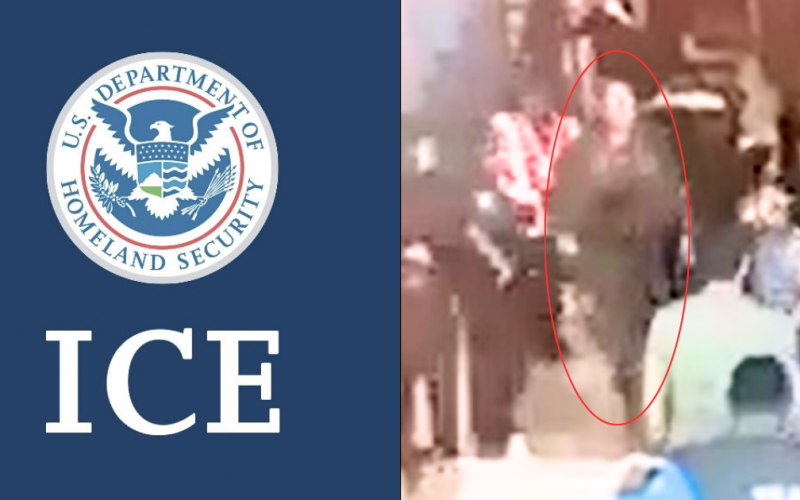
At JFK International Airport in New York, a one-year-old boy was saved from a life-threatening situation thanks to the swift actions of an ICE agent stationed at a TSA checkpoint.
The child, held by his father while waiting in line, became unresponsive and stopped breathing, causing alarm among travelers.
The officer immediately intervened, performing the Heimlich maneuver and restoring the child’s breathing before emergency medical personnel arrived to assess his condition.
The boy was ultimately cleared to continue his journey.
The episode highlights the critical role that federal law enforcement can play in ensuring safety at major transportation hubs, particularly amid operational strains caused by staffing shortages.
TSA employees have faced reduced hours and absenteeism as a result of a partial government shutdown, leaving lines longer and travelers more vulnerable.
In response to these challenges, President Donald Trump deployed ICE officers nationwide to support airports, assisting with passenger flow, crowd management, and safety operations, a move highly criticized by Democratic lawmakers.
Amid this broader effort, Department of Homeland Security (DHS) officials highlighted the quick thinking of the ICE agent at JFK, noting how individual officers on the ground play a critical role in ensuring traveler safety.”
Travelers at JFK reported that the presence of ICE agents helped reduce congestion and provided additional guidance, ensuring that passengers could navigate security lines more efficiently.
Incidents involving unresponsive children are rare at U.S. airports, but staff training emphasizes rapid intervention.
According to DHS, checkpoint personnel respond to dozens of medical emergencies nationwide each year, with ICE officers often positioned to assist where TSA staffing is limited.
Critics of Democratic lawmakers note that continued refusal to fully fund DHS has left TSA understaffed during one of the busiest travel periods of the year, potentially placing vulnerable individuals at risk.
Supporters of the ICE deployment argue that the additional personnel not only mitigate delays but also enhance safety, particularly for children and elderly travelers who may face difficulties in crowded checkpoint areas.
President Trump publicly recognized the contributions of ICE officers, praising their work in maintaining safety while assisting travelers with logistical support, The Daily Wire reported.
In a Truth Social post, he noted that agents have gone above and beyond standard duties, helping passengers with luggage and maintaining order in high-traffic terminals.
The JFK incident illustrates the intersection of personnel shortages, public safety, and federal enforcement strategies.
Lawmakers and security officials have emphasized that adequate staffing, rapid response capabilities, and strategic deployment of trained officers are essential to prevent emergencies and maintain confidence in airport operations.
Observers note that without such measures, delays and understaffing could result in increased risks, particularly for families traveling with young children.
As travelers and officials continue to navigate the challenges of reduced TSA staffing, the life-saving actions of one ICE agent serve as a reminder of the importance of preparedness and the value of federal personnel in safeguarding public spaces.
The episode highlights both the human element and policy implications of maintaining secure, efficient airport operations, demonstrating the tangible impact of swift action amid systemic pressures.
WATCH:
