

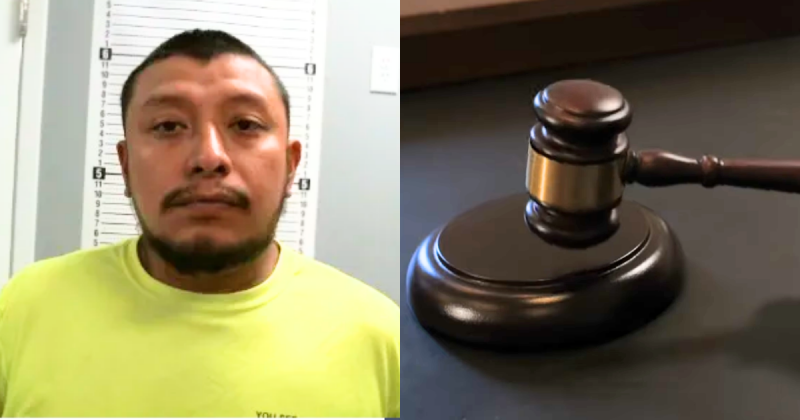
A federal jury in Chicago has acquitted 37-year-old Juan Espinoza Martinez of charges that he offered a $10,000 bounty on U.S. Border Patrol Chief Gregory Bovino, marking a high-profile setback in prosecuting threats against immigration enforcement officers.
The trial, stemming from the administration’s “Operation Midway Blitz” in northern Illinois, concluded Thursday after less than four hours of jury deliberation.
Espinoza Martinez, an illegal alien residing in Chicago’s Little Village neighborhood, faced a murder-for-hire charge for allegedly soliciting someone to harm Bovino, who oversaw immigration operations across the region last fall.
If convicted, he could have faced up to 10 years in federal prison. The defendant showed little reaction at the verdict, later embracing members of his defense team.
Prosecutors presented evidence primarily consisting of Snapchat messages Espinoza Martinez allegedly sent it to an acquaintance and his brother, including a photograph of Bovino accompanied by text offering money to target him.
Assistant U.S. Attorney Jason Yonan described the messages as a “call to action” and argued they went beyond casual speech, constituting direct solicitation for murder, WTTW reported.
The defense contended that the communications reflected neighborhood gossip already circulating online and lacked criminal intent.
Attorney Dena Singer emphasized that forwarding or repeating messages does not meet the legal threshold for murder-for-hire.
Excerpts from Espinoza Martinez’s post-arrest interview, in which he denied threatening anyone and characterized the messages as misinterpreted, were also presented to the jury.
A key prosecution witness, Adrian Jimenez, testified that he considered the messages a serious threat and forwarded them to Homeland Security.
However, the defendant’s younger brother stated that he had seen the same content on Facebook prior to receiving it from Juan and considered it a joke, according to Fox 32 Chicago.
The case was further complicated by claims linking Espinoza Martinez to the Latin Kings street gang.
DHS initially identified him as a “ranking member,” but U.S. District Judge Joan Lefkow barred gang-related testimony due to insufficient evidence, removing a significant element of the prosecution’s narrative.
The acquittal highlights broader challenges in prosecuting threats against federal law enforcement, particularly when cases rely on social media communications.
Roughly 30 non-immigration cases stemming from Operation Midway Blitz have seen charges dismissed or dropped in nearly half of them.
Previous civil litigation has also questioned the accuracy of claims regarding gang threats, including instances where federal testimony was found misleading.
Despite the verdict, Homeland Security maintains that threats against federal officials remain a priority, noting the need for vigilance in protecting agents who enforce immigration laws and combat criminal networks.
Legal experts say the case underscores the difficulty of converting online statements into criminal liability while balancing constitutional protections for free speech.
Espinoza Martinez, who has illegally lived in the U.S. for decades, remains free.
The jury’s rapid acquittal may influence how future cases from Operation Midway Blitz and similar enforcement efforts are prosecuted, raising questions about the ability to safeguard federal officers while upholding legal standards.
WATCH:
