

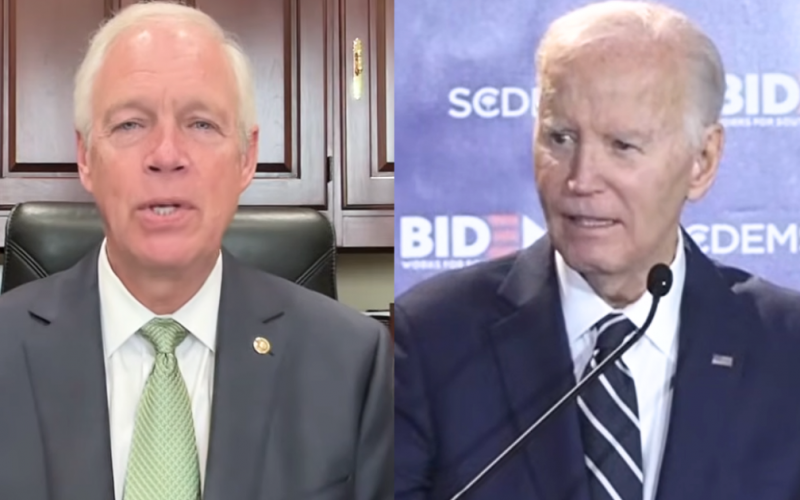
Wisconsin Sen. Ron Johnson (R) disclosed internal records on Monday showing that Biden administration officials detected a statistically significant signal for ischemic stroke in elderly recipients of the Pfizer-BioNTech COVID-19 bivalent booster as early as November 2022.
Despite these findings, federal health agencies continued to recommend widespread booster use for seniors.
Johnson released nearly 2,000 pages of documents and a letter to Health and Human Services (HHS) Secretary Robert F. Kennedy Jr., detailing internal communications and the timeline of events.
The records reveal that in January 2023, the White House revised a CDC and FDA draft communications plan regarding the booster.
Language describing the stroke risk was changed from “moderately elevated” to “slightly elevated,” and mentions of “potential risk” were removed, according to Santa Clarita Valley Signal.
One CDC official noted in an internal email, “Edits reflected from the [White House]. They don’t want to see this document again.”
Critics argue these edits downplayed safety concerns while still promoting booster uptake among those 65 and older.
Johnson’s office emphasized that public statements maintained there was “no change recommended in COVID-19 vaccination practice,” even as officials conducted analyses, including the “Stroke Project,” to evaluate the signal in detail through at least September 2025.
“From the initial detection of the safety signal in late 2022 … through at least September 2024, health officials continued to say the vaccine was safe while simultaneously searching for evidence to support that assertion,” Johnson wrote.
The CDC first identified the signal in its Vaccine Safety Datalink (VSD) system by comparing stroke rates within 21 days of vaccination to rates in days 22–42, Just the News reported.
Officials noted the signal did not appear in other monitoring systems and had not been detected internationally.
A joint CDC-FDA statement said, “Although the totality of the data currently suggests that it is very unlikely that the signal in VSD represents a true clinical risk, we believe it is important to share this information with the public.”
The agencies maintained there was no evidence of an increased stroke risk, affirming that the Pfizer bivalent booster remained safe for elderly recipients.
Subsequent analyses indicated that the elevated stroke signal was primarily among elderly patients who received an influenza vaccine on the same day as a Pfizer booster.
Among these individuals, 40 strokes occurred within 21 days compared with 20 in the 22- to 42-day period.
Those receiving only the Pfizer booster experienced 60 strokes in the initial 21 days and 58 later.
FDA researchers concluded that the increased risk was likely linked to high-dose or adjuvanted influenza vaccines rather than the COVID-19 booster itself.
Despite these findings, federal guidance continued to recommend COVID-19 vaccination for nearly all Americans aged six months and older, including co-administration with flu vaccines.
Johnson criticized this approach, saying, “As safety signals for ischemic stroke appeared, Biden HHS officials continued to urge people to get vaccinated, jeopardizing the health of millions of Americans.”
In his letter, Johnson requested additional records regarding stroke detection, including details on the CDC’s “Stroke Project” and interviews with officials involved in vaccine safety.
He stressed that key documents remain missing, leaving uncertainty about the full extent of HHS awareness.
