

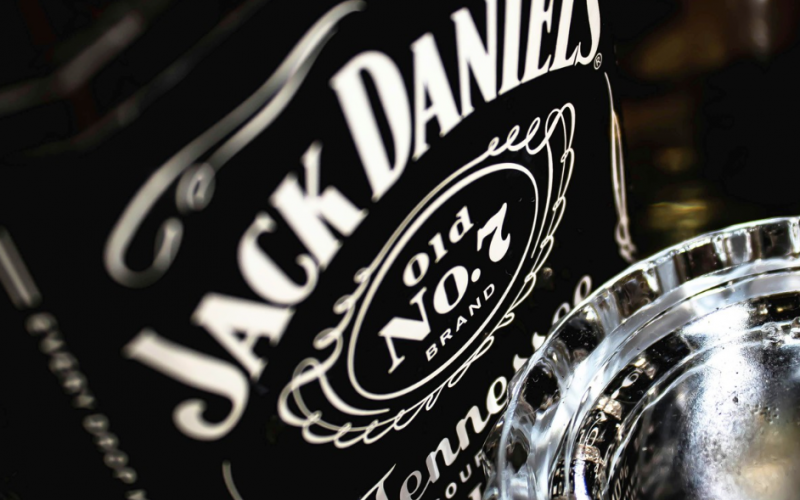
Jack Daniel’s will stay out of French hands — at least for now.
Pernod Ricard, the Paris-based liquor empire whose portfolio spans over 240 brands sold in more than 160 countries, declared Tuesday that its pursuit of Brown-Forman Corporation had come to a dead end.
The announcement arrived the same day the Daily Caller published an investigation spotlighting the French company’s decades-long commercial partnership with Cuba’s communist government.
Brown-Forman is the Kentucky-based maker of Jack Daniel’s Tennessee Whiskey — a brand so deeply woven into American culture that its black-label bottle is among the most recognized spirits in the world. The Brown family has held controlling interest in the company since 1870.
The two companies had acknowledged they were in formal talks on March 26, 2026. Five weeks later, Pernod Ricard pulled the plug.
“These discussions have ended and did not result in an agreement as the companies were unable to reach mutually acceptable terms,” the company said in a Tuesday evening press release. Pernod added it remains “fully focused and confident in its strategy and operating model.”
Brown-Forman’s stock dropped roughly 4 percent in after-hours trading when the news broke.
Earlier that same Tuesday, the Daily Caller had pressed Pernod Ricard directly.
The outlet asked the conglomerate whether its business entanglements with Cuba could constitute a national security threat to the United States — specifically in the event the deal drew scrutiny from CFIUS, the Committee on Foreign Investment in the United States.
The Daily Caller also asked whether Americans should be troubled by the prospect of a foreign company taking ownership of such a storied domestic brand.
CFIUS, which falls under the Treasury Department, carries authority to investigate foreign investments in American businesses, identify and mitigate national security risks, and recommend presidential action to block deals outright.
Pernod Ricard’s Cuba connection is not incidental — it is structural.
In 1993, the French conglomerate and the Cuban government formed a state-run 50-50 joint venture called Corporación Cuba Ron, through which they began exporting Havana Club rum to markets worldwide.
The United States, due to its longstanding trade embargo on Cuba, remained off-limits.
Under the terms of that arrangement, Pernod Ricard handles all marketing and distribution of Havana Club once bottles leave Cuban soil — making the French company a direct commercial arm of a Cuba state enterprise.
The history behind Havana Club involves expropriation and exile. The Havana Club brand was originally built by the family-owned José Arechabala S.A. beginning in 1934, before being nationalized following the Cuban Revolution of 1959.
The Arechabala family’s business was seized by the Cuban government without compensation. The family ultimately fled the island.
Bacardi, whose own founding family also fled Cuba after the revolution, later purchased the Arechabala family’s original Havana Club recipe and began producing a competing version of the rum in Puerto Rico for sale in the United States.
The resulting trademark battle between Bacardi and Pernod Ricard has played out in American courts for decades.
The proposed Pernod-Brown-Forman combination had been described as a merger of equals. A deal would have united the world’s second-largest spirits maker with the largest producer of American whiskey.
Proposed terms would have allowed the Brown family to retain a meaningful ownership stake and some degree of influence in the combined company.
With the French offer now dead, attention shifts to a competing American bidder.
Sazerac, a Louisiana-based company that owns Buffalo Trace — the oldest continuously operating distillery in America — had been pursuing its own offer for Brown-Forman. Sazerac’s bid was reported at approximately $15 billion, or $32 per share.
The collapse of the Pernod talks leaves Sazerac with a clearer path to a potential deal.
For now, Jack Daniel’s remains American.
