

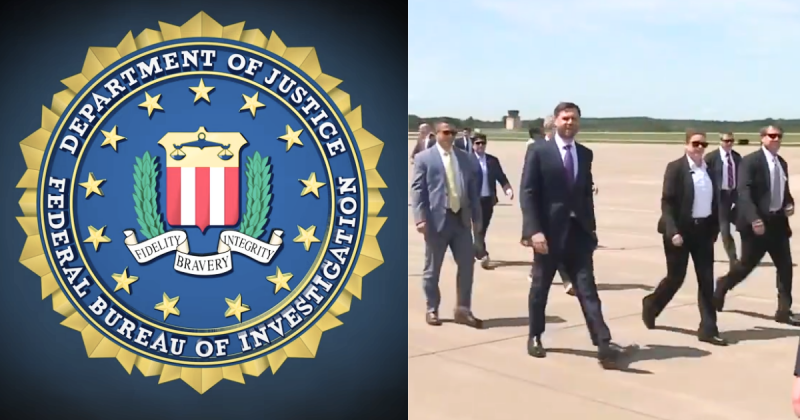
Federal investigators are examining alleged financial crimes tied to a Secret Service agent assigned to Vice President JD Vance’s protective detail, after the FBI conducted a raid at the agent’s residence earlier this month.
Authorities are probing whether a nonprofit charity linked to the agent improperly diverted millions of dollars in donations, raising concerns about oversight within the Secret Service
Federal tax‑exempt organizations are required to file Form 990 annually to disclose their mission, programs, finances and officer compensation.
The IRS uses this as a primary compliance tool, focusing on large revenue changes, high officer compensation, or related-party transactions as red flags.
According to sources who spoke to RealClearPolitics reporter Susan Crabtree, the FBI executed a search warrant at the agent’s home on or around Dec. 8 as part of a joint IRS investigation.
The probe has been active for over a year, with the Secret Service joining in recent months despite no charges being filed.
Investigators are reviewing bank transfers, donation records, reimbursements and asset inventories to determine whether the nonprofit’s reported charitable programs aligned with actual expenditures.
The unnamed agent is listed in IRS filings as the founder and chairman of the nonprofit, established in 2022.
Investigators are assessing whether the charity falsely claimed to provide services while failing to deliver on its stated mission, a potential violation of federal tax and wire fraud statutes.
The charity claims to provide emergency assistance to survivors of domestic violence, financial literacy, obesity prevention and support for families affected by HIV/AIDS across multiple states.
Among its initiatives is the “Laptops for Hope” program, intended to distribute computers to underprivileged children.
Investigators are examining whether the program functioned as advertised or existed largely in name only.
Some laptops were reportedly surplus devices donated by the Secret Service after exceeding warranty limits.
Federal agents are reportedly checking whether computers found in the agent’s home were ever distributed to children or remained stored at the residence.
Investigators have interviewed more than a dozen Secret Service agents, including donors to the nonprofit.
Some received partial reimbursements, prompting examination of whether these transactions allowed improper tax deductions or constituted disguised compensation.
Federal ethics standards prohibit employees from using their position for private gain or engaging in conflicting outside activities.
These rules, outlined in the Standards of Ethical Conduct for Executive Branch Employees, require disclosure of conflicts and set boundaries on financial interactions with external organizations.
Financial disclosures show the nonprofit experienced rapid revenue growth.
In 2022, it reported $351,329 in contributions and $23,000 in salaries; contributions rose to $806,409 in 2023 with $154,590 in salaries, followed by nearly $1 million in contributions and $267,221 in salaries in 2024.
Regulators often scrutinize nonprofits reporting rapid compensation increases without evidence of expanded services. Unreasonable compensation and related-party transactions are common IRS audit triggers.
One source within the Secret Service compared the potential fallout to the agency’s 2012 Colombia prostitution scandal, arguing the current case could be more damaging due to agents’ professional training.
“Anyone involved knew what they were doing was illegal,” the source said.
The investigation comes as the Secret Service faces scrutiny over morale, staffing challenges and reputational damage following two assassination attempts against President Donald Trump last year.
In addition to possible criminal prosecution, the agent could face internal insider-threat allegations for poor judgment and potential criminal intent.
