

A new report is pulling back the curtain on one of the most consequential — and contentious — decisions of the Trump presidency: the launch of military strikes against Iran.
According to the New York Times, senior members of Trump’s own national security team were deeply skeptical of Israel’s pitch for a joint military campaign against Iran. Their objections were blunt. Their concerns were urgent. And they were largely ignored.
Israeli officials made their case in a classified White House meeting, presenting a sweeping vision that included the elimination of Supreme Leader Ayatollah Ali Khamenei, the dismantling of the Iranian government’s power structure, and the installation of a secular figure to lead the nation afterward.
The reaction inside the room was far from enthusiastic. CIA Director John Ratcliffe reviewed the Israeli proposal and pulled no punches in his assessment, telling those gathered that the plan was “farcical.” Vice President JD Vance expressed his own doubts, questioning whether American and Israeli forces could realistically execute a full-scale regime change.
General Dan Caine, Chairman of the Joint Chiefs of Staff, delivered a pointed rebuke during the February 12 Situation Room session. “Sir, this is, in my experience, standard operating procedure for the Israelis,” Caine reportedly told the room. “They oversell, and their plans are not always well-developed. They know they need us, and that’s why they’re hard-selling.”
Secretary of State Marco Rubio needed far fewer words to make his point. “In other words, it’s bullshit,” he reportedly said.
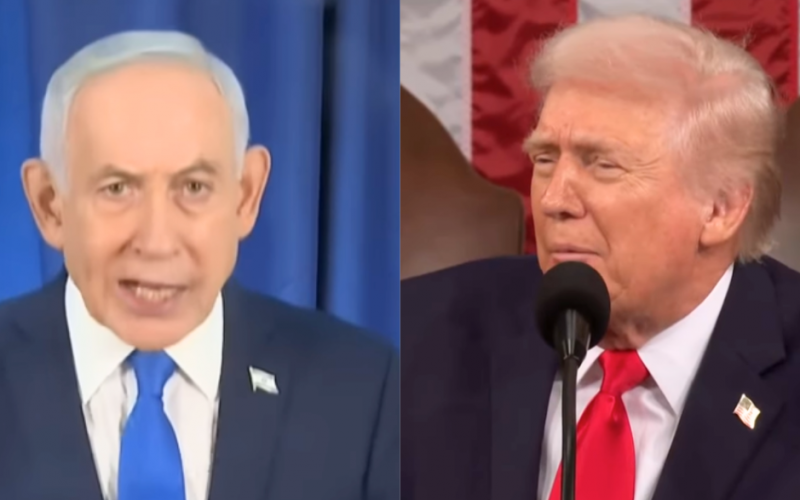
Despite the chorus of skepticism from his own team, Trump had already made up his mind. The Times reported that by the time his advisers were raising alarms, the president had essentially been won over — a shift that reportedly took hold after a February 11 Situation Room meeting with Israeli Prime Minister Benjamin Netanyahu.
Trump pushed back on the idea that the United States would need to own the regime change outcome. Toppling the Iranian government, he reportedly said, was not going to be America’s problem to solve. His stated focus remained destroying Iran’s military and eliminating its supreme leader.
Warnings extended beyond the battlefield strategy itself. U.S. officials flagged that an extended campaign against Iran would put serious strain on American weapons stockpiles, including missile interceptors already stretched thin. Israel offered assurances that it could neutralize Iranian responses before the Strait of Hormuz — a waterway carrying roughly a fifth of the world’s oil supply — could be shut down. General Caine disputed that claim.
Trump remained confident the conflict would be brief.
On February 28, the United States and Israel launched Operation Epic Fury. Tomahawk missiles and air-launched weapons tore through Iranian air defenses and military installations, and Ayatollah Ali Khamenei was killed.
Iran’s retaliation reached far beyond what some in the administration had expected — missiles and drones struck U.S. installations in Iraq and Syria, Israeli population centers absorbed barrages, commercial vessels in the Persian Gulf came under pressure, and proxy militias launched coordinated assaults across the broader region.
Pentagon officials cited significant military achievements: roughly 90% of Iran’s missile capacity degraded or destroyed, around 70% of its launchers neutralized, and more than 150 naval vessels put out of commission.
Iran moved to choke off global oil markets by implementing a blockade of the Strait of Hormuz. Trump responded with escalating rhetoric, warning that Iran’s “whole civilization will die” if the waterway was not reopened. American forces subsequently struck Iran’s Kharg Island on the same day that ultimatum was issued.
Senate Majority Leader John Thune expressed support for the president’s actions, and Sen. Lindsey Graham declared the moment “the catalyst for the most historic change in the Middle East in a thousand years.”
The questions now swirling in Washington are the ones that went unanswered in that Situation Room weeks ago — about the plan’s feasibility, the depth of its preparation, and what comes next.
