

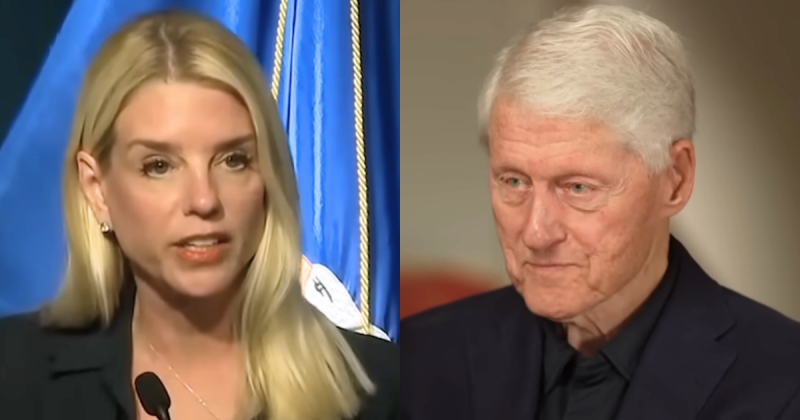
The Department of Justice (DOJ) under President Donald Trump has rescinded a decades-old administrative interpretation that expanded federal benefits access for legal and illegal aliens.
Officials say the move restores the 1996 Personal Responsibility and Work Opportunity Reconciliation Act’s (PRWORA) intent, designed to ensure taxpayer-funded programs prioritize citizens and qualifying immigrants.
The policy change has sparked renewed debate over immigration, public assistance and government accountability.
The change overturns a 1997 guidance issued during the Clinton administration, which had narrowed PRWORA’s eligibility rules, according to Breitbart.
That interpretation allowed certain federal programs to bypass statutory limits, giving broader access to welfare, healthcare and other benefits for non-citizens.
The DOJ’s new directive treats these programs as fully subject to the law, limiting SNAP, housing subsidies and federally funded healthcare to those explicitly authorized.
Officials emphasized that the change clarifies enforcement and corrects decades of inconsistent application across multiple federal agencies.
The reinterpretation also affects federally supported education and workforce programs.
Postsecondary initiatives, Head Start, community health centers, mental health programs and job training grants are now restricted to eligible participants.
The Departments of Health and Human Services and Labor clarified that illegal aliens are ineligible for benefits previously considered outside PRWORA.
Officials emphasized that funding levels remain unchanged, but eligibility is now strictly enforced.
They also noted the change strengthens accountability and ensures taxpayer funds are used as Congress intended.
Supporters say the DOJ’s action restores congressional intent by preventing public funds from subsidizing illegal immigration while prioritizing citizens.
White House adviser Stephen Miller described the move as a long-overdue correction to decades of administrative overreach.
Data from the Center for Immigration Studies indicates more than 50 percent of households led by legal immigrants who had not naturalized received at least one form of welfare, compared to roughly 36 percent of native-born households.
Advocates argue these figures show the prior guidance eroded PRWORA’s intent, highlighting the need for clarity and enforcement to protect taxpayers.
Critics warn the new rules could have unintended consequences. Low-income immigrant families may lose access to essential programs, and several states and advocacy groups have filed lawsuits challenging aspects of the policy.
A federal judge in Rhode Island temporarily blocked some provisions affecting Head Start and similar services, citing procedural concerns and potential harm to vulnerable populations, according to the Associated Press.
Legal analysts say additional litigation could take years to resolve, leaving parts of the policy in limbo and prolonging uncertainty for affected communities.
The DOJ’s policy reflects a broader effort to enforce the principle that immigrants should achieve self-sufficiency rather than depend on government aid.
Officials note the reinterpretation does not reduce overall funding for programs but ensures that benefits are targeted at those legally eligible.
Lawmakers, policy analysts and advocacy groups are closely monitoring its impact on benefit eligibility, immigration patterns and economic outcomes.
The reinterpretation has reignited debate over agency discretion, public assistance, and the proper balance between administrative action and congressional intent, marking one of the most significant updates to federal welfare enforcement in decades.
