

A Fort Bragg soldier stood in the shadow of one of the most sensitive military operations in recent American history — and allegedly used that position to quietly line his pockets.
Federal prosecutors announced Thursday the arrest of Gannon Ken Van Dyke, 38, an active-duty U.S. Army soldier assigned to Fort Bragg in Fayetteville, North Carolina, on charges tied to an alleged scheme to profit from classified intelligence.
Van Dyke was not merely aware of the operation.
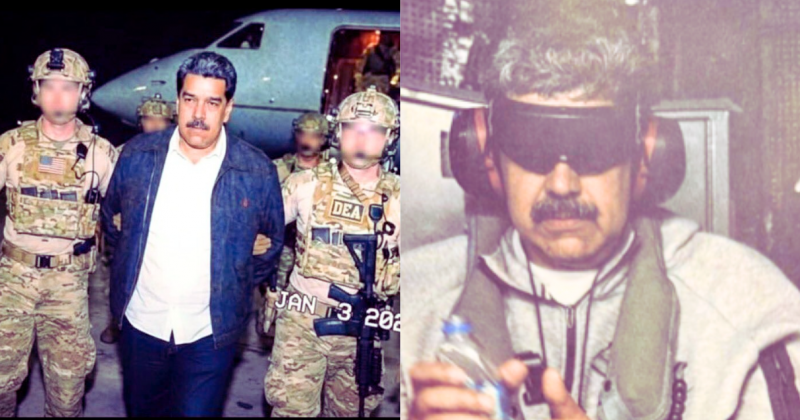
According to the indictment unsealed in the Southern District of New York, he was directly involved in both the planning and execution of “Operation Absolute Resolve” — the classified U.S. military mission that ended with American special forces seizing former Venezuelan President Nicolás Maduro and his wife, Cilia Flores, from a residence in Caracas in the early morning hours of January 3, 2026.
President Donald Trump announced the capture to the American public hours after it took place.
Prosecutors say Van Dyke’s access to classified details about the mission began around December 8, 2025, and extended through at least January 6, 2026. That access came with a legal obligation — Van Dyke had signed nondisclosure agreements barring him from disclosing any classified or sensitive military information.
He allegedly ignored that obligation entirely.
On or about December 26, 2025, Van Dyke opened an account on Polymarket, an online prediction marketplace where users place wagers on real-world event outcomes.
The platform was hosting a series of binary contracts tied directly to Venezuela — including whether U.S. forces would be operating inside the country by January 31, 2026, whether Maduro would be removed from power by that date, whether a full U.S. invasion of Venezuela would occur, and whether President Trump would invoke war powers against the Maduro government.
Van Dyke allegedly knew the answers before the public had any idea the questions were even relevant.
Between December 27, 2025, and the evening of January 2, 2026 — less than 24 hours before the raid went forward — prosecutors say Van Dyke placed approximately 13 separate bets totaling around $33,034, taking the “YES” position across each of the listed contracts.
When the operation became public and the contracts resolved, Van Dyke collected approximately $409,881 in profits, according to the Department of Justice.
The money did not sit still for long. Prosecutors allege Van Dyke quickly moved most of the funds into a foreign cryptocurrency vault, then shuttled them again into a newly created online brokerage account.
He also allegedly worked to erase his digital footprints. On January 6, 2026, he contacted Polymarket and requested his account be deleted, claiming he no longer had access to the email address linked to it.
Around the same time, he switched the email associated with his cryptocurrency exchange account to one registered under a separate name.
The federal government was not fooled.
Van Dyke now faces a sweeping set of charges: unlawful use of confidential government information for personal gain, theft of nonpublic government information, three counts of violating the Commodity Exchange Act, one count of wire fraud, and one count of making an unlawful monetary transaction.
Convictions on the commodities and monetary transaction counts carry a maximum of 10 years each, while the wire fraud count carries a maximum of 20 years.
Acting U.S. Attorney General Todd Blanche put the case in plain terms following the announcement: “Our men and women in uniform are trusted with classified information in order to accomplish their mission as safely and effectively as possible, and are prohibited from using this highly sensitive information for personal financial gain.”
Blanche also signaled that the emerging world of online prediction markets will not serve as a legal gray area for those who exploit government secrets: “Widespread access to prediction markets is a relatively new phenomenon, but federal laws protecting national security information fully apply.”
