

The Department of Government Efficiency’s claim that it saved taxpayers $110 billion during the early months of President Donald Trump’s second term was unreliable and riddled with problems, according to a new federal watchdog report.
The U.S. Government Accountability Office found that DOGE, which was closely associated with billionaire Elon Musk before his departure, could not provide sufficient information to verify 96% of the savings it claimed from canceled federal grants.
DOGE launched its online “Wall of Receipts” last year as part of an effort to publicly document savings generated by cutting contracts, grants, leases and other government spending.
The website initially became a centerpiece of DOGE’s argument that its aggressive cost-cutting campaign was saving taxpayers enormous amounts of money.
But the GAO’s review found substantial problems with the figures being presented to the public.
Despite DOGE’s promises of transparency, investigators found that the organization did not follow its own stated methodology when calculating roughly half of the savings examined by the watchdog.
The GAO also said DOGE officials failed to provide information investigators requested about the problems.
“Because U.S. DOGE Service officials did not respond to requests for information, GAO could not determine the reasons why DOGE did not disclose data quality issues and limitations when the website first went live or at any time since then,” the report said.
Investigators identified billions of dollars in claimed savings that they said were never actually executed.
Approximately $27.4 billion attributed to supposedly canceled contracts was never carried out as reported, according to ABC News’ account of the GAO findings.
DOGE also failed to provide identifying information connected to another $7.2 billion in claimed savings, preventing investigators from adequately reviewing those figures.
One particularly large discrepancy involved an information technology services contract connected to the Defense Department’s Defense Health Agency.
DOGE claimed that changes involving the contract produced approximately $1.7 billion in savings.
The GAO found, however, that no changes to the contract were ever made.
Investigators also determined that DOGE took credit for millions of dollars in savings associated with leases that federal officials had already identified for termination.
The findings raise significant questions about one of the most visible measurements DOGE used to promote the success of its cost-cutting operation.
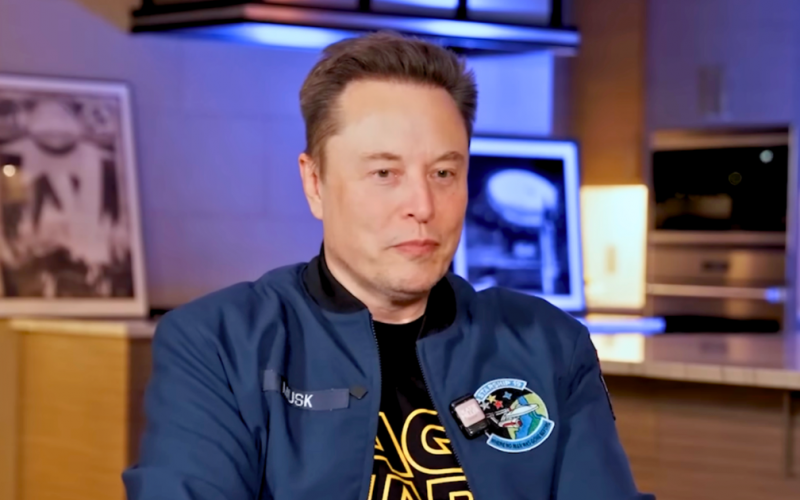
Musk emerged as the public face of DOGE during the beginning of Trump’s second administration and repeatedly promoted efforts to eliminate what the organization considered wasteful government spending.
The Tesla and SpaceX CEO has since left the initiative.
ABC News said it contacted both Musk and the White House for comment on the GAO findings but had not immediately received a response.
DOGE itself formally ended on July 4.
Its “Wall of Receipts,” however, remained available online following the organization’s conclusion and continued displaying a significantly larger estimate of taxpayer savings.
The website currently claims DOGE produced approximately $215 billion in total savings, according to ABC News.
The GAO findings detailed in the report concern the earlier $110 billion figure and do not, based on the information provided by ABC News, establish that every dollar of DOGE’s current $215 billion total is inaccurate.
The watchdog’s findings nevertheless cast significant doubt on the reliability of the accounting methods used to generate some of DOGE’s publicly promoted savings.
The inability to verify 96% of reported grant savings was particularly damaging to the organization’s pledge to provide taxpayers with transparent documentation of its work.
DOGE was created to dramatically reduce the size and cost of the federal government, becoming one of the most controversial initiatives of the opening months of Trump’s second term.
Its supporters credited the operation with identifying unnecessary spending and forcing federal agencies to scrutinize their budgets, while critics questioned DOGE’s methods and disputed some of its reported savings.
Now, more than a year after DOGE began publicly touting its cost reductions, the GAO’s findings are providing an official federal assessment of significant flaws in some of those calculations.
While the “Wall of Receipts” still advertises hundreds of billions of dollars in taxpayer savings, the watchdog’s report concludes that a substantial portion of the earlier claims could not be independently verified.
