

The Department of Homeland Security (DHS) has announced a new voluntary self-deportation program for Haitian and Syrian nationals affected by a recent Supreme Court decision allowing the Trump administration to end Temporary Protected Status for the two countries.
The initiative comes days after the Supreme Court ruled 6-3 in Mullin v. Doe that the Temporary Protected Status statute generally prevents federal courts from reviewing the Homeland Security secretary’s decisions to designate or terminate TPS for individual countries.
The ruling overturned lower court orders that had blocked the administration from ending TPS protections for approximately 350,000 Haitian nationals and about 6,100 Syrian nationals.
Temporary Protected Status, established by Congress in 1990, allows eligible nationals of designated countries already living in the U.S. to remain temporarily and obtain work authorization when conditions in their home countries prevent a safe return.
The program does not provide permanent legal status or a direct path to U.S. citizenship.
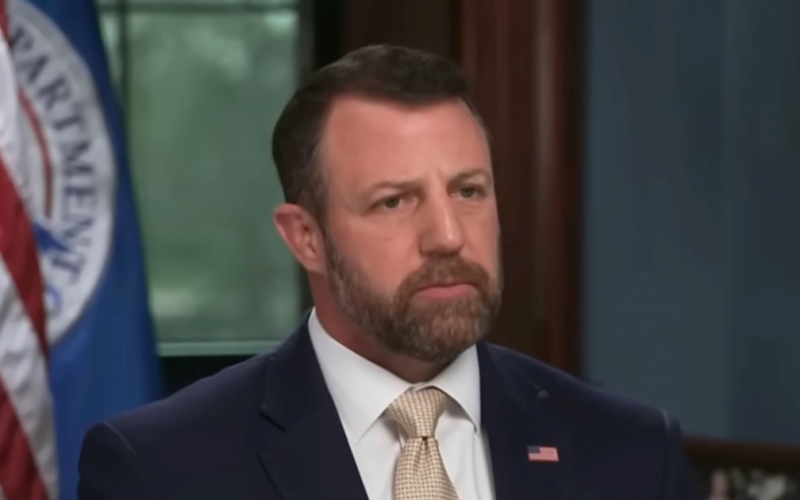
Following the court’s decision, Homeland Security Secretary Markwayne Mullin outlined a voluntary departure program aimed at assisting TPS recipients who choose to return to their home countries.
Speaking on CNN’s “State of the Union,” Mullin encouraged affected individuals to pursue permanent legal status if eligible or accept the department’s assistance to leave voluntarily.
“Either try to fill out the paperwork and be here underneath a permanent status or we’ll help you get back to your country,” Mullin said.
“We’ll actually give you a plane ticket, plus roughly $2,100 to help you re-establish when you get there, but temporary protective status, according to the courts and in its name itself, is not permanent status.”
Under the program, DHS will provide a free airline ticket and approximately $2,100 in financial assistance for each participant to help cover initial resettlement expenses after returning home.
Department officials said the program is designed to facilitate voluntary departures before TPS protections officially expire.
Individuals who choose not to seek another lawful immigration status or participate in the voluntary departure program could be subject to standard immigration enforcement proceedings once TPS terminations take effect, per Trending Politics.
Justice Samuel Alito authored the majority opinion in the Supreme Court’s decision, concluding that the TPS statute gives the secretary of Homeland Security broad authority over country designations and terminations while limiting judicial review of those decisions.
The ruling clears the way for DHS to move forward with ending TPS protections that had previously remained in place under lower court injunctions.
Department officials emphasized that current TPS beneficiaries will continue receiving legal protections until the administration formally implements the termination dates.
During that period, affected individuals may still pursue other immigration options for which they may qualify, including applications for permanent legal status where eligible.
DHS said additional guidance regarding implementation timelines, travel arrangements and eligibility requirements for the voluntary departure program will be released as the agency moves forward with carrying out the Supreme Court’s decision.
