

A sitting Republican vice president now has an unlikely admirer in one of America’s most recognizable liberal broadcasters.
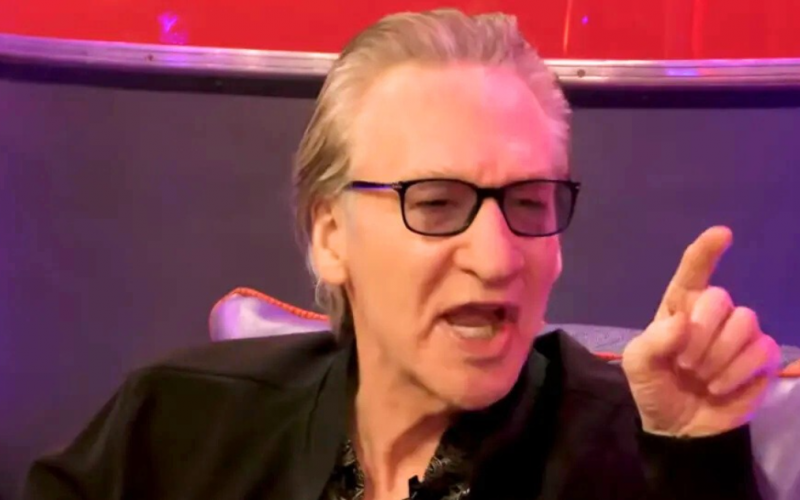
Bill Maher, host of HBO’s “Real Time,” told ABC News anchor Jon Karl that he could see himself casting a ballot for Vice President JD Vance in 2028. The admission builds on remarks Maher made previously, when he described his vote as “in play” heading into the next presidential cycle.
Karl asked Maher point-blank during their sit-down whether Vance specifically could earn his support. Maher answered without hesitation.
“Yes,” Maher said. “If this is the Democratic side, yes.”
Pressed on why, Maher turned his attention to the Democratic Socialists of America, an organization whose influence he said has grown substantially within his own party. He said he bases his concerns on direct statements from the group itself, not outside characterizations.
“I’m not living in communist America … I’ve read the quotes from the DSA platform, from their own mouths. Don’t tell me I’m not seeing what I am seeing,” Maher said.
Maher then described a trend he said he has tracked closely: a growing number of DSA-backed candidates calling publicly for the elimination of police forces, prisons, and the existing justice system altogether.
He questioned whether such proposals could function in practice, framing his break from that wing of the party as a matter of basic realism.
“What world do they think we could possibly live in under these conditions? That’s just a level of nutty that I’m so glad, whatever it was I was like, I’m not going along, ’cause this is where it ends,” Maher said.
Maher’s comments to Karl land roughly a month after Vance himself sat across from Maher as a guest on “Real Time.” That episode, which aired June 26, covered ground including the 2020 election and Donald Trump’s continued hold on the Republican Party.
During that on-air conversation, Maher confronted Vance over a specific grievance: elements within the GOP that still will not acknowledge Joe Biden’s 2020 victory as legitimate.
“But it is a problem if you have an entire political party, an entire political movement that doesn’t recognize the legitimacy of elections, of course, and my big issue from the beginning,” Maher told Vance at the time.
Even so, Maher described the overall tone of that exchange as cordial. He said the two men were able to connect personally despite substantial policy disagreements.
“Everybody’s a monster until you talk to them,” Maher said. “You can disagree with them a lot, but we had a good time.”
Maher’s willingness to name a Trump administration official as a potential 2028 pick stands out given his long-standing identity as a fixture of the political left. For years, Maher has built his platform around skewering Republican politics and policy.
The DSA has meanwhile expanded its footprint in Democratic primaries in recent cycles, with affiliated candidates winning local and national races in multiple states.
Maher’s remarks suggest that expansion is now factoring directly into how at least some establishment-aligned Democrats view their own party’s future.
Karl’s interview did not press Maher on whether other Republican figures besides Vance might also appeal to him under similar circumstances. Maher’s stated openness was confined to Vance in the context of a DSA-influenced Democratic ticket.
Vance has not issued any public statement responding to Maher’s newest comments as of this report. His June appearance on Maher’s program was widely noted at the time as a rare instance of a senior Republican official appearing at length on a liberal-leaning entertainment program.
Maher’s original “in play” comment, made before the Karl interview, had already generated attention for suggesting cracks in his allegiance to the Democratic Party.
The Karl interview aired as part of ABC News’s ongoing political coverage, with no additional commentary from the network attached to Maher’s statements.
Maher’s comments arrive as the Democratic Party continues to navigate internal debate over its ideological direction ahead of the 2028 election, with figures on both the moderate and progressive ends of the coalition staking out increasingly public positions.
