

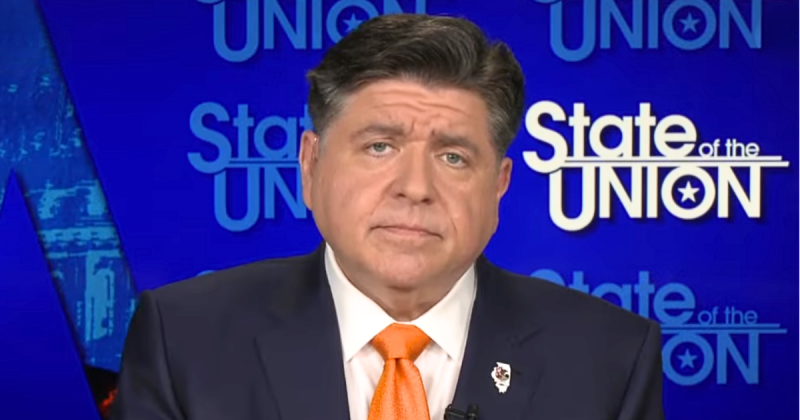
Illinois Gov. JB Pritzker (D) is facing renewed scrutiny after signing a sweeping criminal justice measure that will automatically seal certain criminal records statewide, a move supporters describe as a second-chance reform while critics warn it could limit public transparency.
The law, known as the Clean Slate Act, is expected to significantly expand record sealing for non-violent offenses in the coming years.
The legislation marks a major shift in how Illinois handles eligible criminal records, moving away from a system that requires individuals to petition the courts and toward one that relies on automation.
Beginning in 2029, law enforcement agencies and circuit clerks will be required to systematically seal qualifying records without action from the individual, a change state officials say will bring greater uniformity across Illinois’ 102 counties.
Under current law, record sealing is permitted for certain non-violent offenses, but the process often involves filing court paperwork, paying legal fees and attending hearings.
Administration officials argue those requirements have discouraged eligible individuals from seeking relief, leaving many with records that continue to affect employment and housing long after sentences are completed.
Supporters of the Clean Slate Act estimate the impact could be widespread.
Data cited by ABC7 indicate that a substantial share of Illinois adults with an arrest or conviction history may eventually qualify for partial or full record sealing once the automated system is fully implemented.
Advocates argue that removing older records from routine background checks can help reduce barriers to economic stability and reintegration.
The law does not apply to all crimes.
Convictions involving serious or violent offenses remain excluded, including murder, sex crimes, domestic battery, DUI, reckless driving, stalking, violations of orders of protection and animal cruelty offenses.
State officials have emphasized that the measure does not expand which crimes are eligible for sealing but instead changes how already eligible records are processed.
State Rep. Jehan Gordon-Booth (D-Peoria), a chief sponsor of the legislation, has described the bill as deeply personal.
“I was given the chance to move beyond my mistake and to manifest my potential in service of my community,” Gordon-Booth said, according to BizPac Review. “This law is not about charity. It’s not about forgiveness. This is about justice. This is about redemption.”
Pritzker framed the measure as a bipartisan effort designed to strike a balance between accountability and opportunity.
“For too long, we have been shutting doors for Illinoisans coming home from incarceration after serving their time for non-violent offenses,” the governor said in a press release, adding that the law aims to provide a path forward while maintaining public safety protections.
To oversee implementation, the legislation creates a Clean Slate Task Force that will guide the rollout and submit annual reports to the General Assembly.
The Illinois State Police will also upgrade its criminal history database to identify eligible records and coordinate sealing with circuit clerks statewide.
While sealed records will no longer be accessible to private background check companies, access will not be eliminated entirely.
Law enforcement agencies, prosecutors and courts will retain full visibility, and certain employers and licensing bodies, including schools and financial institutions, will still be able to view sealed convictions through fingerprint-based background checks.
Supporters point to economic projections suggesting the law could help Illinois residents recover billions of dollars in lost wages annually, citing research from other states that links record sealing to higher earnings and improved access to housing.
Critics, however, continue to raise concerns about whether automatic sealing could obscure relevant criminal histories.
The transition to the automated system is expected to cost approximately $20 million over five years, pending legislative appropriations, as Illinois moves toward one of the most expansive record-sealing frameworks in the country.
WATCH:
