

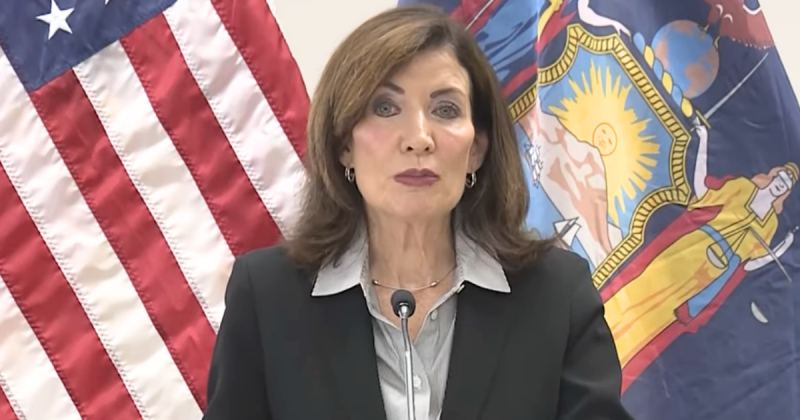
New York Gov. Kathy Hochul (D) declared January as the state’s first‑ever Muslim American Heritage Month and ordered 16 major landmarks, including One World Trade Center, to be illuminated in green to honor the heritage and culture of Muslim Americans.
While the governor framed the gesture as recognition of community contributions, critics have questioned the timing, choice of landmarks and political motivations behind the decision.
The landmarks set to glow green range from One World Trade Center in Manhattan to the Governor Mario M. Cuomo Bridge, Kosciuszko Bridge, Empire State Plaza in Albany, Grand Central Terminal, the State Education Building, Niagara Falls and several transportation gateways.
Hochul said the displays were intended to “recognize the diversity of its Muslim American population” and to protect communities from Islamophobia, hate, bias and harm.
“Home to the largest Muslim American population in the nation, New York is proud to join in this month‑long celebration,” Hochul said in a statement emphasizing the state’s commitment to tolerance and inclusion.
Support for the proclamation came quickly from elected officials of the Muslim faith.
New York City Mayor Zohran Mamdani—sworn in the day before the lighting order as the city’s first Muslim mayor—called the initiative a meaningful acknowledgment of the community’s role in the city’s life.
State Assemblyman Charles D. Fall and State Sen. Robert Jackson (D) said the proclamation affirms that Muslim New Yorkers are “seen, valued, and respected.”
However, conservative commentators and some residents criticized the decision to light One World Trade Center—the skyscraper built on the site of the original Twin Towers destroyed in the September 11, 2001, terrorist attacks—in green, a color considered sacred in Islam.
Critics on social media and public figures wrote that the choice was “tone‑deaf” and insensitive to the memory of the 9/11 victims and their families.
Some argued that honoring a religious community at a site attacked by extremists shows a disregard for historical context.
Opponents argued that honoring a religious community at a site attacked by extremists shows a disregard for historical context.
Critics also highlighted the timing of Hochul’s proclamation, which came shortly after a high‑profile inauguration of a Muslim mayor and in an election year.
Some conservative voices suggested that political calculations may have influenced the decision and that government resources should not be used for what they describe as symbolic gestures that overlook historical sensitivities.
Supporters counter that the lighting honors diversity and inclusion, contending that visible recognition of Muslim heritage counters prejudice and reflects New York’s multicultural identity.
They note that landmark lighting is not unprecedented; New York has previously illuminated state buildings for cultural observances such as Diwali and other heritage months to acknowledge important events and communities.
The color green carries significance in Islamic tradition, often associated with peace, paradise and renewal in religious art and symbolism.
Supporters say that using green for the displays reflects an effort to celebrate that cultural heritage rather than diminish historical memory.
As green lights shine across New York’s skyline, the initiative has sparked debate over the use of public spaces for cultural recognition, government symbolism and the balance between inclusivity and respect for historical events.
Some conservative commentators continue to describe the timing and choice of landmarks as politically opportunistic, while supporters see the gesture as a positive acknowledgment of Muslim Americans’ contributions to the state.
