

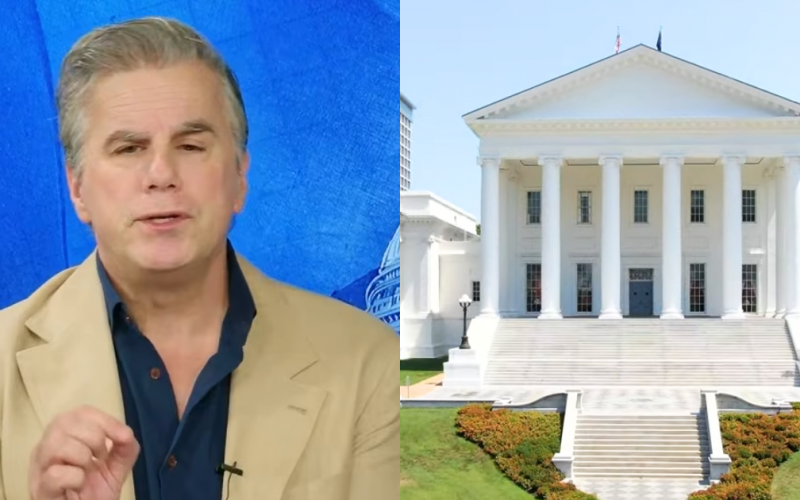
Judicial Watch is raising new concerns over Virginia’s voter rolls after state election records showed more than 6,500 registrations identified as belonging to “declared noncitizens” were canceled over a two-year period, fueling renewed debate over election integrity and citizenship verification ahead of the November election.
Documents released after a Judicial Watch records request show Virginia election officials canceled 6,531 registrations flagged as belonging to noncitizens between June 2024 and June 2026.
The documents were produced in response to a request filed by the conservative watchdog organization seeking information about programs designed to ensure the accuracy of Virginia’s voter lists.
Judicial Watch President Tom Fitton called the findings deeply concerning and urged additional review of how the registrations were identified and handled.
“It is disturbing beyond belief that as many as 6,531 noncitizens were registered to vote in Virginia,” Fitton said. “Judicial Watch is demanding more details and so should federal law enforcement.”
Fitton also pointed to a recent voter-roll controversy in New Jersey, arguing that the Virginia numbers could represent a broader issue involving election administration nationwide.
“These Virginia numbers show that the New Jersey noncitizen voter scandal is just the tip of the iceberg and is a national crisis,” Fitton said.
The New Jersey controversy involved records showing thousands of individuals identified as noncitizens appearing on voter registration lists, raising concerns among election-integrity advocates about how voter rolls are maintained.
Election officials have noted that appearing on a voter list does not by itself prove that an individual voted illegally.
The records released by Virginia did not include voting histories for the canceled registrations, meaning they do not establish whether any of the individuals whose registrations were removed actually cast ballots.
Virginia’s process for identifying possible noncitizen registrations relies in part on information from the state Department of Motor Vehicles.
According to an April opinion from the Virginia attorney general’s office, the DMV provides election officials with information about individuals who indicate they are not U.S. citizens when applying for or renewing a driver’s license or identification document.
Election officials use the DMV information to identify possible matches in the voter database, after which local registrars verify the records and provide notice before any cancellation occurs.
If a potential match is identified, local election officials must verify the match and send a notice informing the individual of the intent to cancel the registration.
The person has 14 days to submit a sworn statement confirming citizenship. If they do not respond, officials may cancel the registration.
The attorney general’s opinion also noted that the process can sometimes produce incorrect flags, including situations where eligible citizens may accidentally indicate noncitizen status while completing DMV forms.
The issue has drawn additional attention after Virginia entered into a settlement with advocacy groups that paused certain removals of declared noncitizens from voter rolls during the 90-day period before federal elections.
Critics argued the pause could limit election officials’ ability to update voter lists before Election Day, while supporters said the move protects against improper removals close to elections.
Federal law prohibits noncitizens from voting in federal elections and makes it a crime to knowingly claim U.S. citizenship for the purpose of registering or voting.
Judicial Watch said it is seeking additional records from Virginia to better understand the canceled registrations and whether further action is needed.
The organization has previously pursued voter-roll lawsuits and transparency efforts in several states, arguing that election officials have a responsibility to maintain accurate voter lists.
The findings are expected to add fuel to the ongoing national debate over election security, citizenship verification, and the balance between maintaining accurate voter rolls and protecting eligible voters from being wrongly removed.
