

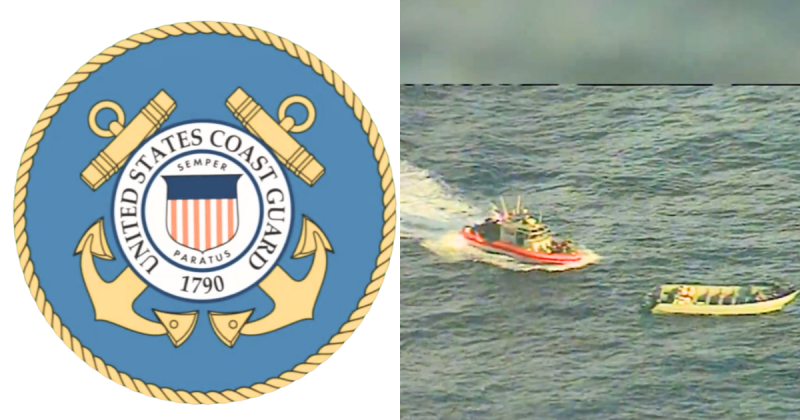
A U.S. Coast Guard cutter seized more than 20,000 pounds of cocaine from a single vessel in the eastern Pacific this week, marking one of the largest maritime drug interdictions in nearly two decades.
The operation was conducted by the crew of USCGC Munro, based in Alameda, California, as part of “Operation Pacific Viper,” a Trump administration initiative aimed at disrupting transnational drug trafficking along Pacific corridors.
Footage released by the Coast Guard shows teams pursuing a high-speed vessel with multiple individuals aboard. A helicopter disabled the boat before the Munro arrived to secure the narcotics.
Officials have not disclosed the status of those on board.
“Our maritime fighting force is leading America’s drug interdiction operations, protecting the homeland and keeping deadly drugs out of American communities,” the Coast Guard said on social media.
Initiated in August 2025, Operation Pacific Viper targets smuggling routes traffickers increasingly use to evade Caribbean and Gulf interdictions.
Since its launch, the Coast Guard reports recovering over 40,000 pounds of cocaine, averaging approximately 1,600 pounds daily.
The Munro interdiction represents the largest single-vessel haul in roughly 18 years, highlighting the growing volume of narcotics transported through the Eastern Pacific.
The Trump administration’s counter-narcotics strategy has occasionally drawn scrutiny for employing lethal strikes on certain high-risk vessels, including a controversial second strike on survivors of a Sept. 2 incident.
Federal officials defend these measures as necessary to dismantle sophisticated trafficking operations and prevent dangerous narcotics from reaching U.S. communities, according to CBS News.
This operation coincided with Caribbean interdictions, where Colombian authorities seized more than seven tons of cocaine from two vessels, valued at over $340 million and arrested 11 individuals, according to WTRF.
Such coordinated enforcement efforts emphasize the regional scale of drug trafficking and the persistent threat posed by highly organized networks.
Historical context underscores the significance of the Munro’s seizure.
In 2007, Reuters reported that the cutter USCGC Sherman intercepted the Panamanian-flagged M/V Gatun, which carried 42,845 pounds of cocaine, one of the largest maritime hauls at the time.
Combined with cumulative Pacific Viper results, the 2025 interdiction signals an unprecedented level of maritime enforcement in recent decades.
Officials attribute the success of these operations to integrated tactics involving cutters, helicopters and interagency intelligence.
Rapid-response boarding teams, aerial surveillance and cutter support allow authorities to counter increasingly sophisticated smuggling techniques, including fast-moving vessels specifically designed to evade detection.
Beyond the immediate interdiction, analysts note that the seizure could have broader implications for U.S. public safety and drug supply.
By removing large quantities of cocaine from circulation, operations like Pacific Viper help reduce availability on American streets, potentially lowering overdose risks and associated criminal activity.
Interdictions also send a strong deterrent message to traffickers considering Pacific smuggling routes.
Law enforcement sources indicate that Operation Pacific Viper and other counter-narcotics initiatives will continue, ensuring the Eastern Pacific remains a strategic priority for U.S. efforts.
The Munro seizure serves not only as a deterrent but also as a benchmark for assessing the effectiveness of maritime enforcement strategies against sophisticated transnational drug networks.
WATCH:
