

CNN launched what it called an “experiment” last week, rolling out podcast-inspired set changes for two of its flagship programs.
The move drew swift criticism from media insiders, rival outlets, and even CNN’s own employees.
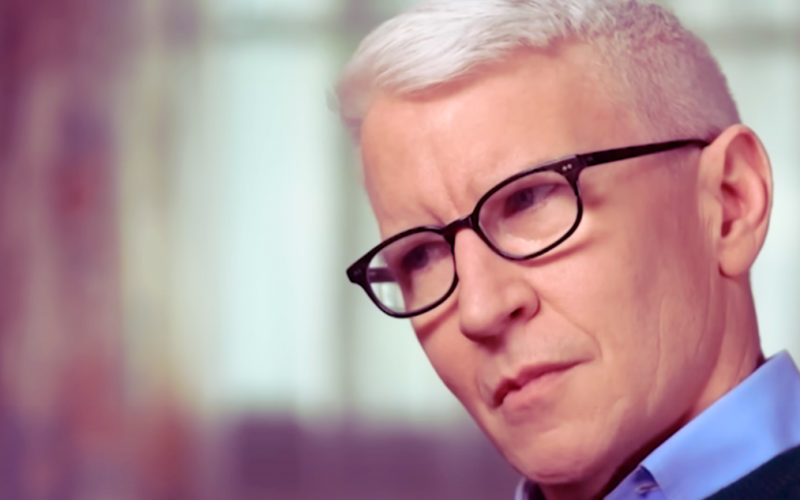
Anderson Cooper began anchoring his primetime show, Anderson Cooper 360, from the newsroom rather than his traditional studio, taking over a table regularly used by CNN data analyst Harry Enten.
Cooper appeared without a jacket and with rolled-up sleeves while speaking into a large desk microphone.
During one panel discussion, he and his guests used a physical map on the table to discuss the Strait of Hormuz, departing from the interactive map he had used earlier in the week.
On Friday, Jake Tapper anchored the first hour of The Lead from his office, similarly accompanied by a large microphone on his desk.
Tapper addressed viewers directly about the change.
“So, you’re probably wondering what’s going on, why we’re in my office for the first hour of ‘The Lead’ today. So, it’s an experiment,” a tieless Tapper told viewers.
“This is my actual desk where I do my actual work, not the desk in the studio. And we thought we would bring you into the space where we and my team do our actual journalism and plan the show every day.”
Tapper showcased his office decor filled with memorabilia from losing presidential campaigns while guests sat on a couch adjacent to his desk.
Tapper’s experiment lasted only the first hour of Friday’s show, while Cooper’s changes carried over into the following week.
A person familiar with CNN’s thinking told Status the podcast format has become a “natural environment” for Cooper, and with the network in special programming, there was an opportunity to experiment with “different deliveries” for news.
The reaction from the media industry was largely negative.
Independent YouTuber Keith Edwards told Status, “It’s kinda like rearranging furniture in a burning house. It shows they fundamentally don’t understand why audiences are leaving.”
Another insider told the Status newsletter that CNN is “a little late to the party” and the move reeks of “desperation” from the network.
A former executive said, “I’m not convinced that podcast microphones and behind-the-scenes shots are enough to move the needle.”
CNN’s own staffers voiced doubts as well.
One CNN insider told Fox News Digital, “The network has been static for far too long. I applaud the experimentation. The question is whether this is the experiment you want to be running.”
A second CNN staffer described the changes as an attempt by CNN at “being something we aren’t.”
“Podcasts are a place people go not because of the look, but because of the product,” they said.
The staffer referenced Joe Rogan as an example, noting, “He’s smart and all those great things, but ultimately he’s not trying to be a journalist.”
The staffer added, “You need looser personalities, not just looser sets.”
Former cable stars who now operate independently weighed in as well.
Former CNN host Piers Morgan said on a Monday broadcast alongside former Fox News host Megyn Kelly,
“They are trying to look like us. We are unencumbered spirits. They cannot say the same. They are still living the old, mainstream media television rules.”
Kmele Foster, who also appeared on Megyn Kelly’s program, noted, “The fact that they are trying so hard to kind of lean into the podcaster aesthetic is telling. What they have to understand is that this is not just about aesthetics.”
Former CNN digital journalist Chris Cillizza, now an independent, said that “the fact that CNN thinks putting mics in front of its anchors” represents a fundamental misreading of why audiences have migrated to independent media.
WATCH:
Former CNN anchor Chuck Todd echoed those sentiments, telling TheWrap that the differentiator for independent media is that “no one’s scripting them. No one’s telling them what to say, telling them how they should say it.”
