

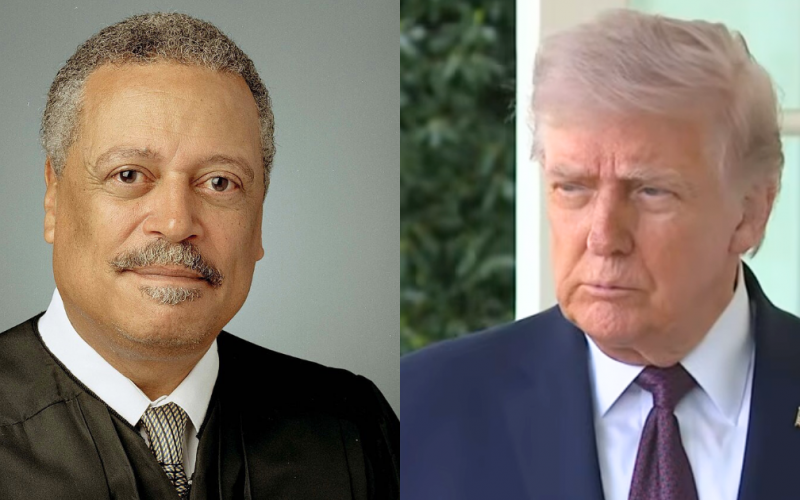
A federal judge has blocked a Trump administration effort to impose new conditions on mail-in voting procedures, ruling that the U.S. Postal Service (USPS) cannot enforce proposed rules tied to state election compliance requirements.
U.S. District Judge Emmet Sullivan, appointed by former President Bill Clinton, issued the order Wednesday, preventing USPS from implementing provisions that would have required states to submit voter information lists and adopt specified ballot handling standards before receiving mail-in ballot delivery services.
The proposed rule originated from a March executive order issued by President Donald Trump that sought to establish uniform standards for mail-in ballot processing and condition USPS services on state compliance with federal requirements.
Under the proposal, USPS could have declined to deliver ballots from states that failed to meet those conditions.
Sullivan found the policy conflicted with a 2021 settlement agreement between the Postal Service and the NAACP, which required USPS to take “extraordinary measures” to ensure timely delivery of election mail, including mail-in ballots.
The agreement also placed USPS election mail practices under ongoing judicial oversight, according to Newsmax.
In his ruling, Sullivan wrote that USPS could not adopt policies that effectively allow refusal or delay of ballots based on state compliance, concluding that such a system would violate its obligations under the settlement to prioritize election mail.
The decision follows earlier litigation brought by nearly two dozen states that challenged similar provisions of the executive order and secured injunctions blocking enforcement within their jurisdictions.
Wednesday’s ruling extends those restrictions nationwide.
The case is part of a broader series of legal challenges involving federal election policy changes, including another recent ruling that blocked portions of a separate executive order related to voter registration and mail voting eligibility standards.
The NAACP, a party to the original settlement, argued the proposal would have introduced new conditions on election mail that could affect voters who rely on mail-in ballots.
Civil rights attorneys said the restrictions conflicted with USPS obligations to ensure timely and uniform delivery of ballots nationwide, Tampa Free Press reported.
Public Citizen Litigation Group and the NAACP Legal Defense Fund also supported the challenge, arguing the USPS is bound by the settlement to prioritize election mail without additional compliance-based restrictions.
They said the rule risked delaying ballot delivery in certain states.
A White House spokesperson previously defended the executive order, telling Fox News Digital that it was intended to establish consistent federal standards for ballot handling and strengthen election integrity.
The administration maintains the policy falls within executive authority over federal election procedures.
Sullivan’s ruling does not resolve the broader legal dispute over the executive order itself but blocks enforcement of the challenged provisions while litigation continues.
USPS has not said whether it will revise the rule or appeal.
The case remains ongoing as courts continue to review multiple challenges to federal election policies and the scope of executive authority over mail-in voting procedures.
