

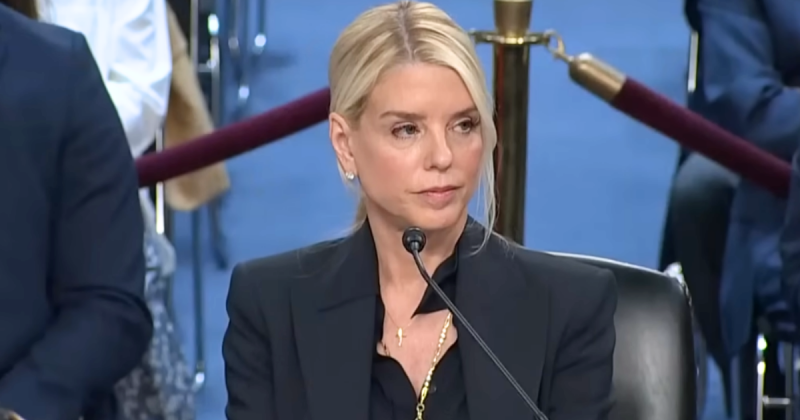
House lawmakers are preparing to take decisive action against Attorney General Pam Bondi after the Department of Justice (DOJ) released heavily redacted files tied to the late sex trafficker Jeffrey Epstein.
Reps. Thomas Massie (R-KY) and Ro Khanna (D-CA), co-sponsors of the Epstein Files Transparency Act, said the department withheld critical documents, arguing the release violates both the letter and intent of the law.
The Epstein Files Transparency Act, passed with near-unanimous support and signed by President Trump, requires the DOJ to make all case files related to Epstein publicly available.
While the department posted hundreds of thousands of pages on Friday, many key documents were redacted or omitted, including records implicating prominent individuals connected to Epstein’s activities.
Massie expressed frustration on CBS News’ “Face the Nation,” stating, “They’re flouting the spirit and the letter of the law. It’s very troubling the posture that they’ve taken.”
Khanna added that survivors viewed the limited release as “a slap in the face,” noting it failed to include files detailing “the rich and powerful men who visited Epstein’s rape island and covered up the abuse.”
In response, the lawmakers are drafting a resolution to hold Bondi in inherent contempt, a rarely used congressional authority allowing fines or imprisonment for officials who refuse to comply with laws or subpoenas.
Massie called it “the most expeditious way to get justice for these victims,” noting the process avoids lengthy court proceedings.
Khanna said the effort is gaining bipartisan support and could empower a congressional committee to assess the legality of the DOJ’s redactions.
Under the proposed measure, Bondi could face fines for each day the DOJ fails to release the complete set of documents, according to the Washington Times.
Massie emphasized he will not consider the matter resolved until survivors confirm that all relevant files have been made available.
Victims’ attorneys have reportedly identified at least 20 men reported to the FBI for involvement in Epstein’s sex crimes.
“They’ve described their professions in general, but they’ve only given me one of those names, and I mentioned that in a congressional hearing, Jes Staley,” Massie said.
Lawmakers also criticized the DOJ for citing previous statutes, including the Privacy Act and Freedom of Information Act standards, to justify redactions.
Massie said the department’s argument that earlier laws override the Epstein Files Transparency Act “wouldn’t survive first contact with any court,” while Khanna noted legal scholars deemed many redactions excessive, especially internal communications and workforce material.
Among the missing materials is a 60-count indictment initially drafted against Epstein, only two counts of which were prosecuted.
Khanna said lawmakers also aim to identify “the other people who were on Epstein’s rape island, who saw young girls being paraded around at parties, 13, 14, 15 year olds and didn’t say anything.”
Deputy Attorney Todd Blanche, who oversaw the release, said the DOJ plans to make “several hundred thousand more” documents available in the coming weeks.
According to The Hill, he explained the removal of certain files, including a photo of President Trump, was prompted by concerns from Epstein and Maxwell victims, not political motives.
Massie and Khanna framed their actions as a challenge to a “corrupt system” protecting elites. By pursuing inherent contempt, they hope to ensure transparency and send a clear message that congressional law cannot be ignored.
The lawmakers said the effort is intended to compel accountability and give victims confidence that the full scope of Epstein’s crimes and those complicit will be revealed.
WATCH:
