

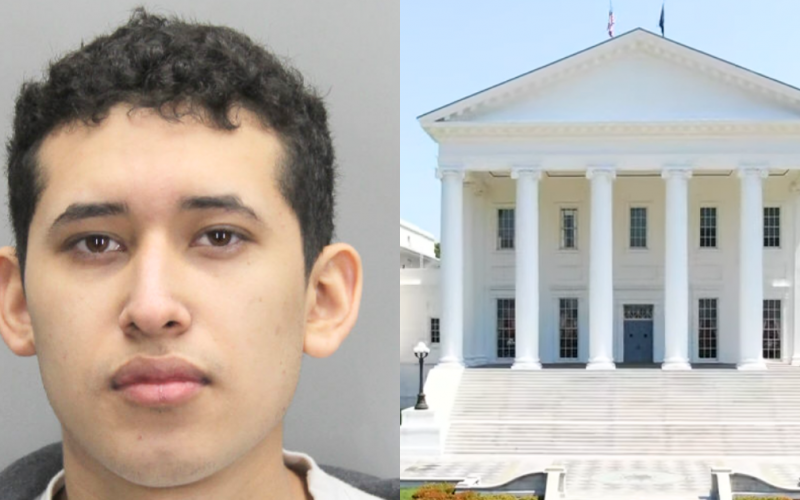
A recent arrest in Fairfax County has sparked national attention on Virginia’s policy allowing certain English learners to remain in high school until age 22.
Nineteen-year-old Israel Flores Ortiz, accused of groping multiple teenage girls at a local high school, has ignited debate over student safety, immigration enforcement, and education policies.
Ortiz reportedly entered the U.S. in 2024 illegally and was released into the community under federal policies that provided limited supervision.
Fairfax County prosecutors initially sought his release, but a judge denied the request, keeping him in custody pending the investigation.
Local law enforcement has indicated ICE detainers will not be honored without a formal judicial order.
The case highlights the effects of Virginia Code § 22.1-5, which allows students whose first language is not English and who first enroll in Virginia after age 12 to remain in high school until 22, provided state funding is available.
While designed to help displaced youth complete their education, the law can result in adults attending classes alongside teenagers, raising obvious safety concerns.
According to the Washington Examiner, some school districts in Northern Virginia have seen adults in hallways and classrooms with students as young as 14, creating uncomfortable and potentially dangerous situations for parents and staff alike.
Parents and educators have voiced alarm over older students in high school settings.
Officials argue the policy supports language acquisition and academic completion, but critics warn that unsupervised adults near minors can create unsafe environments.
Special education students are legally allowed to stay until 22 but typically remain under close supervision, demonstrating the importance of oversight when older students are present.
“No parent expects adult strangers roaming hallways with their children,” one Fairfax parent told reporters.
Immigration policy and local prosecutorial decisions also factor into the discussion, the Daily Presser noted.
Federal border and enforcement actions, combined with local discretion, influence who is released into communities and schools.
Critics argue that prioritizing release over public safety increases risk when violent or inappropriate conduct is alleged.
Local prosecutors’ decisions to favor release have sparked outrage among parents, educators, and taxpayers concerned about accountability.
Financial considerations add another dimension. ESL programs require specialized instruction, additional staff, and translation services.
Extending eligibility to older students diverts resources from younger learners and other educational priorities.
Families dealing with crowded classrooms and stretched resources have raised concerns about whether policy adjustments are needed to protect both learning environments and safety.
Conservative commentators argue that this policy places an unnecessary burden on taxpayers while putting children at risk.
Practical measures could preserve the intent of the law while improving security. Schools can implement stricter screening and supervision standards for older ESL enrollees.
Prosecutors and local officials can prioritize community and victim safety while coordinating with federal authorities.
Proper oversight ensures students benefit from language programs without placing younger peers at risk.
Experts recommend creating age-specific classrooms, increasing monitoring for students over 18, and conducting background checks before enrollment for adult learners.
The Ortiz case has renewed calls for lawmakers, school boards, and administrators to review policies allowing adults in high schools.
Balancing safety for teenagers with educational opportunities for displaced youth requires clear age limits, structured supervision, and coordinated enforcement measures.
Parents expect schools to be secure spaces for learning, and incidents involving alleged criminal behavior by adult students undermine that trust.
As the debate continues, Virginia communities are demanding accountability and common-sense reforms to ensure education policies do not unintentionally endanger children.
WATCH:
