

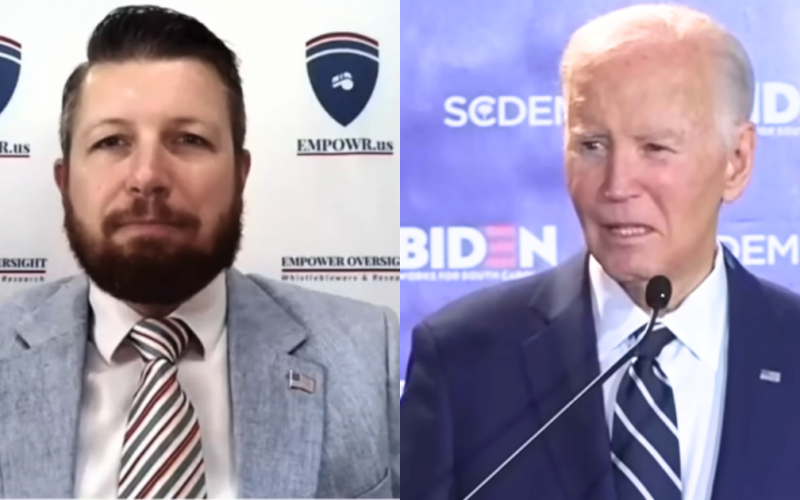
A veteran Drug Enforcement Administration (DEA) agent has alleged that, during the Biden administration, federal authorities allowed large quantities of fentanyl to enter New Mexico communities as part of long-running investigations targeting drug trafficking organizations, raising renewed scrutiny over federal enforcement tactics during the ongoing opioid crisis.
The allegations come from DEA Special Agent David Howell, a long-serving investigator whose whistleblower disclosures have been reviewed by multiple news organizations.
According to reporting and legal filings, Howell contends that agents observed major fentanyl shipments but were directed in some cases not to seize the drugs immediately as part of broader investigative strategies aimed at dismantling trafficking networks operating in the Albuquerque region.
Attorney Tristan Leavitt, president of Empower Oversight and Howell’s legal counsel, said Howell first raised internal concerns after participating in a federal wiretap investigation in which agents were instructed to delay enforcement action on known fentanyl shipments.
Leavitt also said Howell’s disclosures ultimately expanded into claims that more than one million counterfeit pills may have been left unseized during extended operations designed to track higher-level traffickers.
He added that Howell was later removed from courtroom testimony roles after expressing objections to the tactic and has since called for congressional and inspector general review of the DEA’s practices, according to Just the News.
Howell submitted a formal whistleblower complaint to the U.S. Office of Special Counsel in 2023, outlining instances in which he believed federal agents and prosecutors knowingly allowed large fentanyl deliveries to proceed under surveillance operations.
The complaint prompted OSC officials to refer the matter for further review after identifying what they described as a credible basis to examine potential misconduct in how the cases were handled.
Federal agencies have defended the investigative approach, stating that decisions to monitor rather than immediately seize narcotics were tied to court-authorized wiretaps and long-term efforts to identify and dismantle entire trafficking networks.
Officials said the strategy was used selectively and weighed against operational goals, including targeting larger suppliers rather than individual transactions at the street level, the Associated Press reported, per NBC 5.
Former U.S. Attorney Alex Uballez, who served in New Mexico, has acknowledged that law enforcement sometimes permits limited movement of narcotics during active investigations to gather intelligence on larger organizations.
He said prosecutorial decisions often reflect resource constraints and the goal of disrupting broader supply chains rather than focusing solely on individual seizures.
Internal Justice Department guidance governing fentanyl investigations was originally developed in 2017, directing agents to prevent distribution of the synthetic opioid whenever feasible due to its extreme lethality.
According to publicly described revisions and internal summaries, the policy was later updated in 2024 to provide investigators with greater discretion, allowing them to balance immediate interdiction with the potential benefits of continuing surveillance in complex trafficking cases.
Howell has argued that the consequences of allowing fentanyl shipments to remain in circulation cannot be precisely measured, since authorities often cannot track where each pill ultimately ends up after entering the illicit market.
He has maintained that even limited lapses in interception during surveillance operations may have contributed to overdose deaths, though officials have disputed the ability to directly link specific shipments to individual fatalities.
Leavitt and other advocates are now calling for formal congressional hearings and an independent Justice Department inspector general investigation into whether investigative decisions in New Mexico reflected broader policy failures.
Lawmakers have begun referencing the allegations as part of wider scrutiny into federal fentanyl enforcement strategy and its impact on overdose rates nationwide.
WATCH:
