

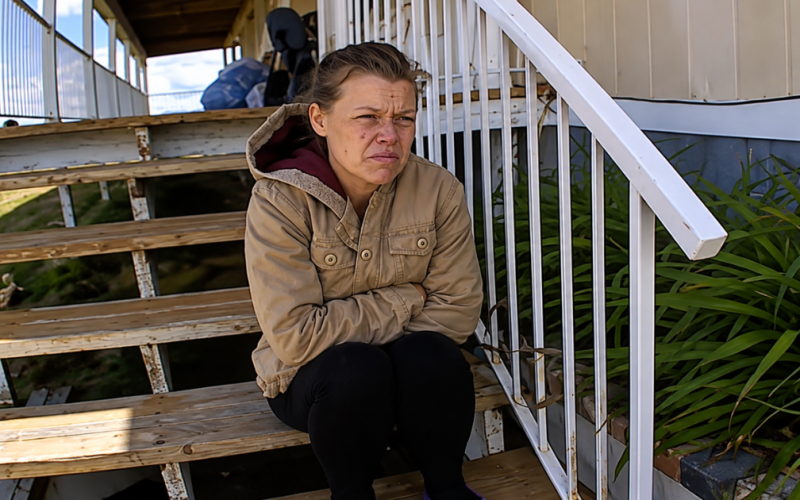
A Nevada woman who spent more than two years behind bars after being convicted of manslaughter over her own miscarriage has won a $1.6 million settlement following a years-long legal battle.
Patience Rousseau, 34, was prosecuted under a little-used Nevada law dating back to 1911 after authorities claimed her drug use caused the death of her unborn child.
Her conviction was eventually overturned, and the case was permanently dismissed in 2025.
Now, Rousseau is set to receive approximately $1.2 million of the $1.6 million settlement, with the remainder covering legal expenses and reimbursing Nevada for an earlier $100,000 settlement.
The agreement does not amount to an admission of wrongdoing by Humboldt County.
Rousseau’s ordeal began in 2018, when she was living in Winnemucca and discovered she was pregnant.
At the time, she had recently escaped homelessness and was staying in the home of an older man involved in drug dealing.
Rousseau was struggling with depression and substance abuse and said she wanted to terminate the pregnancy.
Her car had broken down, leaving her unable to make the roughly 165-mile trip to Reno for an abortion.
She then began searching online for ways to end the pregnancy herself.
According to the report, she consumed large amounts of cinnamon and lifted heavy objects because she believed those actions might cause a miscarriage.
Neither method is medically established as a way to terminate a pregnancy.
Two months later, Rousseau delivered a stillborn boy whom she named Abel.
She buried his remains in her backyard and later posted an emotional message online apologizing to him.
Within weeks, however, she was arrested and charged with felony manslaughter.
Prosecutors used an obscure statute passed in 1911 that criminalizes taking drugs with the intent to terminate a pregnancy after 24 weeks.
Rousseau became the only woman known to have been prosecuted under the law.
Investigators first focused on the cinnamon before shifting their attention to her use of methamphetamine, marijuana and cigarettes during pregnancy.
Prosecutors argued that her drug use showed an intent to end the pregnancy and made her responsible for the baby’s death.
Rousseau eventually pleaded guilty after being advised to do so by her public defender.
She entered prison in 2019 and remained incarcerated for more than two years.
A new attorney later challenged the conviction.
Lawyer Laura FitzSimmons argued prosecutors had failed to establish that Rousseau’s drug use caused the miscarriage.
The county medical examiner had been unable to determine the baby’s cause of death.
FitzSimmons also argued that Rousseau’s substance abuse predated the pregnancy and was not necessarily evidence of an intentional attempt to terminate it, per the Daily Mail.
Another key issue involved the timing of the pregnancy.
Rousseau did not know precisely when she had become pregnant, raising questions about whether she even knew she had passed the law’s 24-week threshold.
In 2021, her conviction was overturned after a court found she had received ineffective legal representation.
Even then, the case did not immediately end.
Humboldt County officials considered prosecuting Rousseau again.
That possibility remained until 2025, when the charges were dismissed with prejudice, permanently preventing another prosecution in the case.
The legal battle also exposed another controversy involving Abel’s remains.
A 2024 investigation reported that the baby’s ashes had ended up with deputy sheriff Jacqueline Mitcham, one of the officers involved in Rousseau’s arrest.
Mitcham allegedly took the ashes with her after moving to Texas.
Rousseau said she only learned what had happened through media reporting.
Her attorneys claimed Mitcham held personal resentment toward Rousseau in part because of anti-abortion views.
As part of the settlement, Abel’s ashes were finally returned to Rousseau.
“That meant everything to me,” she said.
Civil rights attorney Paola Armeni, who represented Rousseau in the settlement claim, said the case inflicted severe emotional damage.
Rousseau’s lawyers accused Humboldt County of violating her constitutional rights, breaking state law and intentionally causing emotional distress.
The settlement was finalized in August, with the money arriving last week.
Rousseau said the payment cannot undo what happened to her or her children.
“They fought so much to avoid paying me,” she said.
“I went through so much and so did my children, who are still facing these issues. It’s not fair.”
She now lives in South Dakota with three of her sons and says she is sober.
Rousseau continues to struggle with depression, loneliness and the stigma surrounding her former conviction.
She said one of her children is receiving treatment for anger problems she believes stem from the separation caused by her imprisonment.
Rousseau plans to use the settlement to pay off her home, buy a car for her mother and start a business selling rare aquatic plants and animals.
She also made clear she has no desire to return to Nevada.
“I don’t ever want to come back to Nevada again, or honestly ever see any of the people in Winnemucca again,” Rousseau said. “They ruined it for me.”
