

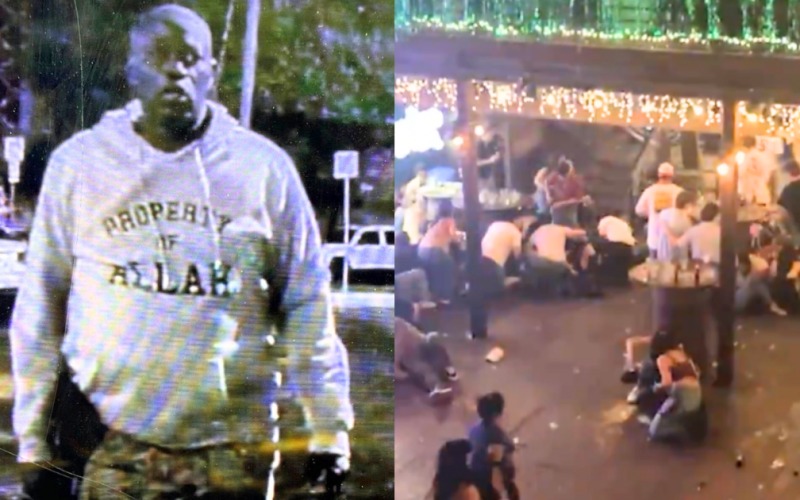
Three Austin police officers who confronted a mass shooting at Buford’s Backyard Beer Garden over the weekend are now facing scrutiny as authorities review the incident.
Ndiaga Diagne, believed to be responsible for the deaths of three individuals and injuring over a dozen more, was killed by officers as they stopped the violent rampage.
Attorney Doug O’Connell, representing the officers via the Austin Police Association, praised their decisive response.
“These three acted heroically to stop a killer who threatened our community. We are standing with them as they navigate the official review process,” O’Connell said, highlighting the challenges officers face under current prosecutorial guidelines.
The victims included 30-year-old Jorge Pederson, 19-year-old Texas Tech student Ryder Harrington, and 21-year-old University of Texas student Savitha Shan.
Authorities noted that Diagne wore a sweatshirt reading “Property of Allah” over a shirt displaying the Iranian flag during the attack, raising concerns about a potential terrorist connection.
Concerns have also been raised about the role of the Wren Collective, a nonprofit linked to over 40 district attorneys nationwide, including Travis County DA Jose Garza.
The Law Enforcement Legal Defense Fund (LELDF) noted that Wren significantly shapes criminal justice policies, including bail, charging, sentencing, and police-involved shootings, a point highlighted by The Post Millennial
The group noted that Wren’s guidance is often adopted almost verbatim by elected prosecutors.
LELDF explained that the collective’s policies extend into nearly every aspect of prosecutorial discretion, including how officers’ use of force is reviewed.
In Austin, this structure requires the district attorney to submit any officer-involved shooting to a grand jury, with the DA controlling what evidence is presented and what is excluded.
O’Connell stressed the challenges this framework presents.
He noted that while officers acted decisively to stop a mass shooter, they must now navigate a legal review process heavily influenced by outside policies, highlighting the tension between law enforcement actions and progressive prosecutorial oversight.
Whiskey Riff reported that the grand jury review has drawn national attention, with conservatives raising alarms that law enforcement officers who act decisively to prevent mass casualties could face unnecessary legal jeopardy.
The outlet highlighted how the review process, influenced by progressive prosecutorial policies, may place officers in a precarious position, potentially discouraging proactive intervention in violent situations.
The reporting emphasized the officers’ heroism in confronting Diagne, emphasizing that they acted quickly to stop a suspect who had already killed three people and injured more than a dozen others.
Whiskey Riff also underscored the broader implications of politically influenced prosecutorial oversight, warning that such frameworks could create a chilling effect on policing nationwide, where officers might hesitate to take decisive action for fear of facing legal scrutiny.
The Wren Collective’s influence has been the subject of criticism from law enforcement advocates who argue that the organization’s uniform policies undermine local discretion and place officers at risk of legal entanglements for doing their duty.
LELDF’s report asserts that Wren’s involvement in DA offices allows the organization to shape how serious criminal incidents, including homicide and police misconduct investigations, are handled.
As Austin moves forward, the grand jury will determine whether the officers acted within the law.
Meanwhile, local and national observers continue to debate the appropriate balance between accountability, prosecutorial oversight, and the need to protect officers who confront violent threats in real time.
