

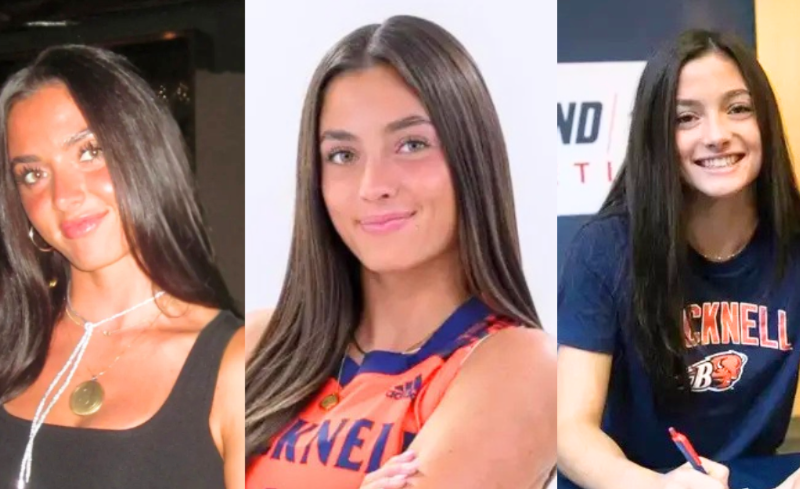
Rachel Apa entered the New York City Marathon with a specific purpose. She wanted to raise money to fight Parkinson’s disease, the illness that killed her grandfather.
The 24-year-old never crossed the finish line. She collapsed Sunday at Mile 24 in Central Park, close to 85th Street, at about 1:30 p.m.
Apa was pursuing an MBA at Charleston Southern University. In a LinkedIn post, she explained what her grandfather meant to her.
“My grandfather was one of my role models growing up. He taught me to stay active, push my limits, and embrace challenges,” Apa wrote.
Her father, Steve Apa, told the New York Times that rhabdomyolysis killed her. The rare muscle condition can result from physical exertion.
“It’s unfathomable. Perfect health, perfect shape, 24 years old,” he said.
Steve Apa followed the race from his home in Lewisberry, Pennsylvania, using the marathon’s tracking app.
He sent his daughter a text of encouragement at every mile as she made her way through the five boroughs and toward the final leg in Central Park.
Her answers grew shorter as the miles passed. At Mile 18, she wrote back “Ow,” he said. At Mile 19, she wrote “Ow ow.”
She sent nothing at miles 20, 21 or 22, though the app showed her still moving. At Mile 23, he texted her: “Final stretch.” Soon after, he saw on the app that she had stopped moving.
Near Mile 24, spectator Michaela Nicholas spotted a runner in green wearing bib No. 29977 with the name “Rachel” printed on it. Nicholas shouted, “Let’s go, Rachel, you got this!”
Seconds later, Apa fell to the ground.
Nicholas, who works as a hospital social worker, ran to the runner and searched for a pulse. She found none. Her fiancée called out for a doctor.
Three bystanders began CPR, and two of them said they were physicians. Nicholas held Apa’s hand and told her she was not alone, she told the Times.
Marathon medical staff used a defibrillator on Apa. Paramedics arrived by ambulance, and Apa’s mother, who had been waiting near the finish line, hurried to the scene.
Paramedics took Apa to Mount Sinai Medical Center.
Doctors worked for more than six hours to save her, then declared her dead at around 9:40 p.m., her father said. About eight hours passed between her collapse and that declaration.
Rhabdomyolysis, nicknamed “rhabdo,” is the rapid breakdown of skeletal muscles attached to the bones.
Damaged muscle releases compounds into the bloodstream that the body is not designed to process, including the protein myoglobin and potassium.
Those compounds can clog the kidneys, poison the tissue and cause renal failure. Potassium pouring out of injured muscle cells can also trigger fatal cardiac arrhythmias and cardiac arrest.
High-intensity exercise and prolonged workouts can bring on the condition. So can muscle injuries from car crashes, burns and electric shocks, as well as certain medications.
Doctors often treat rhabdo with IV fluids, which can stop it from progressing to severe kidney damage that requires dialysis.
According to the Cleveland Clinic, many survivors live with muscle weakness for weeks, and doctors may recommend months without exercise.
The New York Road Runners said the last marathon runner to die after a medical incident did so in 2024.
“We are deeply saddened by the death of one of our runners,” the group said in a statement.
The statement continued: “Our thoughts and sincere sympathies are with the runner’s family, friends, and the entire running community.”
