

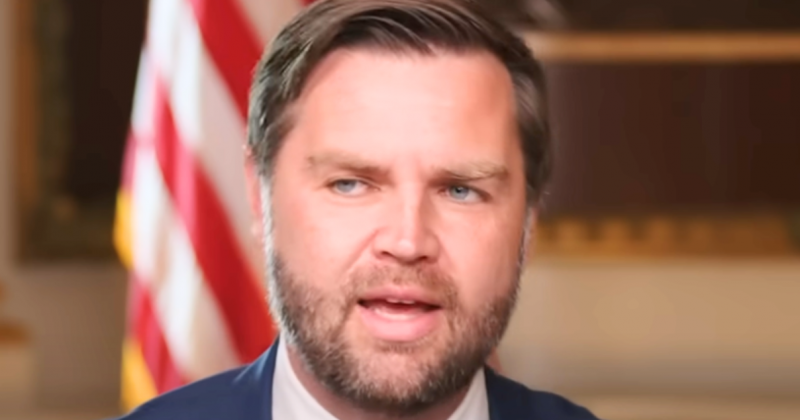
A résumé entry, a Detroit speech and a state party convention address now anchor a public clash between Vice President J.D. Vance and Michigan U.S. Senate candidate Abdul El-Sayed.
Vance raised the matter on a podcast hosted by Mark Halperin. A clip of his remarks went up on social media Monday.
The record at the center of the dispute stretches back more than a decade.
In 2011, El-Sayed wrote a Huffington Post piece arguing that Americans have nothing to fear from the Muslim Brotherhood, a group the U.S. State Department designates a terrorist organization.
“Even if the Muslim Brotherhood were to take power [in Egypt], there are several reasons why the ensuing state would look nothing like Iran,” El-Sayed insisted. He also wrote that the Brotherhood definitely would not resemble Hamas.
One year later, he joined 46 Egyptian leaders in the United States in signing a letter that backed then-Egyptian President Mohamad Morsi, a senior Muslim Brotherhood leader.
The letter urged Morsi to “purge the media and police.”
Morsi granted himself broad powers soon after taking power. Egypt’s military removed him in 2013, ending a presidency that lasted just over a year.
Days after Morsi took office in 2012, El-Sayed’s half-sister, University of Chicago assistant professor Eman Abdelhadi, posted a message of her own: “My family has long been MB.”
The Washington Free Beacon later reported on her account of the family’s history.
“Their mother, Fatten Elkomy, was active in the Brotherhood in college in Egypt in the 1970s, Abdelhadi said,” the outlet wrote.
On July 3, 2013, Abdelhadi published a separate X post.
“I have had family jailed for being a part of it,” she wrote, adding, “Praying for all my family that supports the #MB in Egypt. Lie low, stay safe.”
El-Sayed’s own words on citizenship came next. His 2014 academic résumé stated that he held American and Egyptian citizenship, the Free Beacon reported.
In 2016, El-Sayed told an audience in Detroit, where he served as city health director, that he had “dual citizenship” in Egypt and the United States.
His campaign has since offered an explanation. It says El-Sayed spoke in “error” after an unnamed relative misinformed him that he was a citizen of both countries.
The campaign says he has “never” held dual citizenship. It has declined to say when he discovered the mistake or who gave him the wrong information.
The third statement came in 2017 at the Michigan Democratic Party’s spring convention.
El-Sayed, who was born in a Detroit suburb in 1984 to Egyptian parents, was running for governor at the time.
“I’m done with this notion that certain kinds of people cannot rise up to be a part of leadership in this society,” he told the crowd.
He then said, “We have an opportunity to rethink the way we do government, despite the fact that I may be an immigrant from North Africa.”
The Free Beacon described the comment as “the most recent example of El-Sayed suggesting he is something other than a full-blown American-born citizen.”
Vance told Halperin that one question would top his list if he could sit across from El-Sayed. “Why would you lie and say you didn’t come from America, when you did?” the vice president said.
He then widened his critique.
“And what does it say about the prevailing social attitudes of American elites that a person would actually feel compelled to lie about whether they had come from this country, as if it was something to be ashamed of?” Vance added.
Vance also commented on El-Sayed’s upbringing.
“The lack of gratitude he shows to the United States of America, the fact that he was raised by a couple of white step-grandparents but seems to have a real sense of revulsion toward native-born Americans, I don’t get it. I don’t know where it comes from, and it makes me think that there’s something very dark,” he said.
El-Sayed also faced accusations of lying earlier this month.
During an interview with NBC “Meet the Press” host Kristen Welker, he claimed his family had no ties to the Muslim Brotherhood. Abdelhadi’s earlier posts then circulated widely.
