

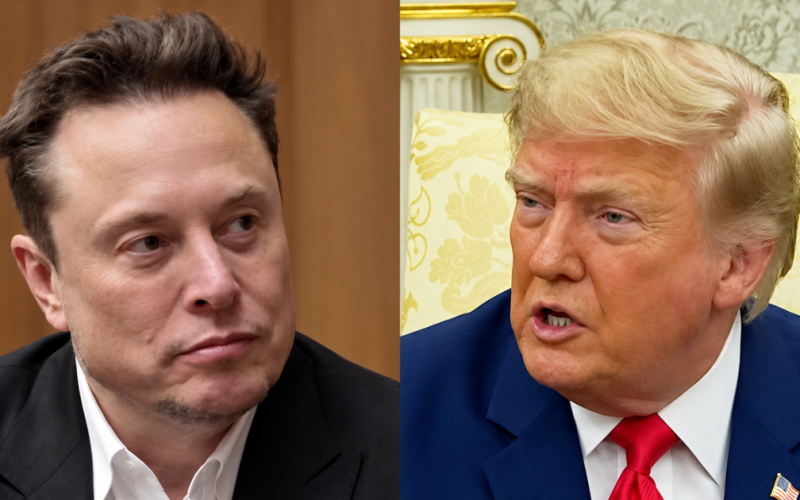
Elon Musk is pushing back after Ukrainian and European officials initially blamed him for a slowdown involving Starshield, the military version of Starlink being used in Ukraine.
Musk said Wednesday that decisions involving restrictions on Starshield are made by the U.S. government, ultimately pointing responsibility toward the Trump administration rather than SpaceX.
“Starshield systems are owned and controlled by the US government,” Musk said.
“Any limits on speed or usage are decided by the US military and ultimately POTUS.”
The comments came after Ukrainian President Volodymyr Zelensky warned that restrictions affecting Starshield could have deadly consequences for Ukrainian forces battling Russia.
Ukraine has relied heavily on Starshield for military communications, drone operations and logistics throughout the conflict.
Ukrainian forces recently noticed that connectivity was being limited when drones reached speeds of approximately 160 kilometers per hour or faster.
Officials said the restriction disrupted multiple active operations against Russian forces.
Zelensky described the situation as a serious mistake.
“It’s a big mistake,” Zelensky told “Piers Morgan Uncensored” on Wednesday. “People will die.”
Musk drew a distinction between Starshield and the commercial Starlink service operated by SpaceX.
“Starlink is a commercial service owned and controlled by SpaceX,” he said.
“Usage of Starlink is limited to civilian or defensive activities and cannot be used for offensive military action, as doing so would be inappropriate for a commercial company.”
Starshield, however, operates under arrangements involving the U.S. government.
The Pentagon, through the Space Force, contracts with SpaceX for Starshield services.
That relationship gives the Defense Department a direct role in administering the government’s agreements involving the system.
Still, questions remain over precisely who has authority to impose individual operational restrictions.
A Ukrainian official familiar with the matter noted that the existence of the Pentagon contract alone does not establish whether the U.S. military or SpaceX controls every specific limitation, including the disputed speed restriction.
Ukraine’s defense minister, Mykhailo Fedorov, later announced some progress.
By approximately 2 p.m. Eastern Time Wednesday, Fedorov said connectivity for systems traveling at speeds of up to 160 kilometers per hour was being restored.
“Removing Starshield’s speed limit entirely is now critical for Ukraine’s defense,” Fedorov said.
He also thanked Musk and expressed hope that his support for Ukraine would continue.
The controversy comes during another difficult period in the war.
The Trump administration has recently criticized Ukraine over attacks on Russian oil refineries amid concerns about high diesel prices ahead of the midterm elections.
Ukraine’s strikes on Russian energy infrastructure have become another point of tension as Washington weighs the economic and political consequences of the continuing war, according to the New York Post.
Russia, meanwhile, launched another series of attacks against Ukraine on Tuesday.
Ukrainian officials said those attacks included a ballistic missile strike and claimed the United States did not provide advance warning for the second consecutive night.
Washington has previously shared intelligence warnings with Ukraine regarding potential Russian attacks.
The Starshield dispute therefore emerged at a particularly sensitive moment.
Ukraine depends heavily on satellite communications to coordinate operations and maintain drone capabilities while fighting Russian forces.
Even temporary restrictions can interfere with military missions that depend on reliable high-speed connectivity.
Initial anger was directed toward Musk because of SpaceX’s central role in satellite communications.
Musk’s statement, however, shifted attention toward the U.S. military and President Donald Trump by arguing that the government controls Starshield and decides how its military capabilities can be used.
With connectivity reportedly being restored at certain speeds, Ukrainian officials are now pressing for the remaining limitations to be lifted completely.
For Zelensky, the stakes extend beyond technology.
His warning was direct: any restriction that weakens Ukraine’s ability to defend itself could ultimately cost lives.
