

Contractors cheating the Union Army prompted Congress to act in 1863. More than a century and a half later, the law born from those allegations sits at the center of a new unit inside Washington’s federal prosecutor’s office.
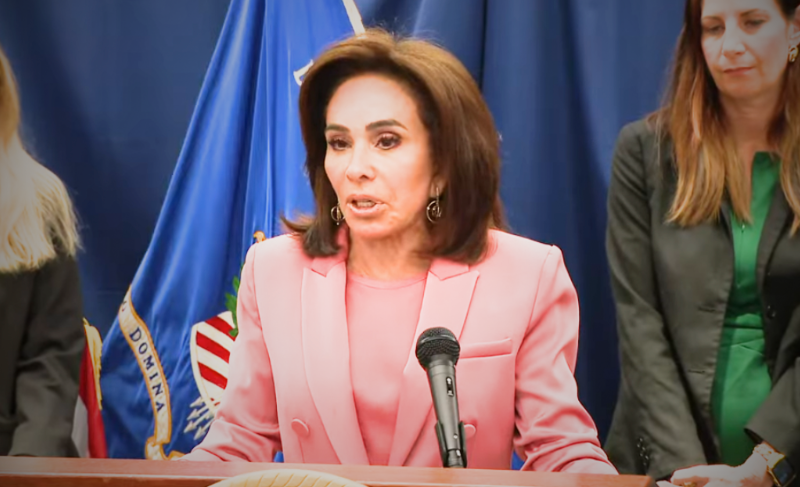
The U.S. Attorney’s Office for the District of Columbia unveiled the Fraud and Asset Recovery Division on Wednesday. U.S. Attorney Jeanine Pirro oversees the office and announced the change.
The unit brings prosecutors, investigators and financial specialists together under one banner. Their combined mission covers civil fraud cases and the collection of money owed to Washington.
Pirro linked the move to the White House’s priorities. “President Trump has prioritized the elimination of fraud, waste, and abuse involving federal agencies and programs,” she said.
“We are sending a clear message: those who cheat the federal government will face decisive, coordinated action.”
That 1863 statute, the False Claims Act, remains the division’s main instrument. It authorizes the government to sue companies and individuals accused of knowingly filing false claims for federal money.
Health care programs, government contracts, grants, and procurement programs all fall within its reach, along with other areas where federal dollars change hands.
The penalties have grown since the Civil War. Current law lets the government collect up to triple its damages and adds civil penalties adjusted for inflation.
Private citizens also hold a role. A whistleblower provision lets people who know of alleged fraud sue on the government’s behalf.
Those plaintiffs, known as relators, receive a portion of any eventual recovery when their cases succeed.
Numbers from the Justice Department show how active the statute has become. Fiscal 2025 produced more than $6.8 billion in settlements and judgments, the largest annual total the law has ever generated.
Whistleblowers contributed a record 1,297 qui tam lawsuits that year. The government opened another 401 investigations on its own.
Congress overhauled the statute in 1986. Settlements and judgments since then have surpassed $85 billion.
Pirro’s office handles a large share of the country’s major federal civil cases because of its Washington location.
By the office’s account, its prosecutors have brought in billions of dollars through False Claims Act and other civil enforcement matters.
Those cases involved allegations ranging from improper government-contract billing to pharmaceutical and medical-device violations.
Inside the office, a different unit carried much of that load until now. The Affirmative Civil Enforcement unit, part of the broader Civil Division, handled fraud investigations.
The Civil Division also defends federal agencies and officials who face lawsuits. According to the office, that defensive work increasingly drew on the same resources the fraud cases required.
The new division takes over much of the affirmative work and houses prosecutors, investigators, auditors and support personnel together.
Dan Schiffer leads it as chief. Sean M. Tepe serves as deputy chief for operations.
The division’s responsibilities stretch past False Claims Act cases.
The Financial Litigation Unit now operates inside it, collecting criminal fines, restitution, special assessments, civil judgments, settlements, and other debts owed to the federal government.
Certain debts owed to federal agencies, including qualifying student-loan obligations tied to the Department of Education, also fall to that unit.
Civil asset forfeiture joins the portfolio, as does enforcement of subpoenas issued by federal agencies and inspectors general.
A separate body, the National Fraud Enforcement Division, operates at the national level.
Acting Attorney General Todd Blanche created it in April to coordinate criminal and civil fraud enforcement across federal jurisdictions.
It supports Trump’s Task Force to Eliminate Fraud, which Vice President JD Vance chairs, and links prosecutors, investigators, benefit agencies, and government data systems to identify suspected fraud schemes.
The Justice Department has not announced the division’s eventual headcount, any added funding, or its first major targets.
