

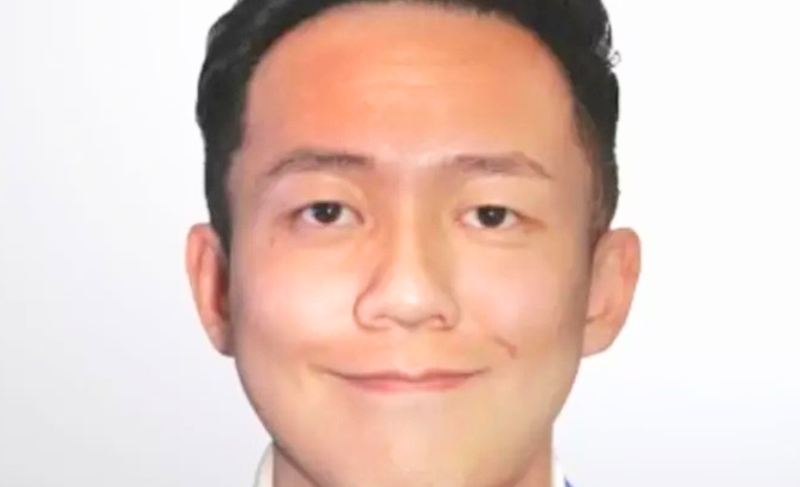
A member of a California state lawmaker’s office staff now sits in federal custody after immigration agents determined he had been living in the country without legal status for years, according to officials.
Ho-Yin Mo, who worked for Democratic Assemblywoman Catherine Stefani, was taken into custody by Immigration and Customs Enforcement agents at Harry Reid International Airport in Las Vegas last week.
Federal officials laid out a timeline showing Mo’s legal presence in the United States expired years before his arrest.
The Department of Homeland Security said Mo entered the country lawfully in January 2020 but was obligated to leave by May 15 of that year.
He did not leave. DHS said in a statement that Mo “illegally overstayed his welcome by failing to depart by May 15, 2020,” placing his unlawful presence at more than six years, according to the U.K. Daily Mail.
Long before landing a job in Stefani’s office, Mo had already carved out a visible role in San Francisco’s political and media landscape.
Originally from Hong Kong, he spent time as an outreach organizer for former Mayor London Breed, whose re-election bid failed despite running in one of the nation’s most reliably Democratic cities.
Mo’s résumé also includes a stint on television. He worked as an anchor for KTSF, a San Francisco station that broadcasts in Chinese.
The arrest quickly drew commentary from federal law enforcement officials framing it as a matter of consistent legal application.
Bill Essayli, first assistant U.S. attorney for the Central District of California, took to the social media platform X to weigh in.
“No one is above the law, not even the California legislature and its staff,” Essayli wrote.
Stefani responded by publicly demanding her staffer’s release, warning that deportation to Hong Kong could follow. Her statement praised Mo’s work and pushed back against the arrest.
“My message today is simple: I am respectfully calling for Ho Yin Mo’s release as soon as possible,” Stefani said. “Ho Yin is a selfless public servant and a valued, legal employee of the California state Legislature serving our San Francisco and Bay Area communities.”
Questions lingered Tuesday about exactly how the arrest unfolded.
An ICE statement pointed to Mo’s involvement in air travel within the country, rather than an international flight in or out of the U.S., though full details were not immediately available.
Immigration officials used the case to reinforce a broader point about legal status and paperwork. “Work authorization or a pending application do NOT confer legal status in the United States,” ICE said.
The agency also connected the arrest to a policy shift dating back to the start of the current administration.
“DHS reversed the horrendous Biden-era policy that allowed aliens in our country illegally to jet around our country. Under President Trump, DHS will no longer tolerate this,” the statement read.
Stefani’s own record includes a notable clash with a major national organization well before this controversy.
Prior to her state Assembly career, she sat on the San Francisco Board of Supervisors.
During her tenure there, she authored a 2019 resolution branding the National Rifle Association a “domestic terrorist organization,” which the board subsequently passed.
Speaking to the San Francisco Chronicle at the time the resolution passed, Stefani defended the designation in blunt terms.
“The NRA exists to spread disinformation and knowingly puts weapons in the hands of those who would harm and terrorize us,” she said.
Mo’s dual background in broadcast journalism and Democratic political operations has added an additional layer of attention to the case, given his prior visibility in Bay Area civic life.
As of Tuesday, federal authorities had not released a timeline for resolving Mo’s case, and it remained unclear whether deportation proceedings had formally begun.
Stefani’s office likewise had not clarified Mo’s current employment status with the Assembly.
The arrest adds to an expanding list of immigration enforcement actions cited by federal officials as evidence of a stricter approach under the Trump administration, one that has increasingly touched political offices previously seen as insulated from such scrutiny.
