

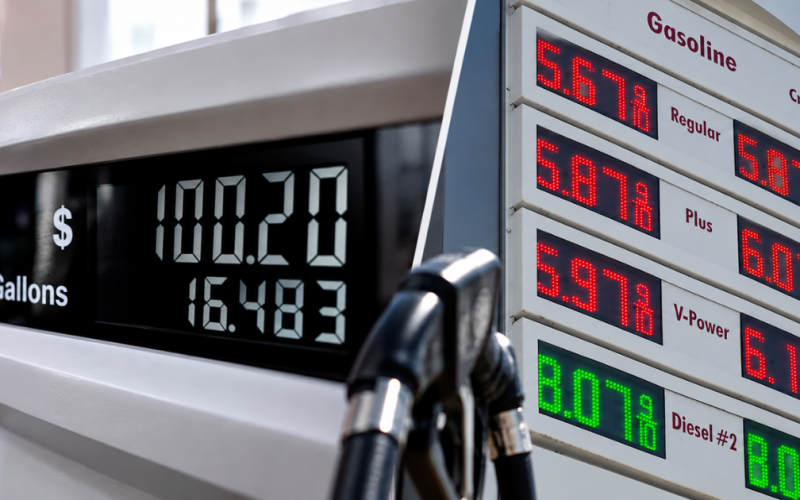
Gasoline and diesel prices climbed sharply across the U.S. Wednesday, with analysts warning motorists could face additional increases as disruptions in global oil markets continue to pressure fuel supplies.
The national average for regular gasoline reached about $4.37 per gallon on Sept. 16, according to AAA, up from roughly $4.33 one day earlier and $4.22 a week ago. A year earlier, drivers were paying about $3.19 per gallon.
Diesel prices have increased even faster, reaching a national average of about $6.31 per gallon Wednesday. AAA data showed the figure was the highest national average for diesel on record, surpassing previous highs set during the 2022 energy price surge.
Tom Kloza, chief energy adviser for Gulf Oil, warned that retailers were still catching up with wholesale price increases and said drivers in some parts of the country could see particularly sharp jumps.
“Watch for huge increases in Great Lakes and Rocky Mountain states in particular,” Kloza wrote, according to The Washington Post.
GasBuddy petroleum analyst Patrick De Haan also warned that gasoline and diesel prices were positioned for another increase over the following 48 hours, particularly in portions of the nation’s interior.
The increases come at an unusual point in the year. Gasoline prices typically begin declining after Labor Day as summer driving demand falls and refiners transition to less expensive winter-grade fuel. Instead, pressure from international energy markets has outweighed the normal seasonal decline.
AAA reported that California had the highest average gasoline price in the country Wednesday at about $6.04 per gallon. Washington, Hawaii, Alaska, Nevada and Oregon were also among the states where prices remained particularly elevated.
The latest increase has been driven in part by higher crude oil prices and concerns about energy transportation routes in the Middle East. Brent crude remained above $100 per barrel Wednesday as markets reacted to continuing supply risks and disruptions involving key shipping and pipeline infrastructure.
Saudi Arabia’s East-West oil pipeline has also suffered damage from drone attacks, creating additional pressure on energy markets.
Reuters reported Wednesday that Saudi Arabia was offering additional crude to Asian refiners through alternative loading arrangements in Oman as it dealt with the pipeline disruption. Some September shipments to European customers were also canceled or delayed, per Trending Politics.
The pipeline normally provides Saudi Arabia with an important route for moving crude to Red Sea ports while bypassing the Strait of Hormuz, a major chokepoint for global energy shipments. The original report cited continued disruptions involving the strait as another factor contributing to rising prices.
Diesel costs could have broader economic consequences because the fuel is heavily used by trucking companies, farms and freight operators. Higher diesel prices can increase transportation expenses for food, merchandise and other goods, potentially adding costs throughout supply chains.
AAA’s Wednesday figures showed regular gasoline was roughly $1.18 per gallon more expensive than it was one year earlier, while diesel was more than $2.60 per gallon higher.
