

A political trade is now on the table in Washington: Keep Republicans in charge of Congress, and a $5,000 check could land in the mailbox of every adult American citizen.
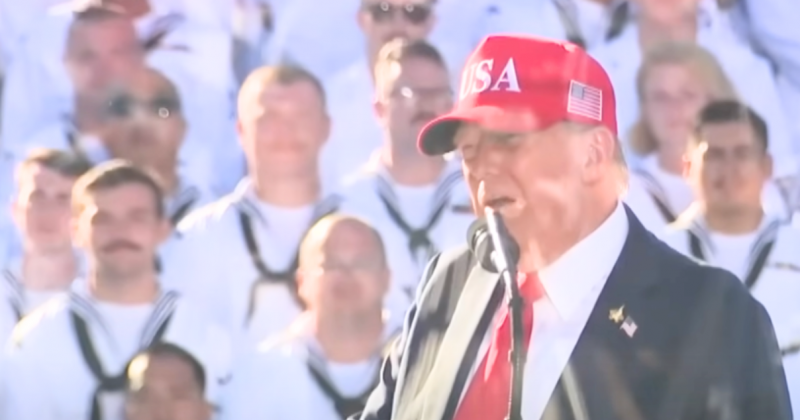
That was the pitch President Donald Trump delivered Wednesday night before a packed room at the Republican Party’s midterm convention in Dallas, where his remarks stretched nearly two hours.
Buried inside that lengthy address was a single sentence that instantly became the headline of the night.
“Here is my promise: If the Republicans win the House of Representatives and the United States Senate, I will issue a dividend to every adult citizen in the United States of America for $5,000,” Trump declared.
Nothing about the payment is guaranteed. It hinges entirely on the outcome of November’s midterm elections and whether the GOP holds both chambers of Congress.
Behind the promise sits a federal balance sheet already stretched thin, with the national debt climbing past $40 trillion.
Fiscal year 2025 alone added roughly $1.8 trillion to that pile, according to figures released by the Congressional Budget Office.
Now stack a nationwide $5,000 payment on top of that. Economists calculate the total cost near $1.2 trillion, based on an adult citizen population of about 240 million people.
Where would that money actually come from? The administration has yet to spell it out.
Vice President JD Vance stepped in after the speech to fill some of the gaps, telling Fox News that the wealthiest Americans may be left out of the payout entirely, a detail that could trim the overall price tag.
“What the president is talking about is fundamentally a dividend for American workers,” Vance said.
His explanation for funding the dividend rested squarely on trade policy and the revenue generated by tariffs imposed under the Trump administration.
“We’re taking an extraordinary amount of revenue because the president of the United States is standing up to both foreign companies but also foreign countries who have been taking advantage of America’s workers,” Vance said.
The numbers tell a mixed story. Treasury records show a record-setting $34.2 billion collected in customs duties in just one month, with total collections since January climbing to roughly $208.5 billion.
Even that sum falls dramatically short of the $1.2 trillion price tag attached to Trump’s proposed checks.
Complicating matters further, those tariff figures represent gross revenue only. They don’t reflect refunds tied to tariffs the Supreme Court later invalidated.
Billions of dollars have already been returned to importers as a result of that ruling, shrinking the pool of tariff money the government can actually count on.
Vance cast the proposal as a payoff for loyalty at the ballot box, urging voters to see a direct connection between their vote and their wallet.
“If you keep us in power and allow us to continue to do these things, then you’re going to share in some of the benefit of this incredible wealth that we are creating in the United States of America,” Vance said.
Specifics remain scarce. The White House has released no eligibility criteria and no formal plan detailing how the dividend would be funded or distributed.
Trump has described the payment in corporate terms, likening it to a dividend a thriving company might issue to its shareholders, and has said the money would need to be spent inside the United States.
None of it moves forward without action from Capitol Hill.
Congress holds the authority to approve or reject the plan, since the president cannot issue the payments on his own.
This isn’t the first cash proposal to come from Trump’s administration. A previous plan called for $2,000 tariff-funded checks, and another floated returning a share of federal savings directly to taxpayers.
Both of those earlier ideas stalled and never became law.
Trump closed his Dallas remarks by tying his political future directly to the outcome of the midterms, framing the election as a test of his agenda.
“If the Republicans win, you win with us,” Trump said. “Now all we have to do is win.”
Whether the $5,000 dividend ever reaches American bank accounts now depends on what happens at the ballot box this November.
