

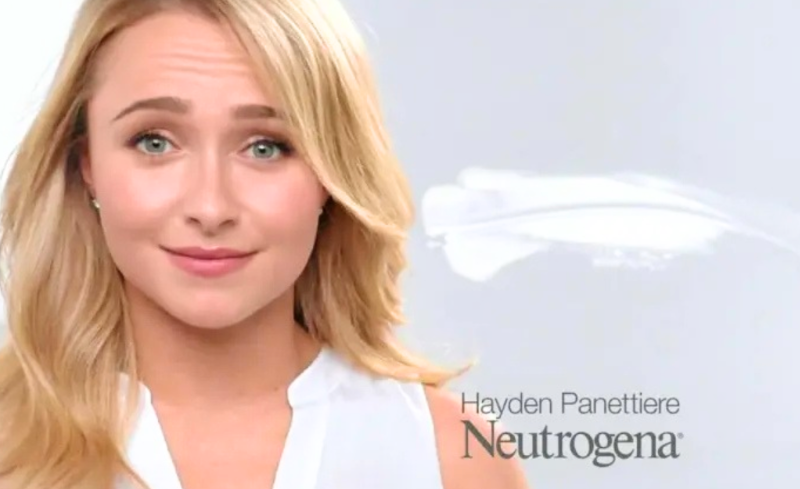
A public reckoning has arrived for Neutrogena, four months after Hayden Panettiere first accused the company of dropping her over a postpartum depression admission — and only after the actress’s sudden death forced the brand’s hand.
The cosmetics company broke its silence Thursday in an Instagram post, conceding that its 2015 decision to sever ties with Panettiere left her feeling abandoned during one of the hardest chapters of her life.
“We understand that we made her feel unsupported during a very difficult time,” Neutrogena wrote. “This is not what Neutrogena stands for or who we want to be.”
Grief permeated much of the statement, with the company describing Panettiere as a decade-long fixture of its brand and voicing pride in having worked alongside her.
Executives pointed to Panettiere’s willingness to discuss her mental health publicly as a turning point for broader cultural conversations, crediting her with helping “inspire important conversations and awareness.”
As a gesture toward amends, Neutrogena announced plans to direct funding toward an established health partner focused on expanding postpartum depression resources for women, though no dollar figure or timeline accompanied the pledge.
“We are making a significant investment to a long-standing community health partner to help give more women access to the support they need, including care for postpartum depression,” the company stated.
Neutrogena defended its months-long silence as a matter of respect for the Panettiere family during their mourning period, ending its message with condolences to “Hayden’s family and all who loved her.”
The saga began well before Panettiere’s death, when her memoir, “This Is Me: A Reckoning,” hit shelves in May and detailed her version of events — including her claim that Neutrogena invoked a morality clause to justify cutting her loose.
According to the book, the fallout stemmed from complications surrounding the 2014 birth of her daughter, Kaya, whom she had with former partner Wladimir Klitschko.
Panettiere described a brutal delivery in graphic detail: “I labored with Kaya for 14 hours and was in surgery for three hours after she was born,” followed by a recovery marked by disorientation and severe pain.
The toll of her postpartum struggles extended into her professional life, ultimately leading to her departure from the television series “Nashville” — a blow she said clashed with her deep pride in showing up as a professional.
She wrote candidly of the compounding losses that followed, noting Neutrogena’s exit came as “yet another blow in a year that had given almost nothing else,” even as fans and media largely rallied behind her.
Panettiere’s relationship with Neutrogena stretched back to 2005, when the company signed her as a teenage spokesmodel who would go on to headline global campaigns for roughly ten years.
That partnership unraveled in the weeks following her candid September 2015 television appearance on “Live! with Kelly and Michael,” where she opened up about her diagnosis.
She told the show’s hosts that postpartum depression was “something that’s completely uncontrollable,” using the words “really painful” and “really scary” to capture the experience, while urging greater support for women facing it.
Speaking again on the “Jay Shetty” podcast in May, just months before her death, Panettiere admitted she never anticipated losing the Neutrogena deal over her honesty, calling it “the last thing that I thought they would ever fire me over.”
She recounted her representative’s immediate objection to the move: “That’s illegal. You can’t do that,” though Panettiere clarified the company technically avoided firing her by simply letting the contract expire unrenewed.
News broke Sunday that Panettiere had been found dead in South Carolina at age 36, with early reports citing an apparent drug overdose.
The revelation ignited fury online, with a wave of fans organizing calls for a boycott of Neutrogena products in the wake of her death.
“I will never buy one of their products again in my life,” one fan wrote, a sentiment that spread rapidly across social platforms in the days that followed.
Old Neutrogena marketing content also resurfaced amid the backlash, including a lighthearted 2023 Threads post about friendship and skincare habits that took on a darker meaning in hindsight.
Commenters flooded the resurfaced post with criticism, one writing that the message “did not age well” and accusing the company of mistreating the late actress.
Another user’s blunt reply — “Friends don’t drop friends when they’re suffering but hey” — captured the broader public mood toward the brand this week.
Neutrogena has yet to specify which organization will receive its promised donation or when further updates will be shared with the public.
