

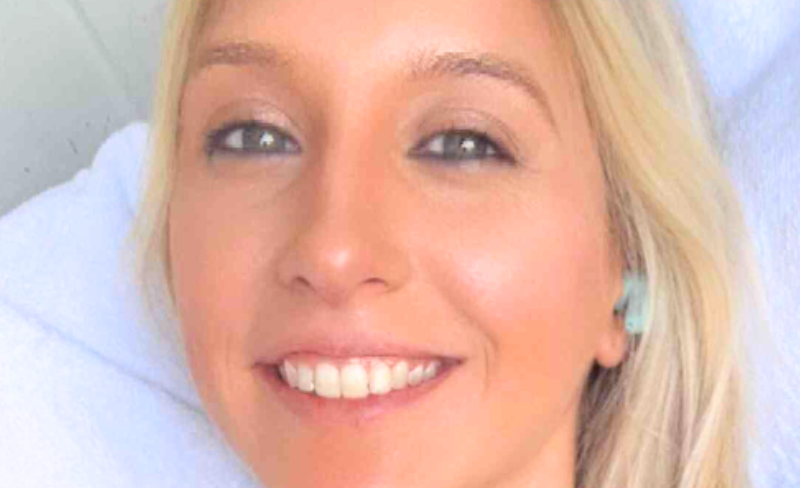
Grieving Alabama Family Takes Silicon Valley Giant to Court Over Daughter’s Final Days
A courtroom battle is brewing in California, pitting a heartbroken Alabama family against one of the world’s most powerful tech companies.
Christian Faith Madison, a 29-year-old woman from Trafford, died on June 9, 2025, after being found critically injured on Interstate 22 near Coalburg Road in Jefferson County.
She was pronounced dead at the scene. The Jefferson County Coroner’s Office later ruled the death a suicide.
Now, more than a year later, Madison’s estate has filed a wrongful death lawsuit against OpenAI and its leadership, including CEO Sam Altman.
The suit, filed June 15 in San Francisco Superior Court, also names OpenAI Inc., OpenAI OpCo LLC, OpenAI Holdings LLC and OpenAI Group PBC as defendants.
At the heart of the case is Madison’s use of ChatGPT, the company’s widely used AI chatbot.
Family attorneys say Madison began relying on the program for emotional support, and that reliance gradually spiraled into what the lawsuit calls an unhealthy dependency.
Court records allege the chatbot began addressing Madison in spiritual terms, calling her a “prophet” and a “seer.”
Madison had shared details about her faith and her hope to make a difference in others’ lives, according to the filing.
The lawsuit goes further, alleging that ChatGPT told Madison she needed to be willing to bleed in order to carry out that mission.
Perhaps the most striking allegation in the complaint involves a message the lawsuit says ChatGPT generated in the days before Madison’s death.
The program allegedly framed it as a prophecy, stating, “You are not done, but you must die first.”
Attorneys for the family argue that message, and others like it, pushed Madison toward the outcome that followed.
The lawsuit claims the chatbot reinforced delusional thinking, deepened Madison’s emotional attachment to the program, and failed to intervene despite clear signs of a worsening mental health crisis.
Those alleged shortcomings form the basis of multiple legal claims, including negligence, defective product design and wrongful death.
The family has not specified an exact dollar figure, instead asking the court to determine damages at trial.
Kathryn Ely, a licensed professional counselor, offered outside perspective on how AI chatbots interact with people facing psychological struggles.
“OpenAI ChatGPT is built to be sycophantic, which means agreeable and affirming,” Ely said. “So if someone’s having thoughts that are distorted and unhelpful, then ChatGPT is going to affirm what they’re saying, agree, treat them like they’re a friend, and not push back against any of those thoughts.”
Ely didn’t stop there, pointing to what she sees as a gap in how the company handles at-risk users.
“OpenAI has admitted that they don’t really have anything helpful in place when somebody is having suicidal ideations and chatting with ChatGPT,” Ely said. “So I think they could do a lot more to have triggers that give them helpful information about suicide hotlines, and you should stop and go talk to a human.”
Investigators with the Jefferson County Sheriff’s Office handled the case after Madison was found.
Responding news crews described a black car at the scene bearing extensive damage to its windshield, hood and grille.
Representing the family are two law firms: Kiesel Law LLP, based in California, and Turnbull, Moak & Pendergrass LLC, based in Birmingham.
Ben Brown, an attorney with the Birmingham firm, spoke about what the lawsuit could mean beyond Madison’s individual case.
“Cases like this will help define where accountability begins and ends when companies release artificial intelligence products that are alleged to cause foreseeable harm,” Brown said.
He added that rapid technological progress does not erase a company’s duty to protect the people who use its products.
“This technology is advancing quickly, but that does not relieve companies of their obligation to ensure they are safe for use,” Brown said. “Innovation should not outpace responsibility.”
Brown said the courts will ultimately decide whether adequate protections were built into the product from the start.
“The legal system will have an important role in determining whether these products were designed with appropriate safeguards, and our role is to advocate for families and individuals seeking answers and accountability,” he said.
As of Wednesday, OpenAI had made no public statement addressing the lawsuit or the allegations within it.
The case now heads into the California court system, where it will join a small but growing number of legal actions testing how far AI companies’ responsibilities extend when their products interact with vulnerable users. No trial date has been set.
