

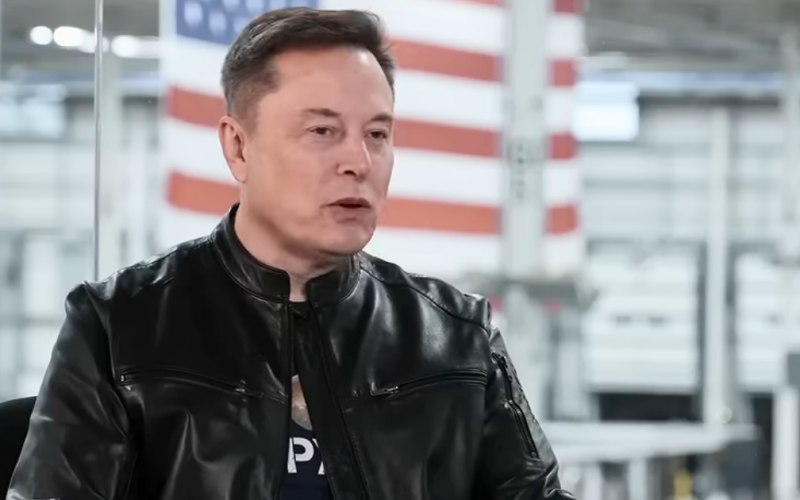
Elon Musk could face legal consequences after the Wisconsin Elections Commission determined there was probable cause that he violated the state’s election bribery law by offering $1 million checks connected to the 2025 Wisconsin Supreme Court election.
The commission voted 5-1 to refer two complaints against Musk to Brown County District Attorney David Lasee’s office for review.
The complaints, filed by voters, remain confidential under state law, and prosecutors will decide whether to pursue charges.
The complaints center on America PAC’s decision to give three Wisconsin petition supporters $1 million checks after they participated in a campaign opposing what Musk described as “activist judges.”
The PAC also offered $100 to registered voters who signed the petition or referred others to sign it.
The commission’s motion stated that it found probable cause Musk violated a state law prohibiting offering anything of value to induce someone to vote, according to The Post Millennial.
Musk’s involvement came during a high-profile Wisconsin Supreme Court race in which he spent millions supporting Republican-backed candidate Brad Schimel.
Musk and groups connected to him spent more than $20 million during the campaign, but Schimel ultimately lost to Democratic-backed candidate Susan Crawford.
The race became the most expensive judicial election in U.S. history, with combined spending from both sides exceeding $100 million.
Before the election, Musk announced the giveaways through posts on X, stating that he would hand out checks to individuals connected to the petition effort.
He later awarded two $1 million checks at a rally in Brown County shortly before voters went to the polls.
Wisconsin Attorney General Josh Kaul, a Democrat, previously attempted to stop the payments through legal action, arguing they violated state election laws, but state courts declined to block the giveaways before the election, according to TIME.
Musk’s attorneys have argued that the payments were part of a political advocacy effort and were not intended to influence how voters cast their ballots.
Legal filings stated that the giveaways were part of a political advocacy effort rather than an attempt to influence how voters cast their ballots.
Musk’s attorneys argued that blocking the payments would interfere with his First Amendment rights and restrict protected political speech.
The legal dispute is separate from another lawsuit filed against Musk, America PAC, and related organizations by the Wisconsin Democracy Campaign and two voters.
That lawsuit alleges the payments violated Wisconsin’s election bribery laws and constituted an unauthorized lottery.
The case seeks to prevent similar cash giveaways to voters in future elections and remains pending in Brown County, according to CBS News.
The Wisconsin controversy is not the first time Musk’s voter incentive programs have faced legal scrutiny.
Similar $1 million giveaways during the 2024 presidential race triggered challenges in other states.
Those efforts also faced legal challenges, including a lawsuit from Philadelphia District Attorney Larry Krasner, who argued the payments violated Pennsylvania election and lottery laws. A judge allowed the payments to continue.
The Wisconsin Elections Commission consists of three Democratic members and three Republican members, making the 5-1 vote a bipartisan decision.
Under state law, the Brown County district attorney has 40 days to notify the commission about whether prosecutors will pursue the complaints.
Musk’s representatives did not immediately comment following the commission’s decision.
The referral marks another legal challenge involving political spending and voter incentives as officials examine whether Musk’s payments crossed the line from political advocacy into prohibited election activity.
Musk has maintained that the effort was aimed at promoting political participation.
WATCH:
