

The Supreme Court on Friday struck down President Donald Trump’s effort to end birthright citizenship, ruling 6-3 that the administration’s executive action violated the Constitution and reaffirming that citizenship extends to nearly all people born on U.S. soil.
The decision marks one of the administration’s most significant legal defeats and preserves a constitutional guarantee established under the 14th Amendment, which has long been interpreted to grant citizenship to children born in the United States regardless of their parents’ immigration status.
Chief Justice John Roberts authored the majority opinion, joined by Justice Amy Coney Barrett and the court’s three liberal justices. Justice Brett Kavanaugh agreed in part with the ruling but wrote separately, concluding that Congress, rather than the president acting alone, would have to change birthright citizenship laws.
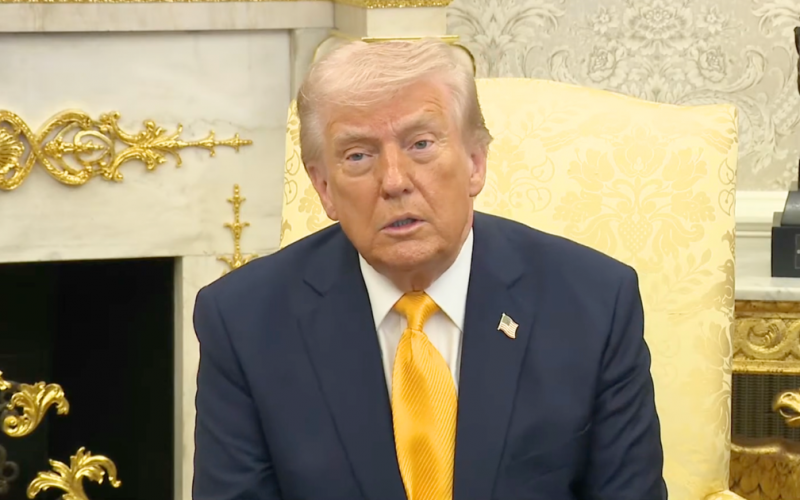
Trump responded to the decision from the Oval Office, saying he would accept the court’s ruling despite disagreeing with it.
“I guess I have to accept it. It is the Supreme Court. I think it is very bad for our nation,” Trump said, while urging Congress to pursue legislation addressing birthright citizenship.
In a Truth Social post, Trump called on lawmakers to act immediately, writing that Congress should begin work on legislation ending what he described as “expensive and unfair” birthright citizenship.
Trump first sought to end birthright citizenship through an executive order signed on his first day back in office in 2025. The directive was immediately challenged in federal court and blocked before it could take effect, setting the stage for the Supreme Court battle.
The administration argued that children born to parents who are in the country unlawfully are not “subject to the jurisdiction” of the United States, a phrase contained in the 14th Amendment’s Citizenship Clause. The plaintiffs countered that more than a century of legal precedent establishes that nearly everyone born on U.S. soil is entitled to citizenship.
Writing for the majority, Roberts said the Constitution’s guarantee of citizenship remains intact.
“Citizenship, then and now, was the right to have rights,” Roberts wrote, adding that the framers of the 14th Amendment extended that promise to “every free-born person in this land.”
Justice Clarence Thomas, joined by Justice Neil Gorsuch, issued a lengthy dissent arguing the majority had improperly expanded the scope of the Citizenship Clause beyond its original meaning. Justice Samuel Alito also dissented, contending the ruling preserves incentives for illegal immigration, per the Daily Mail.
The ruling leaves birthright citizenship unchanged and represents another major setback for one of the administration’s signature immigration initiatives. While the executive order cannot move forward, Trump has pledged to continue pursuing the issue through Congress.
