

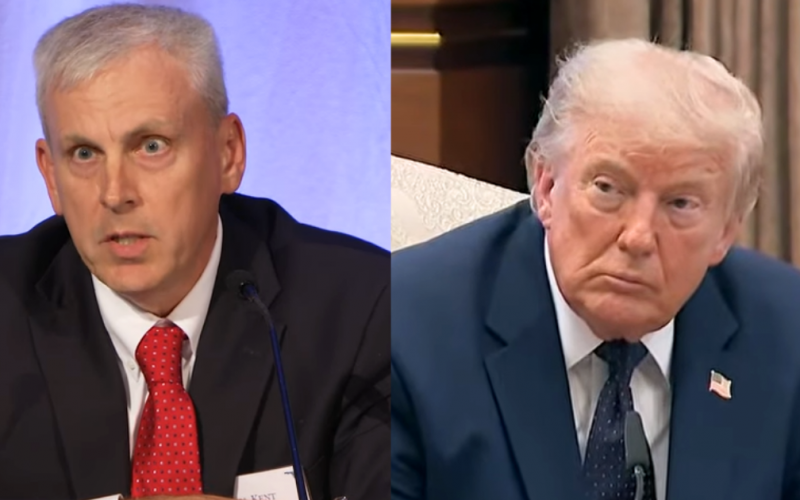
A Trump-appointed federal judge in Florida has ordered the Department of Homeland Security (DHS) to immediately restore key features of the Systematic Alien Verification for Entitlements (SAVE) system, creating a direct conflict with a separate federal court ruling in Washington, D.C., that required those same capabilities to be disabled.
The dispute centers on whether expanded access to the database complies with federal privacy laws and how states may use it to verify citizenship for voter rolls and other government programs.
U.S. District Judge T. Kent Wetherell II granted an emergency motion filed by Florida and several other states, concluding that DHS violated a court-approved settlement agreement by disabling the SAVE system’s bulk-upload and Social Security number search capabilities.
Wetherell ordered the department to immediately restore those functions, writing that DHS was “plainly in violation” of the settlement, which his court approved in late 2025 and retained jurisdiction to enforce, Florida’s Voice reported.
The ruling follows a June decision by U.S. District Judge Sparkle L. Sooknanan, who found that the Trump administration’s modifications to the SAVE system likely violated the Privacy Act and the Social Security Act by expanding the use of Americans’ personal information.
After that decision, DHS disabled the disputed features nationwide to comply with the D.C. court’s order.
The ruling drew criticism from some Republican lawmakers, with Rep. Abe Hamadeh (R-AZ) later introducing articles of impeachment alleging that Sooknanan exceeded her constitutional authority by issuing the decision.
However, the impeachment effort remains separate from the underlying litigation over the SAVE system, which began after Florida challenged DHS’ verification process.
The legal dispute began when Florida challenged DHS’ verification process, arguing that the database lacked practical search tools needed to verify citizenship because users had to enter unique immigration identifiers instead of Social Security numbers or process records in bulk.
The litigation ended in a settlement agreement requiring DHS to modernize the system by integrating Social Security Administration data and adding bulk-processing capabilities for participating states.
Florida, Indiana, Iowa, and Ohio later joined the agreement, according to The Sheffield Press.
In his order, Wetherell said his court had already determined the modifications were lawful when it approved the settlement agreement.
He further concluded that the challenged features comply with federal law, citing 8 U.S.C. §1373 and finding that the Privacy Act’s routine-use exception permits the disclosure of information needed to verify citizenship or immigration status, according to RedState.
Although the department is now subject to incompatible rulings from two federal courts, Wetherell said the settlement approved in his court remains binding unless reversed through the appeals process.
Florida argued that losing access to the expanded SAVE tools prevented the state from enforcing laws requiring citizenship verification of registered voters.
Ohio also challenged the changes, while Iowa said the removal of certain features made it harder to verify citizenship for professional license applicants, according to The Gateway Pundit.
Supporters of the expanded SAVE system, including the Trump administration and several Republican-led states, argue the additional verification tools strengthen election integrity by helping states identify individuals who may not be eligible to vote under federal law.
Groups that challenged the SAVE expansion, including the League of Women Voters, say broader citizenship checks could create errors that wrongly classify some eligible voters as noncitizens and trigger improper voter-roll removals.
DHS has been ordered to submit a status report within seven days detailing its compliance with Wetherell’s ruling and any developments in the related D.C. litigation.
With two federal courts issuing contradictory directives, the dispute is expected to continue through the appellate courts and could ultimately reach the U.S. Supreme Court.
