

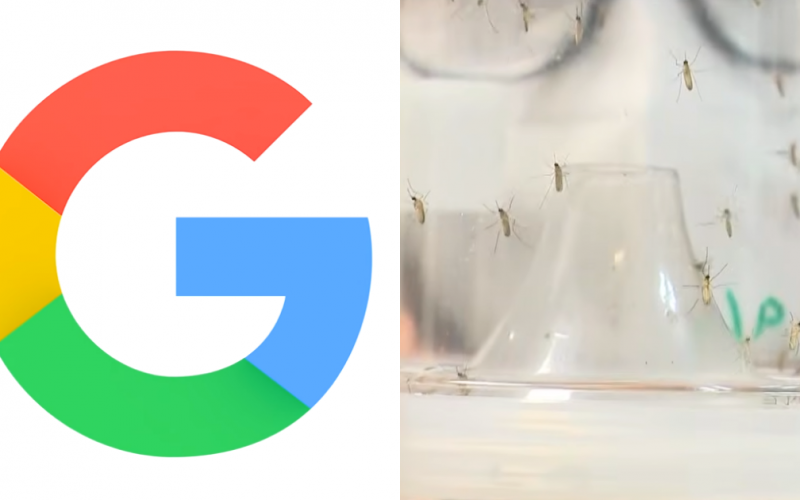
Google is seeking authorization from federal regulators to carry out an experimental program involving the release of male mosquitoes in select areas of California and Florida, according to filings under review by the U.S. Environmental Protection Agency (EPA).
The initiative is part of Google’s “Debug” program, which focuses on mosquito population control through biotechnology, automation, and data-driven systems.
The proposal under EPA review outlines a two-year experimental use program that would involve staged releases of specially bred male mosquitoes in both states.
Regulators are evaluating the application under the EPA’s experimental use permit framework, and a public comment period is currently open before any final decision is made on approval.
The mosquitoes used in the program are male insects that do not bite humans and therefore do not transmit disease.
The approach involves mosquitoes associated with a naturally occurring bacterium known as Wolbachia, which interferes with reproduction when present in mosquito populations.
When Wolbachia-carrying males mate with wild females, the resulting eggs are unable to develop properly, reducing future mosquito populations over time, according to The Guardian.
The method is based on the sterile insect technique, a biological pest-control strategy that has been used in various forms for decades to manage insect populations without relying on chemical pesticides.
Google has stated in materials cited in reporting that traditional mosquito control methods, including spraying and habitat reduction, face limitations due to resistance, environmental constraints, and the difficulty of eliminating breeding sites entirely.
Mosquitoes are widely recognized in public health research as carriers of diseases such as dengue, Zika, West Nile virus, chikungunya, and malaria.
According to Cyber News, Google’s Debug initiative focuses on addressing mosquito-borne illnesses through population suppression techniques rather than treatment-based approaches, according to reporting and company materials referenced in multiple outlets.
EPA documents cited by FOX 13 indicate that the proposed program would involve phased mosquito releases over the authorization period, with deployment levels dependent on regulatory approval and environmental assessments.
The agency is reviewing potential ecological and public health impacts before determining whether to grant an experimental use permit.
Google has previously tested aspects of the Debug program in Singapore, where local environmental authorities reported significant reductions in mosquito populations and decreases in dengue transmission following controlled releases of Wolbachia-infected mosquitoes.
These findings have been referenced by the company as part of its case for expanding the program to additional regions.
Linus Upson, head of Google’s Debug initiative, said in a statement that the program is designed to scale mosquito control technologies globally.
He pointed to outcomes in Singapore as an example of how data-driven biological interventions could be applied in regions where mosquito-borne diseases remain a persistent public health challenge.
Researchers and public health experts describe Wolbachia-based suppression and sterile insect technique programs as established methods used in mosquito control research and field trials.
These approaches are often discussed as alternatives or complements to chemical pesticide-based control strategies, particularly in regions where resistance has reduced chemical effectiveness, according to WCNC.
The EPA is currently accepting public comments on the proposal through June 5.
A final determination on whether to approve the experimental use permit has not yet been announced, and no specific deployment timeline has been confirmed pending regulatory review.
WATCH:
