

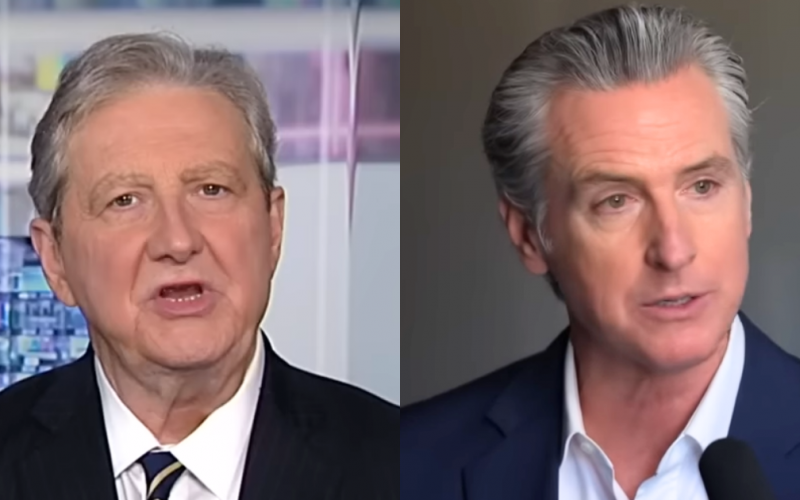
Questions surrounding California’s Medicaid program gained renewed attention during a Senate hearing this week after Louisiana Sen. John Kennedy (R) raised concerns about reports involving Medi-Cal coverage of spiritual and ritual-based services, including practices critics have described as “exorcism-like” interventions.
Kennedy’s remarks immediately fed into a broader federal discussion over how large Medicaid programs are overseen, particularly as policymakers continue examining spending trends and payment accuracy across state-run healthcare systems.
California’s program, due to its size and budget, has increasingly become a point of focus in those debates.
Much of the policy backdrop involves how Medicaid funds are structured under federal law.
States are permitted to design certain benefits through waiver programs, especially in tribal healthcare systems where culturally specific approaches are integrated into treatment models.
These arrangements allow for traditional healing practices when delivered through approved providers operating within recognized Indigenous health programs.
Federal guidance describes these services broadly as culturally grounded care intended to improve access and outcomes in underserved populations.
They may include ceremonies, rituals, and community-based wellness practices, but federal rules do not define or explicitly recognize religious practices such as exorcisms as covered medical treatment.
Kennedy brought the issue into focus during questioning of acting Attorney General Todd Blanche, citing reports that California’s Medicaid program may reimburse certain spiritual or faith-based care practices.
His remarks, as highlighted by Fox News, centered on how non-traditional services are classified and whether they fall within the intended scope of federally funded healthcare programs.
California’s Medi-Cal program has expanded in recent years to include traditional healing services within Native American and tribal health systems.
State officials have framed the policy as part of a broader effort to address longstanding disparities in healthcare access and to incorporate culturally responsive care into public health delivery.
The expansion reflects a wider shift in how some states approach healthcare access for Indigenous populations, where community-based healing methods are sometimes integrated alongside conventional medical treatment.
Supporters of such policies argue they improve trust in healthcare systems and increase engagement among underserved groups, particularly in rural or tribal communities.
At the same time, the expansion has prompted criticism from lawmakers and policy analysts who question how Medicaid spending categories are defined.
Some argue that the inclusion of culturally based services raises concerns about oversight and whether federal reimbursement rules are being interpreted too broadly at the state level.
That debate has unfolded alongside increased federal attention to Medicaid spending more broadly.
Recent reviews have pointed to concerns over improper payments and administrative oversight challenges in large state Medicaid programs, adding pressure on states to tighten compliance and reporting standards, according to The Wall Street Journal
California’s Medi-Cal program has experienced significant cost growth in recent years, with projections placing annual spending at more than $200 billion in upcoming budget cycles.
Officials attribute the increase to expanded eligibility, rising enrollment, and broader demand for healthcare services across the state’s population.
As federal oversight efforts continue, the discussion over culturally specific healthcare services versus conventional medical definitions is expected to remain part of broader Medicaid policy debates in Washington.
Lawmakers remain divided over how far states should be allowed to extend coverage under federal funding rules while maintaining consistent oversight standards.
WATCH:
