

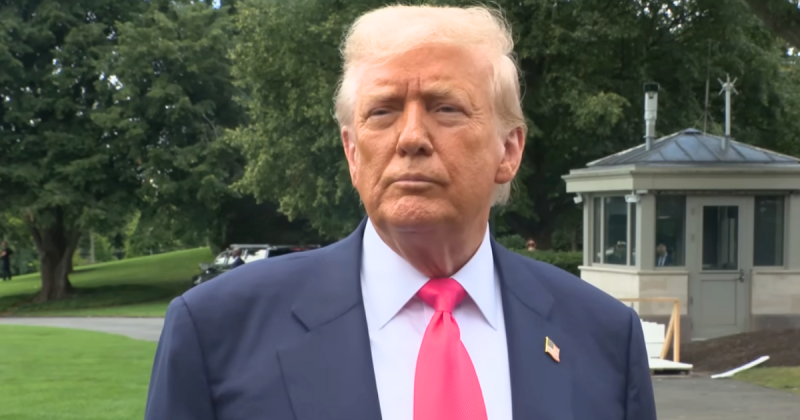
President Donald Trump signed a sweeping executive order this week expanding federal oversight of the U.S. financial system, directing regulators and banking institutions to strengthen scrutiny of accounts and lending practices tied to concerns over illegal immigration, fraud, and cross-border criminal activity.
The administration framed the move as part of a broader effort to reinforce national security protections while targeting money laundering networks and identity-based financial fraud.
Titled “Restoring Integrity to America’s Financial System,” the order argues that gaps in financial oversight can be exploited by transnational criminal organizations operating across borders.
It cites risks involving illicit financial transfers linked to fentanyl trafficking, human smuggling, and large-scale laundering operations that rely on U.S. banking infrastructure.
The White House said the initiative is designed to reinforce “safe and sound lending” standards while strengthening compliance across the financial sector.
Federal agencies are now being directed to develop updated guidance for banks and credit unions to identify potential indicators of suspicious activity.
These include structured cash flows tied to payroll cycles, shell company formations designed to obscure ownership, and transaction patterns associated with labor trafficking or unauthorized employment networks.
The order also calls for enhanced identity verification procedures, including closer review of foreign-issued documentation and taxpayer identification systems used in place of Social Security-based identification.
Another key component instructs regulators to evaluate whether immigration status should factor into credit risk assessments, particularly for mortgages, auto loans, and consumer credit products.
The administration argues that changes in legal work authorization or deportation risk could affect a borrower’s ability to repay financial obligations over time.
Agencies are also expected to revisit “ability-to-repay” standards and broader anti-money laundering compliance frameworks.
The directive further requires the Federal Reserve and other financial regulators to review oversight rules governing nonbank financial institutions and payment service providers as part of a broader effort to modernize the financial system while maintaining regulatory safeguards.
Industry groups have responded cautiously.
American Bankers Association CEO Rob Nichols said banks support stronger protections against illicit activity but stressed the importance of balancing compliance requirements with access to credit and financial services, ABA Banking Journal reported.
Separately from the executive action, Republican lawmakers in Congress are advancing legislation that would impose stricter identity requirements on the U.S. banking system.
The proposal, which Resist the Mainstream previously covered, would require banks and credit unions to verify citizenship or lawful immigration status before allowing individuals to open or maintain financial accounts, reflecting a broader push among GOP lawmakers to link financial access more directly to immigration enforcement policies.
Supporters of the measure argue that current banking rules leave gaps that can be exploited by individuals without legal status, potentially allowing them to access financial services without sufficient identity verification.
They say tightening these standards would help reduce fraud risks and improve the integrity of the financial system.
The legislation is led in the House by Rep. Keith Self (R-TX) and in the Senate by Arkansas Sen. Tom Cotton.
It would require financial institutions to collect documentation verifying legal status before opening accounts or extending services.
Acceptable forms of identification under the proposal would include U.S. passports, REAL ID-compliant driver’s licenses, or permanent resident cards.
Industry analysts say the combined regulatory push and legislative effort could significantly reshape compliance requirements across the banking sector.
Supporters argue these measures strengthen defenses against criminal financial networks exploiting system vulnerabilities, while critics warn they could expand regulatory burdens and complicate access to financial services for some consumers, according to Bloomberg.
Federal agencies are expected to begin issuing guidance and proposing regulatory updates within the next 60 to 180 days as both the executive order and related policy debates move through implementation and congressional review.
