

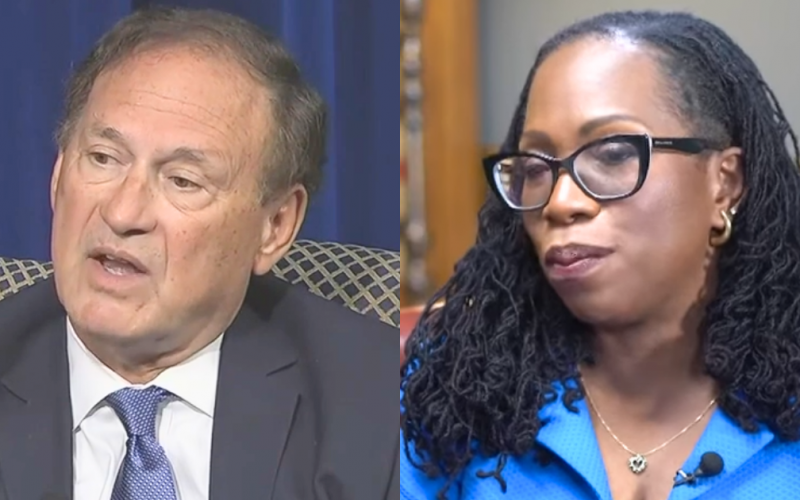
A rare internal split at the Supreme Court spilled into public view this week as justices clashed over how quickly to enforce a major redistricting ruling involving Louisiana’s congressional map.
The disagreement centered not only on the outcome of the case but also on how aggressively the Court should intervene while election preparations are already underway.
At the heart of the dispute is a recent 6-3 ruling striking down Louisiana’s congressional map over constitutional concerns tied to racial districting.
That decision set off an immediate scramble among state officials, who must now redraw boundaries ahead of the 2026 election cycle.
However, the latest order from the Court escalated the timeline even further.
In an unsigned move, the justices shortened the standard 32-day waiting period before a ruling is formally sent back to lower courts, effectively accelerating implementation and allowing Louisiana to move forward more quickly with redistricting.
The procedural shift drew a sharp objection from Justice Ketanji Brown Jackson, who warned that the Court was abandoning its usual restraint at a sensitive moment in the electoral process.
In her dissent, she argued the majority was moving too aggressively while voting logistics in the state were already in motion, describing the decision as a break from established judicial norms, Trending Politics reported.
Jackson wrote that the Court was “unshackl[ing] itself” from procedural constraints, framing the expedited timeline as a departure from standard practice that could inject instability into ongoing election administration.
That criticism triggered a forceful response from Justice Samuel Alito, joined by Justices Clarence Thomas and Neil Gorsuch, who directly challenged both her reasoning and tone.
In a separate opinion, Alito rejected the idea that the Court was acting outside its authority or altering procedure without justification, according to Fox News.
Calling it “insulting,” he argued that delaying implementation would have forced Louisiana to proceed under a map already declared unconstitutional, calling that outcome untenable given the Court’s own ruling.
Alito wrote that Jackson’s objections “level charges that cannot go unanswered,” pushing back against her framing of the majority’s decision.
The exchange highlighted a deeper divide on the Court over timing and judicial responsibility—whether the priority should be procedural consistency or immediate correction of an unconstitutional electoral map before upcoming elections proceed further.
While the ruling itself carried no signature, the separate writings revealed a stark ideological and methodological split over how the Court should manage election-related decisions once a constitutional violation has been identified.
The underlying case continues to ripple beyond Louisiana.
The decision has placed pressure on other states with pending or contested congressional maps, as courts nationwide weigh similar challenges ahead of the 2026 midterms.
For now, Louisiana remains in a fast-moving redistricting process, with state officials preparing revised boundaries under a compressed legal timeline.
The Supreme Court’s decision to accelerate enforcement ensures the issue will remain active in lower courts even as political and electoral deadlines continue to tighten.
