

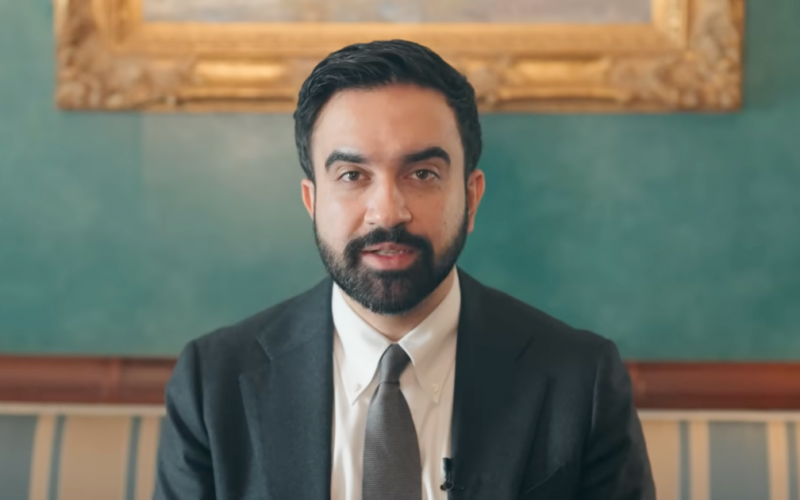
New York City Mayor Zohran Mamdani released a new promotional video Saturday defending his plan to open city-backed grocery stores across the five boroughs, calling the proposal part of a “new era” of affordability.
The one-minute video, posted by the mayor’s office and shared on social media, featured Mamdani narrating a message centered on government intervention to lower food costs.
“New York City, it is time for a grand experiment once again,” Mamdani said in the video.
He compared the proposal to former Mayor Fiorello La Guardia’s use of government action during the Great Depression.
“Just as LaGuardia used government to respond to the challenges of the Great Depression, we will use government to respond to rising prices and unaffordable groceries.”
The video showed a clean supermarket setting with carts filled with produce, eggs, coffee, and packaged goods, while text on screen read “affordable groceries for everyone.”
During his mayoral campaign, Mamdani promised publicly owned grocery stores in each borough.
Earlier this month, he announced the first planned site would be at the city-owned La Marqueta in East Harlem.
According to the report, construction of that location is expected to cost roughly $30 million.
The city has also set aside $70 million in capital funding for the broader program.
Mamdani said he wants all five stores operating by 2029, with at least one opening in 2027.
The mayor said the stores would not necessarily be fully city-operated supermarkets.
Instead, he described a model where a private operator runs the store while complying with standards set by the city.
“The city will subsidize a core set of staples: a private operator will run a store, but they answer to the standards that the city will set,” Mamdani said.
He added that bread and eggs would be cheaper and grocery shopping would no longer be an “unsolvable equation.”
The rollout immediately drew criticism online.
Some opponents questioned whether taxpayer-funded stores could sustainably undercut private grocers while still covering labor, supply, rent, and transportation costs, per the New York Post.
Others argued the city should focus on reducing regulation, improving competition, or cutting business costs instead of entering the grocery market directly.
The policy reflects a broader political debate over affordability in high-cost cities.
Supporters of Mamdani’s plan argue that food insecurity and rising prices justify aggressive experimentation.
They point to public markets, municipal utilities, and subsidized housing as examples of government stepping in where private markets fail.
Critics counter that government-run retail often becomes expensive, bureaucratic, and dependent on subsidies.
