

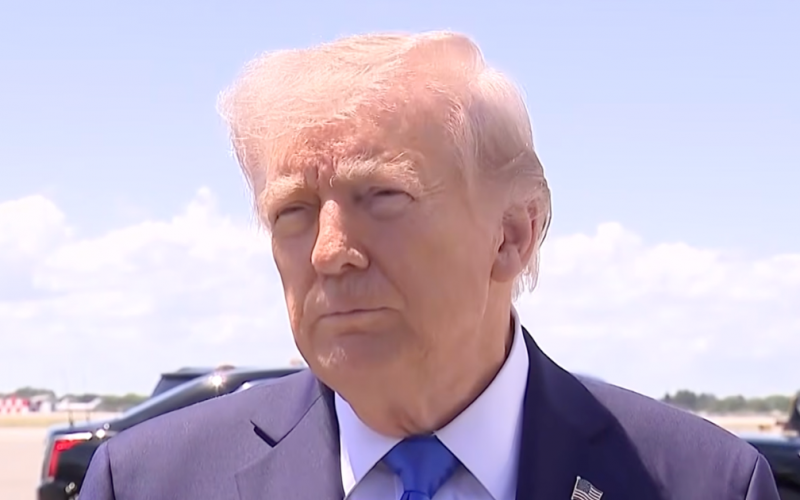
President Donald Trump announced Saturday that he canceled a planned U.S. delegation trip to Islamabad, Pakistan, where American officials were expected to continue negotiations with Iranian representatives.
Trump revealed the decision in a Truth Social post and blamed internal disorder inside Iran’s government for halting the diplomatic effort.
“I just cancelled the trip of my representatives going is Islamabad, Pakistan, to meet with the Iranians,” Trump wrote.
He added there was “tremendous infighting and confusion” within Iran’s leadership and said, “Nobody knows who is in charge, including them.”
The canceled delegation was expected to include Special Envoy Steve Witkoff and adviser Jared Kushner.
Earlier White House statements had said the trip was intended to advance talks after Iran reportedly signaled interest in direct face-to-face discussions.
Vice President JD Vance had also been placed on standby in case his presence became necessary.
Trump also used the post to emphasize leverage.
“We have all the cards, they have none,” he wrote, adding that if Iranian officials wanted talks, they only needed to call Washington directly.
The statement suggests Trump believes the United States has little reason to travel abroad for talks while Iran remains divided internally.
When asked whether canceling the trip meant a return to war, Trump denied that conclusion.
According to Axios correspondent Barak Ravid, Trump said, “No. It doesn’t mean that. We haven’t thought about it yet.”
That answer leaves uncertainty over whether diplomacy is merely paused or whether pressure tactics are replacing direct negotiations.
Pakistan had been trying to serve as a mediator between the two sides.
Iranian Foreign Minister Abbas Araghchi met in Islamabad with Pakistani Prime Minister Shehbaz Sharif and Army Chief Asim Munir.
Pakistani officials described the meetings as part of broader efforts to promote regional peace and stability.
Araghchi reportedly departed Islamabad before the expected arrival of the U.S. delegation.
Iranian state media said he did not plan to meet American officials directly and instead viewed Pakistan as a channel for passing proposals between the two governments, per Breitbart News.
That detail may explain some of Trump’s frustration.
If the United States expected direct talks while Iran planned only indirect messaging, the trip may have offered little value.
Publicly, Iranian officials have attempted to project unity.
Iranian President Masoud Pezeshkian and other officials issued statements claiming the government remains cohesive.
However, the report said there are signs of disagreements between factions described as moderates and hardliners, especially regarding negotiations with Washington.
Earlier in the week, Trump had already cited those internal divisions as a major obstacle to progress.
He also extended an existing ceasefire beyond its original two-week window without announcing a firm deadline.
According to the report, Trump said part of that extension came after requests from Pakistani leadership and because Iran needed time to present a unified negotiating position.
